As an Amazon Associate, we earn from qualifying purchases. Some links on this site are affiliate links at no extra cost to you. Our recommendations are based on thorough research and editorial judgment.


Why Olive Trees Need Cold Hours for Fruit Production

Olive trees need 200 to 300 chill hours below 7ºC between November 1 and January 15 to break dormancy and trigger flower development. These cold hours signal the tree to end its rest phase and start blooming, which is vital for good fruit set and yield. Without enough chilling, flowers may develop unevenly or late, reducing fruit quality. Different varieties like Arbequina require more chill hours. Understanding this helps growers improve harvest timing and output. More details explain how this process affects olive production.
Key Takeaways
- Olive trees need 200-300 chill hours below 7ºC to break dormancy and initiate effective flowering and fruit development.
- Adequate cold hours signal the end of dormancy, enabling timely flowering and optimal fruit set for higher yields.
- Insufficient chill hours cause delayed or uneven blooming, reducing fruit quantity and quality.
- Cold conditions reduce flower disease risks, improving fruit set success and overall production stability.
- Different olive varieties have specific chill hour needs; monitoring helps growers choose suitable varieties and optimize orchard management.
The Role of Chill Hours in Olive Flower Development
You may be interested

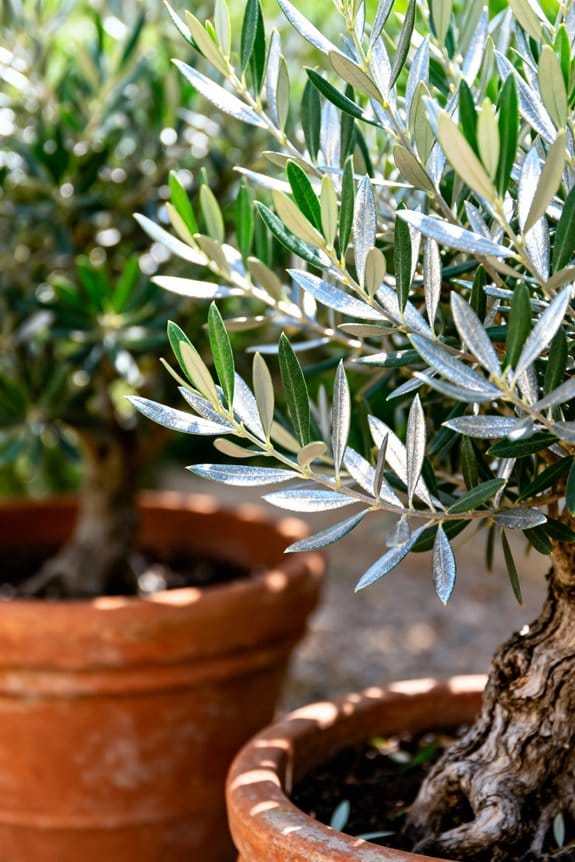

Although olive trees can survive in various climates, the role of chill hours during winter is vital for their flower development. Olive trees require between 200 and 300 chill hours—periods when temperatures remain low but above freezing—to break dormancy. For example, the Arbequina variety needs at least 300 chill hours to start blooming effectively between November 1 and January 15. These chill hours trigger flower production by signaling the tree to end its rest phase. Without adequate chilling, olive trees delay or fail to bloom, which lowers fruit set and reduces the quantity and quality of olives. Monitoring chill hours helps growers anticipate flowering times and guarantees a better harvest with improved fruit quality and yield. This step is essential for successful olive fruit production. Additionally, the Arbequina variety is popular for its continuous harvest and moderate watering needs, making it well-suited for growers monitoring chill hours.
How Olive Trees Respond to Temperature Variations

Understanding chill hours helps explain how olive trees react to changes in temperature throughout the year. Olive trees need between 200 and 300 chill hours at temperatures below 7ºC to break dormancy and start flowering. If temperatures rise above 12.5ºC for too long, chill hours become insufficient, leading to delayed blooming and poor fruit quality. Some olive trees, like the Arbequina, require a minimum of 300 chill hours to flower well and stay healthy. When chill hours are lacking, olive trees may flower unevenly, creating multiple stages of bloom on one tree that complicate care. Additionally, warmer winters can erase previously gained chill hours, disrupting the timing of flowering and fruit ripening. Temperature changes directly affect the olive trees’ flowering cycle and fruit production. Arbequina Olive Trees are ideally suited for mild climates within USDA Hardiness Zones 7-9, where they can achieve optimal growth conditions for fruiting.
Chilling Requirements for Different Olive Varieties

Since olive varieties differ in how many chill hours they need, it’s important to know each type’s specific requirements. Olive trees usually require between 200 to 300 chill hours, which are hours below 7ºC (45°F) from November 1 to January 15. For example, the Arbequina variety needs at least 300 chill hours to guarantee good fruit production. Other varieties like Picual and Hojiblanca can adjust somewhat to local climates but still depend on enough chill hours to bloom properly. These chilling requirements must be met during the tree’s dormant period to promote healthy flowering and fruit set. Knowing the chill hour needs of each olive variety helps growers manage orchards effectively for better yields. Additionally, when growing olive trees in containers, selecting pots with proper drainage is essential to maintain optimal soil moisture during critical growth periods.
Effects of Insufficient Chill on Olive Yields

Many olive trees need between 200 and 300 chill hours below 7ºC (45°F) during winter to bloom well. Without enough chill, flowering can be delayed or completely absent, which directly reduces olive yields. For example, the Arbequina variety specifically requires around 300 chill hours to start flower production properly. When temperatures don’t drop low enough, the trees struggle to meet this need. Insufficient chill also raises the risk of flower diseases, further harming crop yields. Reduced chilling weakens fruit set and lowers overall productivity. In short, if olive trees don’t experience the required cold temperatures, both fruit quality and quantity suffer. Ensuring adequate chill hours each winter is essential to maintain reliable crop yields in olive orchards. Additionally, using organic fertilizers can help strengthen trees and improve their resilience and fruit production even when chill hours are suboptimal.
Measuring and Calculating Chill Hours for Olive Orchards

How do growers keep track of chill hours in their olive orchards? They measure the number of hours temperatures stay below a specific range, usually between 0°C and 7°C. Chill hours accumulate mainly from November 1 to January 15, when olive trees are dormant. Different olive cultivars need distinct chill hours; for example, Arbequina requires about 300 hours to bloom properly. Farmers use temperature loggers or weather stations to record hourly data throughout the dormant season. This data is then analyzed to calculate total chill hours, helping predict fruit production success. If chill hours fall short, farmers can expect delayed flowering and lower yields. Accurately monitoring chill hours is essential in olive cultivation for managing orchard health and optimizing fruit production. Additionally, maintaining a consistent nutrient regimen during the growing season supports olive tree vigor and maximizes yield potential.
Recommended Products

[Color LCD Screen Weather Station] Newentor temperature & humidity monitor with a large color LCD display shows essential home weather information at a glance: indoor/outdoor temperature & humidity, daily high/low records, customizable alerts, time/date, alarm clock & snooze, weather forecast, moon phase, and barometric pressure.
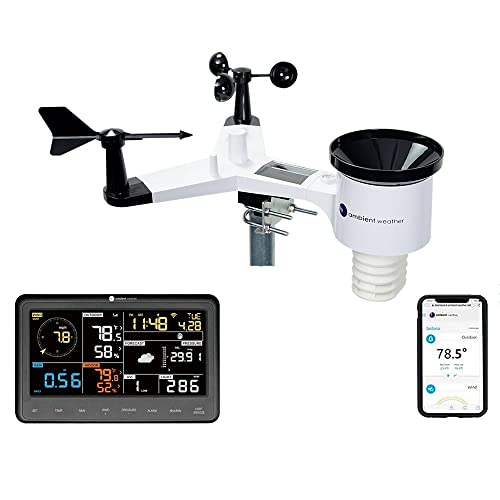
COMPLETE WEATHER STATION: (1) Osprey Sensor Array with Rain Cup, and (1) Brilliant, Easy-to-Read LCD Color Display

Impact of Climate Change on Winter Dormancy in Olives
What happens to olive trees when winters get warmer? Olive trees need between 200 and 300 chill hours at temperatures below 7°C to break dormancy properly. A lack of chill hours disrupts this cycle, leading to delayed or incomplete flowering. Climate change brings higher winter temperatures that can erase already accumulated chill hours, confusing the tree’s internal clock. As a result, olive development becomes irregular, causing blooms to stretch from January through May in some regions, like Tenerife. This continuous blooming reduces fruit yield and complicates harvest timing. Farmers face new challenges because chill hour variability affects budburst timing and crop consistency. Understanding how rising temperatures impact winter dormancy is essential to adapting olive cultivation practices for sustainable fruit production. Proper pruning during late winter can help promote healthier growth and better yields despite these challenges.
Managing Asynchronous Flowering in Olive Trees
As winter chill hours drop below 200 to 300, olive trees often face asynchronous flowering across their branches. This uneven flowering results from insufficient low temperatures in winter, disrupting the usual synchronized budburst. Chill hours impacts olive growth significantly, as varieties like Arbequina require a minimum of 300 hours to bloom uniformly. When chill hours are lacking, flowers bloom at different times on the same tree, reducing fruit set and yield consistency. Managing asynchronous flowering involves selecting olive varieties with higher chill hour adaptability and monitoring local winter temperatures closely. Growers can also prune strategically to promote uniform bud development. Understanding chill hour needs helps anticipate flowering phases and reduce susceptibility to diseases. Consequently, adapting to chill hour variations supports better fruit production despite climate challenges. Implementing selective pruning techniques during the appropriate dormant period can further enhance uniform bud growth and improve overall tree health.
Recommended Products
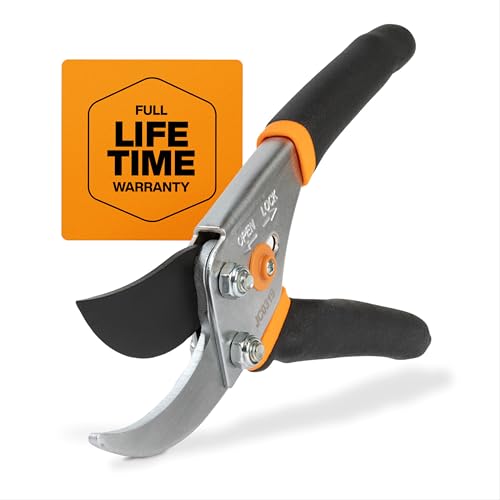
CLEAN CUTS FOR LIVE GROWTH: Bypass blade design is ideal for pruning delicate flower stems and green growth, helping reduce crushing and plant damage while cutting stems and small branches up to 5/8” in diameter

Unbreakable sharpness! Japanese SK5 steel blade with titanium coating endures 100,000 cuts. Built for lifelong clean cuts

REDUCE HAND STRESS- This scissors was made to eliminate the day to day stress that comes from long time pruning with our soft grip handles, sharp stainless steel blades and springless design to allow free movement
Technological Methods to Assess Dormancy and Chilling
Technological methods to assess dormancy and chilling in olive trees have advanced considerably. Leafy explant cutting techniques allow researchers to test dormancy release directly, measuring chilling requirements for different olive varieties. These cuttings are kept at controlled temperatures, often between 4°C and 10°C, to simulate winter conditions. Meanwhile, statistical models analyze temperature data recorded hourly during winter months to estimate dormancy duration accurately, correlating changes in chilling accumulation with physiological responses. Controlled growth chambers also replicate cold exposure precisely, enabling observation of flowering onset post-dormancy. Since olive varieties vary widely in chilling needs—some requiring over 300 chill hours, others less—methods must be customized to each cultivar. These technological tools improve understanding of how dormancy breaks and guarantee fruit production is optimized under varying temperature regimes. Additionally, choosing the ideal olive tree variety is critical as it influences chilling requirements and overall fruiting success.
Recommended Products

Monitor maintenance intervals and eliminate guesswork on when to service your motorcycle with ProTaper's wireless hour meter.

Versatile Compatibility: designed for a wide range of small gas engines, this inductive hour meter works perfectly with generators, lawn mowers, dirt bikes, motorcycles, ATVs, boats, snowmobiles, and more. Keep accurate track of engine hours across all your equipment with a single, reliable device

Keep track of your industrial engine or equipment's service life with AIMILAR's AC 110V-250V hour meter - reliable, easy to install, and provides high accuracy readings up to 99,999.9 hours.
Regional Differences in Olive Chill Hour Accumulation
Different olive-growing regions experience wide variation in chill hour accumulation during winter. Chill hours, defined as time spent below 45°F, range from 200 to 300 hours for ideal flowering. Olive varieties like Arbequina require at least 300 chill hours between November 1 and January 15 for good bloom induction. Regions such as Greece benefit from colder weather conditions, which help accumulate these chill hours, enhancing olive oil production prospects. Conversely, warmer areas like parts of Andalusia may not reach required chilling levels, causing delayed blooming and lower fruit set. This variability means growers must understand local chill hour patterns and olive variety needs carefully, as insufficient chill can considerably reduce yield and overall olive oil quality in a given season. Optimal fruit production also depends on full sun exposure and proper soil conditions to support tree health and growth.
Strategies to Adapt Olive Cultivation to Changing Climates
Several practical strategies can help olive growers adapt to changing climate conditions and safeguard their crops. Monitoring chill hours is essential, as olive trees generally need 200–300 hours below 7°C for flowering. Farmers can switch to climate-resilient olive varieties like Martina, which tolerate fewer chill hours and warmer winters. Using precision agriculture tools, such as soil moisture sensors and local weather forecasts, helps optimize irrigation and prevent stress during droughts. Implementing regulated deficit irrigation further conserves water while maintaining fruit quality. These combined approaches allow growers to adjust to fluctuating winter temperatures and reduced chill accumulation caused by climate change. Ongoing research will continue improving these adaptive methods, ensuring olive production remains stable despite warming trends and unpredictable weather patterns. Additionally, selecting the appropriate pot size and material can improve root health and stability, especially when growing olives in containers. For example, choosing a durable plastic or concrete pot helps provide better support and environmental control.
Recommended Products

Accurate Soil Moisture Detection: The XLUX Soil Moisture Meter can tell you if the soil deep inside your pot or garden is dry, moist or wet; whereas your eyes and fingers can only determine the moisture level of the soil surface. The probe is 5.5 inches (14 cm) longer than regular styles, allowing it to measure the soil moisture at the bottom of larger and deeper flower pots.

【4 in 1 function】This is a 4-in-1 multifunctional soil tester.Our soil tester fastly to measure soil moisture, pH, temperature and sunlight to help you take better care of flowers and plants.You can know when you need to water your soil by measuring moisture and pH & Temperature value of the soil and sunlight level of plants with it.

Accurate Soil Moisture Detection: The XLUX Soil Moisture Meter can tell you if the soil deep inside your pot or garden is dry, moist or wet; whereas your eyes and fingers can only determine the moisture level of the soil surface. The probe is 5.5 inches (14 cm) longer than regular styles, allowing it to measure the soil moisture at the bottom of larger and deeper flower pots.
Frequently Asked Questions
Do Olive Trees Need Chill Hours?
Olive trees require specific chill hour requirements to break dormancy, with climate impact influencing these hours. Seasonal variations affect bloom timing, while frost damage poses risks, making adequate chilling essential for healthy flowering and productive fruit yields.
How to Encourage an Olive Tree to Fruit?
Encouraging an olive tree to fruit is as simple as juggling fertilizer application, mastering pruning techniques, ensuring impeccable soil drainage, and waging war on pests—because apparently, olive trees demand an agricultural symphony before generosity.
Why Are Olives Harvested at Night?
Night harvesting benefits olives by preserving fruit quality and chemical composition while reducing oxidation. This harvesting technique minimizes environmental impact, improves tree health through less stress, and guarantees efficient, quieter operations supporting overall sustainability in olive production.
How Many Chill Hours for Arbequina Olives?
The Arbequina variety requires a minimum of 300 chill hours, where temperatures remain below 45°F between November 1 and January 15. These temperature requirements guarantee ideal conditions for flowering and fruit production.


