As an Amazon Associate, we earn from qualifying purchases. Some links on this site are affiliate links at no extra cost to you. Our recommendations are based on thorough research and editorial judgment.

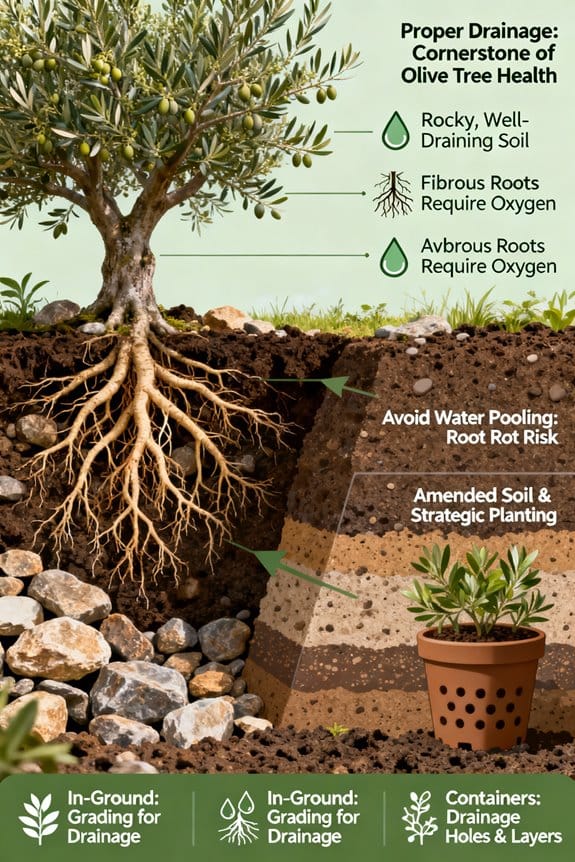
Why Drainage Is Critical for Olive Tree Root Health

Drainage is critical for olive tree root health because stagnant water suffocates roots and triggers root rot. Olive trees need well-drained soil that holds moisture but drains excess water quickly. Use a mix with 50-70% sand or perlite, avoiding heavy clay, and pots with 2-3 drainage holes about 0.25 inches wide. Water deeply every 10-14 days only when the top 2 inches of soil are dry. Understanding drainage helps keep roots healthy and trees thriving.
Key Takeaways
- Well-drained soil prevents root rot by avoiding waterlogged and oxygen-deprived root conditions.
- Proper drainage ensures olive trees absorb nutrients effectively, enhancing overall tree health.
- Poor drainage causes yellowing leaves and a musty soil odor, indicating root stress and damage.
- Overwatering and heavy clay soils limit oxygen, promoting harmful anaerobic conditions for roots.
- Using porous soil mixes and pots with drainage holes reduces water buildup and protects root health.
The Importance of Well-Drained Soil for Olive Trees
Although olive trees can tolerate drought, they require well-drained soil to prevent root problems. Well-draining soil allows moisture to pass through quickly, which reduces the risk of root rot caused by waterlogged roots. When planting olive trees in containers, make certain the pot has sufficient drainage holes, typically at least 4-6 holes of 1/4 inch diameter, to avoid standing water. Sandy or gravelly soil types are ideal because they foster drainage and maintain oxygen flow to the roots. Proper drainage keeps the root zone dry but not dry enough to stress the tree, allowing olive trees to absorb nutrients efficiently and grow healthy roots. Healthy olive trees rely on balancing moisture; too much water encourages root rot, which harms their stability and longevity. Using soil composed of peat moss, perlite, and worm castings can further improve aeration and drainage for optimal root health.
Common Signs of Poor Drainage in Olive Trees
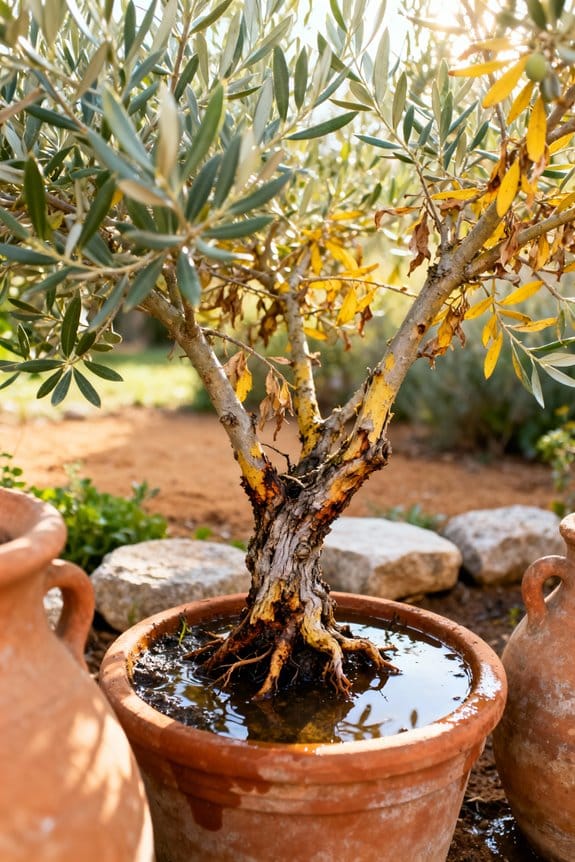
How can you tell if an olive tree is suffering from poor drainage? Common signs of poor drainage include yellowing leaves, which indicate root stress due to excess moisture. Another clear sign is the presence of waterlogged soil, often noticeable by a damp, musty odor. If the tree is planted in a pot, water pooling at the bottom signals insufficient drainage. Checking the roots is critical; dark, mushy roots suggest root rot caused by inadequate drainage. In a well-drained soil environment, these symptoms rarely appear. Regularly inspecting soil moisture and ensuring proper drainage can prevent these issues. Acting quickly when these signs emerge helps maintain healthy roots and overall tree health. Good drainage is essential to avoid prolonged exposure to excess water and keep an olive tree thriving. Using pots with multiple drainage holes, such as those with a superior drainage system, can significantly reduce the risk of root rot and waterlogging.
How Overwatering Affects Root Health
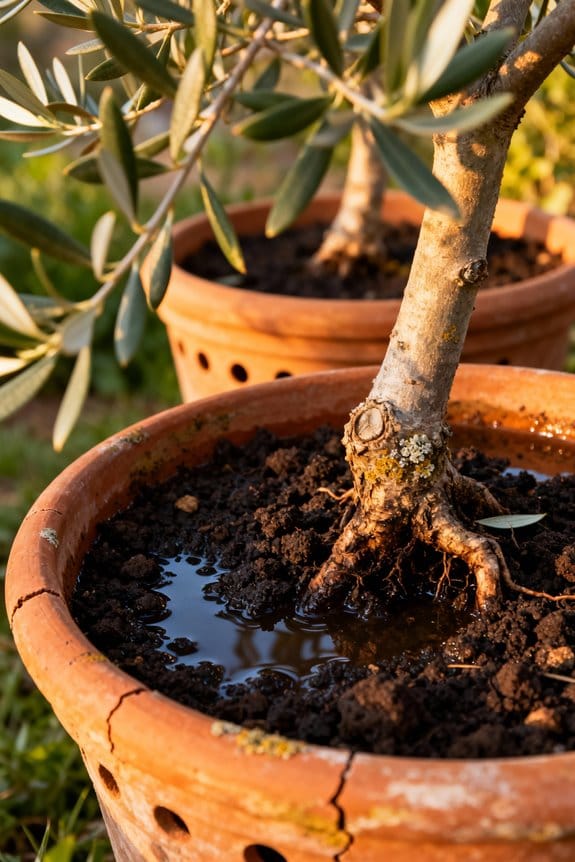
Overwatering can seriously harm olive tree roots by limiting oxygen in the soil. When too much water saturates the soil, oxygen levels drop, creating anaerobic conditions detrimental to root health. This lack of oxygen stresses the roots, making them prone to fungal infections like root rot. Root rot often emerges after days of waterlogged soil, especially in poorly drained areas. Symptoms include yellowing leaves and a musty smell from the soil. Olive trees need well-draining soil to avoid excess moisture retention, which is common in heavy clay soils. Proper drainage prevents the soil from becoming soggy. Maintaining a watering routine that allows the soil surface to dry slightly between watering sessions is essential. Generally, watering once every 10 to 14 days during warm seasons supports healthy roots and reduces overwatering risks. Additionally, choosing sandy or loamy soils helps ensure effective drainage and root oxygenation.
Choosing the Right Soil Mix for Optimal Drainage
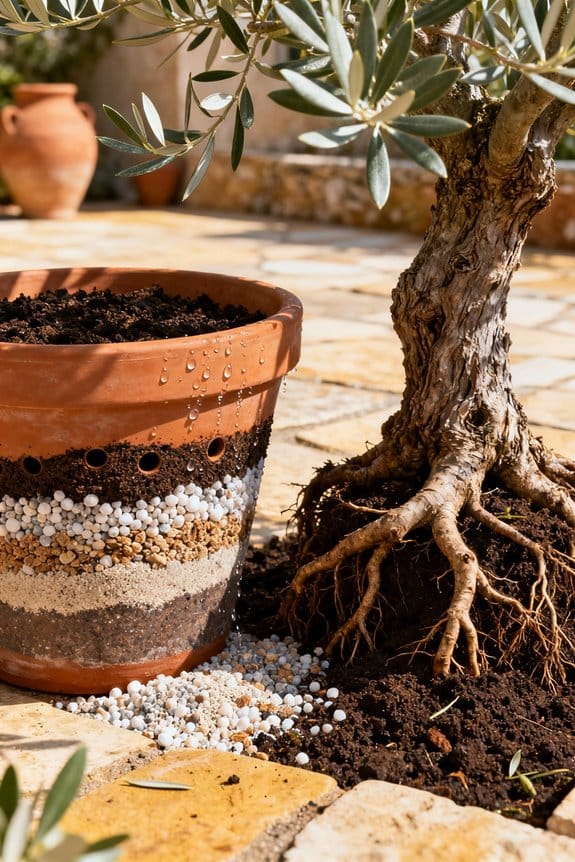
When selecting soil for olive trees, guaranteeing ideal drainage is key to root health and overall growth. A well-draining soil mix should comprise 50-70% aerated materials like sand or perlite. These components enhance airflow and prevent water buildup around roots, reducing the risk of rot. Heavy clay soils must be avoided because they retain too much moisture and suffocate roots. Adjusting the soil mix to the tree’s age matters: younger trees need a faster-draining mix with less water retention. Additionally, incorporating small gravel helps maintain a balanced moisture level while promoting drainage. By carefully matching soil composition to water needs, olive trees develop stronger roots and better resist overwatering complications. Proper soil selection guarantees sustained health and vigorous growth throughout each growth stage. Using a weighted pot or proper container also supports root system stability and optimal growing conditions.
Selecting Proper Pots and Containers to Improve Drainage
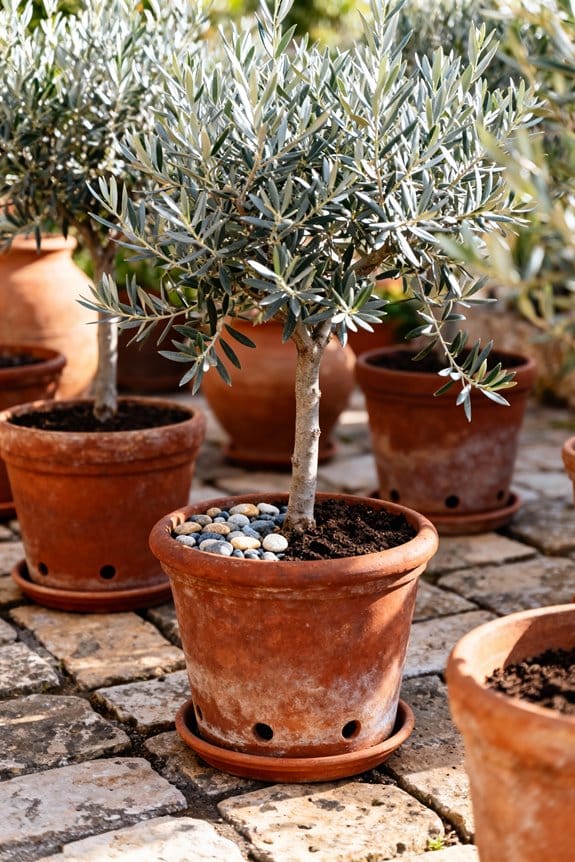
Three essential factors determine the suitability of pots and containers for olive trees. First, selecting the right pot means choosing one with multiple holes at the bottom. These holes allow excess water to escape, preventing poor drainage that leads to root rot. Second, pots made from breathable materials like terracotta improve air circulation and moisture evaporation, aiding root health. Third, pots should be at least 12 inches deep to provide sufficient space for root growth and a well-draining soil mix. Additionally, raising pots off the ground helps prevent water accumulation, especially in humid areas. For potted trees, a light potting mix with sand or perlite complements the container, ensuring roots stay healthy and well-drained without sitting in soggy soil. Choosing pots made from durable materials that withstand outdoor conditions can also enhance the longevity and health of your olive tree.
Watering Techniques to Prevent Waterlogging
A careful balance in watering keeps olive trees healthy and prevents waterlogging. Trees need deep but infrequent watering, allowing the top 2 inches of soil to dry before watering again. Using a moisture meter helps determine when water is necessary, avoiding soggy conditions. Adjust the watering schedule based on temperature and sunlight; hotter days increase evaporation, so trees may require slightly more water. Always check that pots have adequate drainage holes to let excess water escape freely. Water should never pool at the base, as this leads to root problems. A good routine is to water thoroughly, then pause until the upper soil layer feels dry to the touch—this prevents constant moisture buildup and supports strong, healthy roots in olive trees. Regular application of slow-release nitrogen fertilizers can also enhance root health by providing steady nutrients over time.
Effects of Poor Drainage on Nutrient Uptake and Disease Susceptibility
Because olive tree roots need oxygen to absorb nutrients effectively, poor drainage can quickly create serious problems. Waterlogged soil reduces oxygen availability, which directly impairs nutrient uptake. Key nutrients such as nitrogen, potassium, and phosphorus become less accessible, causing growth to slow and fruit production to decline. Moreover, saturated soils create an environment where fungal pathogens like Phytophthora thrive. This leads to root rot, which damages root structures and further limits nutrient absorption. As root rot progresses, the tree’s disease susceptibility increases, setting up a harmful cycle where weakened roots cannot support the tree properly. This combination of nutrient deficiencies and disease makes it essential to prevent waterlogged soil and maintain proper drainage for olive tree root health. Choosing a potting mix with quick drainage properties is vital to avoid these issues and promote healthy root development.
Best Practices for Maintaining Healthy Roots in Potted Olive Trees
When maintaining potted olive trees, ensuring proper drainage is essential to root health and overall growth. Start by selecting the right soil—one that drains well with sand, perlite, or small gravel mixed in to prevent water retention. Make sure the pot has adequate drainage holes so excess water can escape easily. Water deeply but infrequently; wait until the top 2 inches of soil are dry before watering again. Deep watering encourages roots to grow downward, which improves stability and drought resistance. Regularly check the roots for any signs of rot or decay, such as dark or mushy areas. If problems appear, adjust watering or improve drainage promptly to protect your potted olive’s roots and keep the tree healthy over time. Choosing pots with 2-3 drainage holes approximately 0.25 inches wide is critical to preventing root rot and ensuring proper water flow.
Frequently Asked Questions
Do Olive Trees Need Good Drainage?
Olive tree drainage is essential for preventing excessive soil moisture, which can harm roots. Proper planting techniques, including selecting containers with adequate drainage holes, promote healthy root systems and prevent waterlogging, ensuring ideal growth and longevity.
How to Fix Root Rot in Olive Tree?
Like rescuing a drowning ship, fixing root rot causes in an olive tree demands pruning decayed roots, ensuring pot drainage, rejuvenating soil moisture with well-draining mix, and adjusting olive tree care to restore balanced energy and growth.
Do Olive Trees Have Deep Roots in Pots?
Potted olive trees typically develop a limited root system due to container gardening constraints. Their roots do not grow as deep as in natural soil, making soil moisture management essential to maintain healthy growth within restricted pot volumes.
How to Bring Back a Dying Olive Tree?
Reviving olive trees involves identifying signs of stress like yellowing leaves, adjusting watering techniques to prevent overwatering, inspecting roots, and applying soil amendments such as sand or perlite to improve drainage and support healthy growth.


