As an Amazon Associate, we earn from qualifying purchases. Some links on this site are affiliate links at no extra cost to you. Our recommendations are based on thorough research and editorial judgment.


Managing Olive Tree Size in Container Gardens

Managing olive tree size in container gardens starts by choosing a 15-20 gallon pot for young trees and 25-30 gallons for mature ones, ensuring 18-20 inches diameter for good root space. Compact varieties like Arbequina stay about 6 feet tall with regular pruning in late winter. Use well-draining soil—a mix of potting compost, sand, and organic compost—and keep drainage holes clear. Repot every 2-3 years, trimming roots as needed. Proper care and pruning maintain tree size, and more detailed steps can further improve results.
Key Takeaways
- Select compact olive varieties like Arbequina suited for containers and prune regularly to maintain height between 4 to 6 feet.
- Use appropriately sized pots (15-30 gallons) to limit root space, naturally controlling tree size and slowing above-ground growth.
- Prune selectively in late winter or early spring, removing crossing branches and thinning canopy to encourage airflow and manage shape.
- Repot young trees every 2-3 years, gradually increasing pot size to balance root expansion and avoid excessive vertical growth.
- Maintain balanced soil fertility and drainage with well-draining mixes and regular, moderate fertilization to support healthy, controlled growth.
Selecting the Right Container Size
Selecting the right container size is essential for growing a healthy olive tree in a pot. Starter trees need pots at least 15-20 gallons, roughly 18-20 inches in diameter, to support root growth properly. As trees mature, moving to 25-30 gallon containers helps accommodate expanding roots. Pots should have good drainage holes to prevent waterlogging and root rot. Container materials affect pot longevity and performance. Terracotta is breathable but can crack below 32°F. Fiberglass or resin pots are lightweight and frost-resistant, offering longer durability outdoors. Concrete pots provide stability but weigh more and reduce portability. Gradually increasing container size each year encourages healthy root development without overwhelming the tree. Choosing the right container balances size, material, and drainage to sustain olive trees effectively over time. Additionally, ensuring the soil stays slightly alkaline with a pH of 7 to 8 supports optimal growth in container settings, making soil quality a key factor in successful cultivation of olive trees in pots soil quality.
Recommended Products

100% realistic- a perfect copy of an olive tree. This drop-in is a no-maintenance work of art. Complete with a well-suited pot, it makes for a lovely gift.
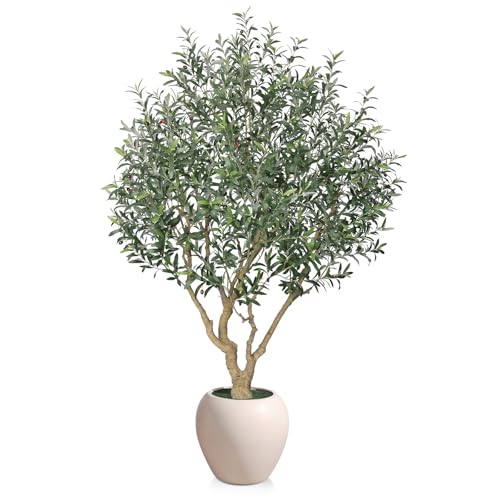
Elevate Your Space with Timeless Elegance. Standing 8 feet tall, this artificial olive tree is the perfect tall artificial plant to command attention in home decor. With 3690 silk leaves and a 63-inch spread, it mimics nature’s grace in a way that suits both modern farmhouse and boho interiors

Standing at an impressive 8 feet, the SOGUYI faux Olive Tree is a masterpiece of lifelike design. The olive tree's luxurious presence is complemented by a vintage Greek-inspired planter, adding a touch of Mediterranean elegance and timeless charm to any space
Choosing Suitable Olive Tree Varieties

Choosing the right olive tree variety helps keep container gardening manageable and rewarding. Opt for compact olive varieties like Arbequina or Manzanillo, as they grow slowly and stay smaller, fitting well in 15-30 gallon pots. These varieties reach about 6 feet tall when pruned properly, making maintenance easier. For those wanting mostly aesthetic appeal, ornamental options such as Skylark offer small, evergreen foliage with minimal fruit production. These trees thrive in USDA zones 8-11 but can adapt to cooler climates in containers if kept above 50°F. Selecting a slower-growing type reduces frequent repotting and excessive pruning. Ultimately, choosing a variety that aligns with container size and climate allows gardeners to control tree size effectively while ensuring healthy growth and seasonal enjoyment. Additionally, choosing a 6ft olive tree balances size with realism and maintenance ease for container gardening.
Recommended Products

New look, same great formula; packaging may vary

Compact Yet Sturdy Design: Introducing our 21″ by 17.5″ rounded square rolling planter pot-a small powerhouse perfect for your patio. Despite its size, this planter boasts heavy-duty locking wheels, robust frames, and exceptional drainage holes for watering.

MAGSHIELD ACCESS - Durable and powerful magnets create an ultra leak-resistant shield that stays open when you need it and snaps closed with a gentle push
Understanding Root Restriction Benefits

Root restriction plays a central role in managing olive tree size within containers. Limiting the root systems by choosing appropriately sized pots naturally keeps the tree smaller and more manageable. In container gardening, an olive tree’s roots grow only as far as the pot allows, which slows above-ground growth. For example, starting with a 15-20 gallon container limits roots to prevent the tree from becoming too large. Gradually increasing pot size offers controlled growth steps but skipping repotting keeps the tree compact. This method reduces the need for heavy pruning while maintaining tree health and fruiting potential. Proper root restriction guarantees efficient use of space and water, creating a balance that suits typical household garden environments, especially where full sun and well-draining soil are provided. Additionally, using a container with an optimal pot size of 18-24 inches in diameter ensures proper drainage and supports healthy root development.
Soil Mixes Ideal for Olive Trees in Containers

An olive tree’s health depends heavily on its soil mix, especially in containers. Ideal soil must balance drainage and nutrient retention while maintaining pH near neutral, around 6.5 to 7.5. Avoid highly acidic or alkaline soils, which reduce nutrient availability and stress roots. A common blend includes two parts quality potting compost, one part grit or coarse sand, and one part organic compost to supply ample potting nutrients. Mixing these components guarantees adequate aeration while providing needed minerals. Regularly replenish the top layer with fresh compost or balanced fertilizer every 6 to 8 weeks during growing seasons to maintain potting nutrients. This approach promotes steady growth without over-fertilization. Such soil mixes support olive trees’ drought tolerance and minimize root health issues in container gardens. Maintaining soil moisture at 20-30% moisture helps prevent root rot and encourages healthy root development in container-grown olive trees.
Recommended Products

CONTAINS MILLIONS OF SOIL-ENRICHING MICROORGANISMS: Provides a perfect habitat for soil-enriching microbes, and comes preloaded with billions of them to kick-start the soil microbiology of any lawn, field, or container - improving soil health & fertility
BIGGER PLANTS: Watch your container plants flourish with this potting soil that feed for up to 6 months to grow plants twice as big versus unfed plants

Miracle-Gro Potting Mix feeds container plants for up to 6 months so you get more blooms for more color (vs. unfed plants)
Ensuring Proper Drainage for Healthy Roots
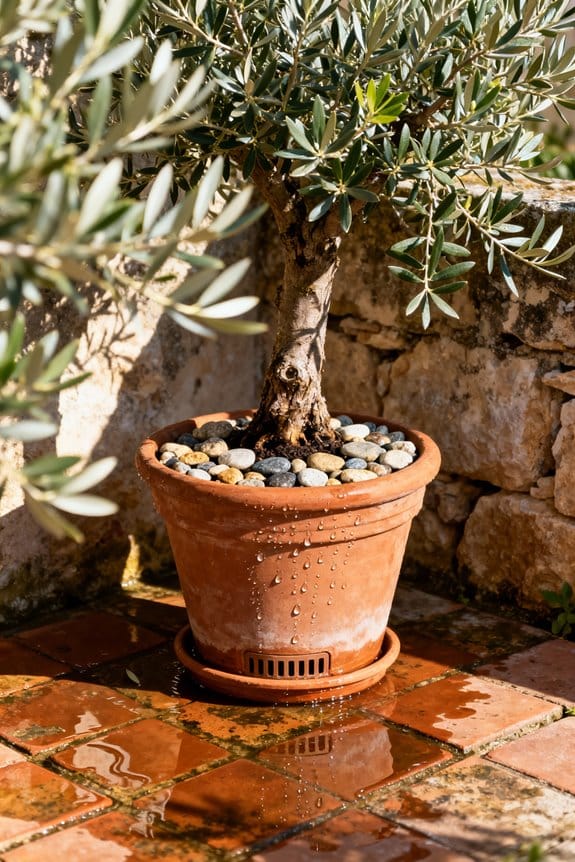
Maintaining good soil mix composition goes hand-in-hand with proper drainage to keep olive tree roots healthy. Drainage solutions start with selecting containers that have multiple drainage holes, ideally around 1 inch in diameter, to prevent standing water. Adding a 1-inch layer of gravel or small stones at the pot bottom improves runoff and keeps roots from sitting in moisture. Using well-draining soil mixes, such as potting compost blended with sand or grit at a ratio of about 3:1, further supports root health by promoting air circulation. It’s essential to check that excess water exits the pot within 15 minutes after watering. Proper drainage solutions reduce the risk of root rot, fungal issues, and guarantee a stable, healthy root environment essential for controlling olive tree size in containers. Choosing a planter with an open-bottom design and adequate drainage holes enhances root aeration and prevents harmful water buildup.
Recommended Products

Manufactured in the USA: Proudly crafted in the United States

Modern Planter: This planter is designed with a unique textured detail that effortlessly complements any design style and elevates the look of real or faux greenery. Place potted shrubs, trees, or snake plants out on your porch or by your front door.

Healthier Roots and Less Bending Down: The higher depth allows plenty of room for root systems to develop, better water drainage, and soil quality. Higher beds also mean you will bend over less, it eases the strain of bending down saving your back, one primary benefit of gardening in raised beds is that you don’t have to bend down quite as far when tending, weeding, or harvesting your plants
Managing Watering and Drought Tolerance
Watering container-grown olive trees requires careful attention to timing and quantity to avoid overhydration. Typically, watering frequency should allow the soil to dry out halfway between waterings. Check the top 2 inches of soil; if it feels dry, it’s time to water. Avoid constant dampness, which risks root rot. Look for drought symptoms like leaf curling, yellowing, or premature leaf drop to gauge moisture needs. During hot spells above 85°F, increase watering slightly but avoid saturation. In cooler temperatures, reduce frequency accordingly. Use pots with drainage holes to guarantee excess water escapes. Applying about 1-2 quarts per watering usually works for medium pots (15-20 gallons), but adjust based on soil dryness and container size. Consistent monitoring helps balance drought tolerance with hydration for healthy growth in containers. It is also important to use a moisture meter to accurately monitor soil hydration levels and prevent overwatering.
Providing Adequate Light and Temperature Conditions
How much sunlight does a container-grown olive tree need to thrive? It requires at least 10 to 12 hours of full sun daily. When natural sunlight is insufficient, reliable artificial light sources, such as full-spectrum LED grow lights, supplement the light requirement effectively. Maintaining temperature stability is equally important. Olive trees prefer temperatures between 50°F and 85°F (10°C to 29°C) to grow well. Sudden temperature fluctuations stress the plant and reduce growth. Avoid placing containers near drafty windows or HVAC vents that cause rapid temperature changes. During cooler months, protect trees from temperatures below 15°F (-9°C). Consistent light exposure combined with careful temperature management helps maintain tree vigor and size. Additionally, ensuring proper water pH levels between 6.0 and 8.0 is crucial for healthy root development in container olive trees. Paying close attention to these factors creates ideal growing conditions to keep container olive trees healthy and manageable.
Techniques for Effective Pruning and Shaping
Pruning an olive tree in a container starts with choosing the right time, typically late winter or early spring before new growth begins. Effective pruning techniques focus on removing dead or crossing branches to improve airflow and encourage dense growth. Shaping methods such as selective thinning help maintain a compact canopy about 4 to 6 feet tall, ideal for container space. Start by cutting back long or leggy shoots to a strong side branch, using clean, sharp tools to prevent disease. Avoid heavy pruning on young trees, as it delays growth. Regularly inspect the tree and prune small amounts annually rather than large cuts all at once. Combined, these pruning techniques and shaping methods guarantee a healthy, well-structured olive tree that thrives in limited container environments. Ensuring the tree receives 6-8 hours of sunlight daily will support vigorous growth and fruit production even in container settings.
Recommended Products

【UP TO 45mm CUTTING DIAMETER】- SWANSOFT-8612 electric tree trimmer blades can easily cut through branches up to 45mm thick without causing damage. The blades of this battery pruning shears are forged from Swiss SK5 high-carbon steel, which is sharp and resistant to wear and tear. Flat and fast pruning like cutting butter easily

【Designed for Orchard, Vineyard & Large Backyard Trees】Built for real pruning work across orchards and residential landscapes, Kebtek KT 9035 battery operated pruners easily cut apple, peach, olive trees, and grapevines up to 35mm (1.38 inch). Also suitable for common American yard trees such as oak, maple (sugar & red maple), pecan, eucalyptus, and palm trees, making it a versatile solution for both fruit farms and home gardens.

TaskStar 2-in-1 Electric Pruner: Effortlessly switch between handheld and pole mode, offering flexible pruning for a variety of tasks; Trim low shrubs with precision or extend the pole to easily reach high branches—one tool, limitless possibilities
Repotting Strategies to Control Growth
Several factors guide the repotting of olive trees in containers to manage growth effectively. Repotting frequency depends on the tree’s age and root development, often occurring every two to three years for young trees. This allows room to expand without promoting excessive size increases. Size limitations come from selecting containers that restrict root growth, naturally controlling the overall tree size. For example, moving from a 15-gallon pot to a 20-gallon pot gradually increases space without sudden growth jumps. When repotting, inspect roots and trim any circling or dead roots before placing the tree in fresh, well-draining soil. This process combined with careful pot size adjustments helps keep olive trees compact and manageable in container gardens. Additionally, providing well-drained soil is crucial for healthy root development and overall tree vigor.
Maintaining Soil Fertility in Containers
Maintaining soil fertility in containers is key to keeping olive trees healthy and productive. Organic compost should be mixed into the top 2–3 inches of potting soil every 6–8 weeks during the growing season. This replenishes nutrients and improves nutrient retention, which is critical because container soil depletes faster than garden beds. Use about one cup of compost per 5 gallons of soil volume. Additionally, incorporating slow-release fertilizer designed for olives every 3 months supports continuous growth. Avoid overwatering to prevent nutrient washout; allow soil to dry halfway between waterings. Layering fresh organic compost on top during repotting also aids nutrient retention and soil structure. Consistent monitoring of soil condition and reapplying compost guarantees the olive tree thrives without requiring oversized containers. Selecting compost with a balanced N-P-K ratio tailored to olive trees ensures optimal nutrient availability throughout the growing season.
Protecting Container Olive Trees in Cooler Climates
When growing olive trees in containers, cooler climates pose unique challenges that require careful preparation. Cold protection is essential to prevent root damage when temperatures fall below 32°F. Containers should be insulated using materials such as bubble wrap, burlap, or foam sheets wrapped around the pot and base. Elevating containers on pot feet or bricks improves drainage and reduces frost risk. Moving trees to sheltered spots, like a garage or greenhouse, during freezing nights adds another layer of safety. Water the tree sparingly before cold spells to avoid ice formation inside the soil. Using heavier pots like concrete or fiberglass can help maintain more stable root temperatures. Consistent monitoring is crucial since prolonged exposure to cold without adequate insulating materials can seriously harm container-grown olive trees in cooler zones.
Frequently Asked Questions
How Often Should I Fertilize My Container-Grown Olive Tree?
Container-grown olive trees should be fertilized every 4-6 weeks during the growing season using balanced fertilizer types rich in growth nutrients such as nitrogen, phosphorus, and potassium to promote healthy development and maintain soil fertility effectively.
Can Container Olive Trees Survive Indoors Year-Round?
Like sun-soaked groves confined within four walls, container olive trees can survive indoors year-round if indoor care guarantees bright, direct light or supplemental grow lights meet their light requirements, while maintaining moderate temperatures and good airflow.
What Pests Commonly Affect Olive Trees in Containers?
Olive trees in containers commonly face pests like olive fruit flies, which damage fruit, and scale insects that infest stems and leaves. Both can weaken the tree, necessitating monitoring and appropriate pest control measures for healthy growth.
How Do I Prevent Fungal Diseases on Container Olive Trees?
Preventative measures include balancing moisture and airflow; just as too much rain drowns roots, poor soil drainage invites fungal diseases. Using well-draining soil and ensuring proper pot drainage keeps olive trees healthy, minimizing fungal risks effectively.
Is It Necessary to Winterize Container Olive Trees in Mild Climates?
Winter care for container olive trees in mild climates is generally minimal. Climate influence typically reduces frost risk, but some protection during unexpected cold spells guarantees tree health and prevents stress, especially for younger or less hardy specimens.


