As an Amazon Associate, we earn from qualifying purchases. Some links on this site are affiliate links at no extra cost to you. Our recommendations are based on thorough research and editorial judgment.


Why Most Olive Trees Struggle Indoors and How to Help

Most indoor olive trees struggle due to insufficient sunlight and overwatering. They need at least six hours of direct sun near a south-facing window and well-drained soil that dries two inches deep before watering again. Temperatures should stay between 65 and 80 °F with low humidity. Avoid stagnant air and pests by regular inspection and proper care. Positioning and steady routines prevent stress, so understanding these steps helps maintain a healthy olive tree indoors and supports stronger growth outcomes.
Key Takeaways
- Olive trees need at least six hours of direct sunlight daily, and insufficient light is a major cause of indoor struggling.
- Overwatering causes root rot and yellow leaves; let the top two inches of soil dry before watering again.
- High indoor humidity and poor air circulation weaken olive trees and invite pests like scale insects.
- Position trees near south-facing windows and rotate regularly to ensure even light exposure and healthy growth.
- Gradual acclimation outdoors with filtered light helps reduce transplant shock and strengthens indoor tree resilience.
Common Challenges for Olive Trees Indoors
Although olive trees can adapt to indoor settings, they present several common challenges that require careful attention. An indoor olive tree needs at least six hours of sunlight daily, but inadequate light often leads to leaf drop and poor health. Overwatering is another frequent problem; the tree’s well drained soil must dry out between waterings to prevent root rot. Maintaining good airflow is essential because olive trees prefer dry air and suffer in high humidity. Pests, such as scale insects, tend to appear on weakened trees and signal underlying issues. Indoor olive trees typically live only about 8 to 9 years, so consistent care—including monitoring watering habits, airflow, and pest presence—can help extend their resilience successfully indoors. For those seeking easier upkeep, artificial olive trees provide a realistic, maintenance-free alternative that requires no watering or sunlight.
Essential Light Requirements for Indoor Olive Trees

A south-facing window acts like a natural sunlamp for indoor olive trees, delivering the six hours of direct sunlight they need each day. Olive trees rely on this direct sunlight indoors to maintain healthy growth and avoid stress. Position the tree close to the glass, ideally within 2 feet, to guarantee maximum light exposure. Bright indirect light may not be enough over weeks, often causing leaf drop. Morning sun through large windows also supports the tree’s wellbeing well indoors. Avoid overwatering since excess water can complicate light-related stress by weakening roots. Regularly rotate the pot to encourage even growth and monitor the leaves; pale or dropping leaves typically signal insufficient hours of sunlight. Maintaining these specific light conditions helps indoor olive trees stay healthy and productive. Using well-drained sandy soil can further support root health and overall tree vitality indoors.
Recommended Products

Relax with daVinci Glider Nursery Chair with Storage Ottoman: Enjoy comfort with a high back, back-and-forth gliding motion, and smooth 360° swivel. The ottoman with storage provides space for baby essentials, combining relaxation with practical storage.
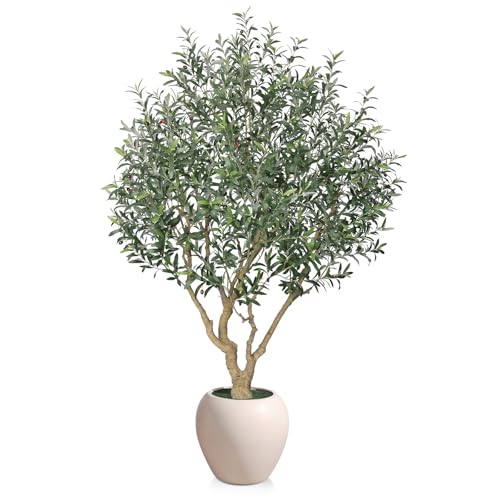
Elevate Your Space with Timeless Elegance. Standing 8 feet tall, this artificial olive tree is the perfect tall artificial plant to command attention in home decor. With 3690 silk leaves and a 63-inch spread, it mimics nature’s grace in a way that suits both modern farmhouse and boho interiors
Ideal Temperature and Humidity Conditions

When maintaining indoor olive trees, keeping the temperature between 65 and 80 degrees Fahrenheit is essential for their health. This ideal temperature replicates their natural hot, dry climate, supporting steady growth. Care should also focus on controlling humidity levels, which must stay low, as high humidity can cause stress and fungal issues. Poor humidity control shortens an indoor olive tree’s lifespan, usually about 8-9 years under optimal circumstances. Providing fresh air through open windows during warmer months improves air circulation and benefits the tree’s overall vigor. Additionally, placing the tree near a source of natural light supports photosynthesis and helps maintain temperature balance. Young indoor olive trees require close monitoring to adapt properly to these temperature and humidity conditions, ensuring they thrive over time. It is also critical to maintain water pH between 6.0 and 8.0 to promote healthy root development in indoor environments.
Proper Watering Practices to Avoid Root Issues

Maintaining proper watering practices supports the temperature and humidity conditions olive trees need indoors. Olive trees require well-draining soil and benefit from allowing the top two inches of soil to dry before watering again. Water thoroughly with about four cups weekly, but adjust frequency based on growth and room humidity. This approach respects their drought-tolerant nature and reduces root rot risk. Always monitor soil moisture by touching the soil surface; overwatering causes yellow leaves and invites pests. When watering, verify water passes through the pot’s drainage hole to flush built-up salts, promoting healthy root development. A gradual watering routine after establishment keeps the plant healthy. Proper watering practices balance soil moisture without causing soggy roots, which is critical for indoor olive tree success. Using a potting mix with good aeration and drainage further helps prevent waterlogging and root rot.
Recommended Products

Specifically Formulated for Olive Trees: This potting mix is designed to replicate Mediterranean conditions, balancing moisture retention and drainage for strong roots and healthy growth, indoors and outdoors.

✅ 🌿 Unleash Olive Tree Excellence: Our premium potting mix enhances growth, health, and productivity, resulting in flourishing olive trees.

100% Natural: Expertly hand-blended with premium ingredients for potted citrus trees, ensuring your trees receive the purest, chemical-free nutrients. Contains no artificial additives.
Choosing the Right Soil and Pot for Indoor Growth

Selecting the right soil and pot is essential for indoor olive trees to thrive. Use well-drained potting soil or a cactus blend since olive trees prefer sandy, fast-draining soils. Start by placing one to two inches of filler material—gravel or styrofoam—at the pot’s bottom to improve drainage and prevent root rot. Choose pots with several drainage holes to allow excess water to escape easily. Because olive trees like dry climates, let the top two inches of soil dry out between waterings. This mimics their natural conditions and prevents overwatering. As trees grow, repotting annually into a container at least two inches larger in diameter is necessary to give roots room to expand and maintain healthy growth indoors. Proper soil and container choice guarantees your olive tree’s success. Using a nutrient-rich potting mix specifically formulated for olive trees can further enhance growth and prevent waterlogging.
Pruning Techniques to Maintain Indoor Olive Trees
Prune indoor olive trees carefully once they reach about four years old to avoid interfering with growth. Begin by removing dead branches with clean, sharp shears to encourage healthy growth and prevent disease. Focus on trimming floppy branches to maintain a compact shape, keeping the tree no taller than 4 to 6 feet. Create an open-centered form by cutting inward-facing shoots; this improves light penetration, which is essential for maximizing fruit yield indoors. Avoid heavy pruning; minimal cuts are best to prevent stress. Perform pruning in late winter or early spring when the tree is dormant. Use sterile tools and make clean cuts at a 45-degree angle, about 1/4 inch above a bud, to promote healing. Regular pruning helps keep indoor olive trees healthy and productive over time. Additionally, maintaining an ideal well-draining soil environment supports the tree’s growth and resilience indoors.
Recognizing and Managing Pests Indoors
Indoor olive trees can attract a few persistent pests, with scale insects being among the most common. These pests thrive on stressed plants lacking adequate sunlight and proper watering. Scale insects pierce plant tissues, causing yellowing leaves and sticky residue at the pot’s base. Regular monitoring is essential to catch early signs like shriveling or discoloration. Treat infestations by applying neem oil or insecticidal soap directly to affected areas, repeating every 7 to 10 days for three weeks. To prevent pest attraction, maintain consistent care: provide at least 6 hours of indirect sunlight daily and water when the top 1 inch of soil feels dry. Choosing pots with good drainage systems helps maintain plant health and prevent conditions that favor pests. These steps keep indoor olive trees healthier, reducing stress that invites scale insects and other pests.
Recommended Products

DEFENDS YOUR PLANTS - Monterey 70% Neem Oil controls black spot, powdery mildew, rust, needle rust, downy mildew, twig & twip blight, anthracnose, scab and flower, botrytis, alternaria, and other fungal diseases.

Control diseases and insects in your garden with Captain Jack’s Fruit Tree Spray Concentrate! Use on a variety of listed fruits, nuts and citrus plants.

🌿 100% NATURAL NEEM OIL - Premium Nature cold pressed neem oil is the highest quality pure neem oil for hair as well and provides numerous beauty and health benefits. Neem oil unrefined cold pressed helps to restore moisture and promote soft, supple skin and plant spray aceite de neem oil organic
Tips for Transitioning Olive Trees Between Indoor and Outdoor Environments
Although olive trees are hardy, moving them between indoor and outdoor settings requires care to avoid stress and damage. When shifting outdoors, acclimate the tree gradually to direct sunlight over a week. Start by placing it in a shaded spot, then increase sun exposure daily to prevent leaf burn. Verify the outdoor temperature stays consistently above 65°F before moving the tree outside. Initially, position the tree in a protected area to adjust to wind and temperature changes. Monitor soil moisture closely, as outdoor conditions cause faster drying than indoors. After shifting, regularly check for pests because environmental stress can attract insects. These steps help the olive tree acclimate smoothly, reducing shock and promoting healthy growth in its new environment. Additionally, maintaining a balanced soil pH between 6.0 to 8.0 ensures optimal nutrient uptake during the transition.
Frequently Asked Questions
How to Make an Olive Tree Thrive Indoors?
To make an olive tree thrive indoors, guarantee adequate light requirements, follow a consistent watering schedule, apply fertilizer frequency biannually, utilize proper pruning techniques, perform pest management regularly, and maintain stable temperature control to support healthy growth.
How to Revive an Indoor Olive Tree?
Reviving an indoor olive tree is like nurturing a dormant flame: it requires steady sunlight requirements, balanced watering schedule, excellent soil drainage, controlling indoor humidity, vigilant pest management, and shielding from harsh temperature fluctuations to reignite life.
Do Coffee Grounds Help Olive Trees?
Coffee ground benefits for olive trees include nutrient release and slight pest control. However, careful use is needed due to soil pH concerns and moisture retention risks. Compost tea made from coffee grounds can enhance nutrient uptake effectively.
What Are Common Problems With Indoor Olive Trees?
Common problems with indoor olive trees include overwatering issues, low light exposure, pest infestations, temperature fluctuations, humidity problems, and poor soil drainage. These factors collectively stress the plant, hindering growth and causing leaf yellowing or drop.


