As an Amazon Associate, we earn from qualifying purchases. Some links on this site are affiliate links at no extra cost to you. Our recommendations are based on thorough research and editorial judgment.


Using Olive Trees for Privacy Screening in Your Garden

Olive trees are excellent for garden privacy, growing 15 to 30 feet tall with a narrow 6 to 10-foot spread. They thrive in full sun and tolerate drought once established, preferring temperatures between 60°F and 80°F. Plant Wilsonii varieties 6 to 8 feet apart for a dense, evergreen hedge that needs minimal pruning—once or twice a year in late fall or early spring. Water young trees thrice weekly during the first year, then reduce watering. Exploring maintenance and planting tips can improve your screen’s success.
Key Takeaways
- Olive trees provide evergreen, dense grey-green foliage that offers year-round privacy and visual screening in gardens.
- The Wilsonii Olive is ideal for narrow spaces, growing up to 20 feet tall with minimal pruning and low leaf shedding.
- Plant olive trees in full sun with well-drained, nutrient-rich soil and space them 6-8 feet apart for effective screening.
- Prune olive trees once or twice yearly, removing dead branches to maintain shape without compromising privacy density.
- Combine olive trees with shrubs or columnar Italian Cypress and hardscaping for enhanced privacy and aesthetic appeal.
Benefits of Using Olive Trees for Garden Privacy
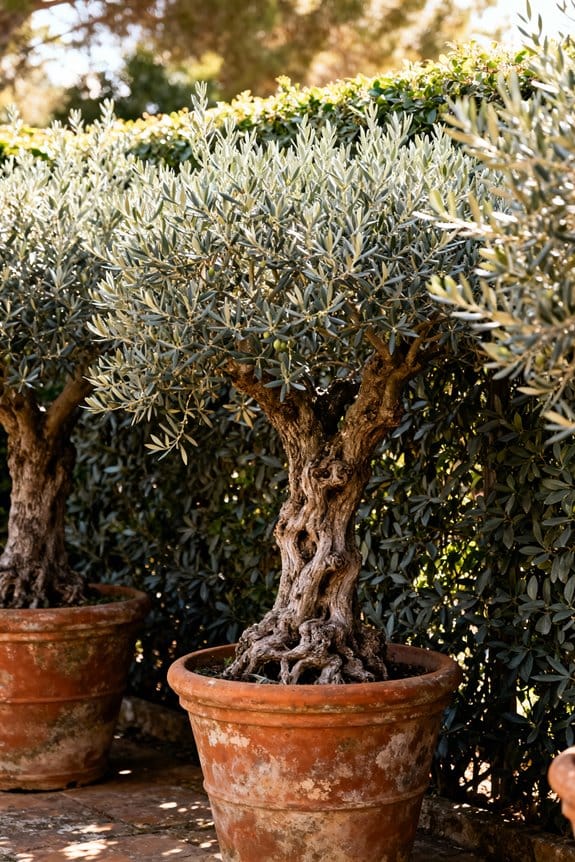
Olive trees offer an evergreen solution that works well for garden privacy. Their dense grey-green leaves grow vertically, creating an effective privacy screening that blocks sight lines year-round. These trees typically reach heights of 15 to 30 feet but require minimal space laterally—about 6 to 10 feet—making them suitable for narrow garden strips. Olive trees are drought-tolerant once established, thriving in temperatures ranging from 60°F to 80°F with well-drained soil. They grow slowly but steadily, which means less frequent pruning is necessary to maintain a clean screen. With modest watering during dry months and annual trimming, olive trees provide a low-maintenance yet attractive natural barrier. This combination of durability, style, and sustainability makes olive trees an excellent choice for those seeking practical privacy screening solutions. It’s also important to consider USDA zones to ensure the selected olive tree variety thrives in your local climate.
Characteristics of Olive Trees Suitable for Screening
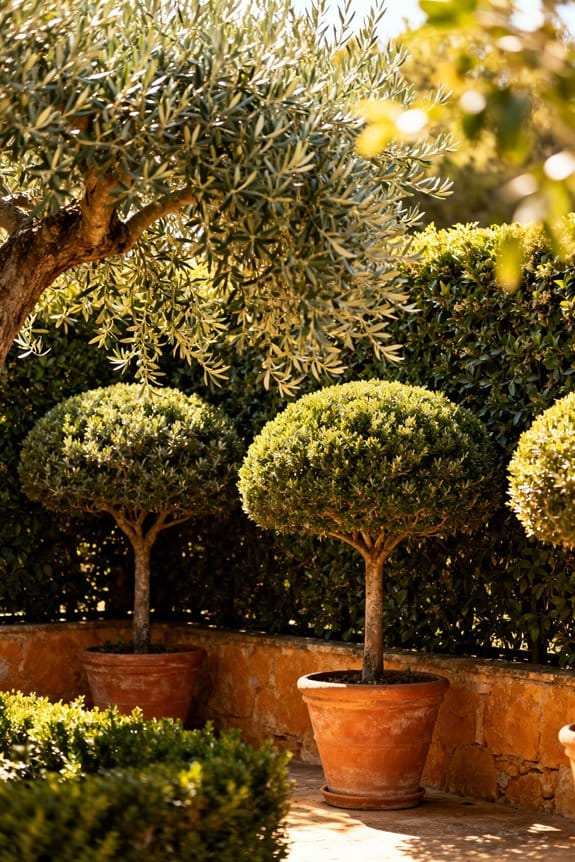
Choosing the right tree for garden privacy means balancing height, width, and maintenance. Olive trees, especially the Wilsonii Olive, grow up to 20 feet tall but stay narrow, perfect for tight spaces. Their dense, grey-green leaves form thick, evergreen screens that block views year-round while adding Mediterranean style. These trees tolerate drought well after establishment and thrive in full sun with temperatures between 60-85°F. Maintenance is low since olives shed leaves slowly, reducing cleanup—usually once or twice annually. Wilsonii Olive requires minimal pruning to maintain shape and density. For best results, plant olives 6-8 feet apart to create a continuous hedge. Their ability to balance form, function, and ease makes Olive trees an excellent choice for effective, attractive garden screening. Additionally, olive trees have low maintenance requirements which make them suitable for gardeners seeking minimal upkeep.
Choosing the Right Olive Tree Variety for Your Space
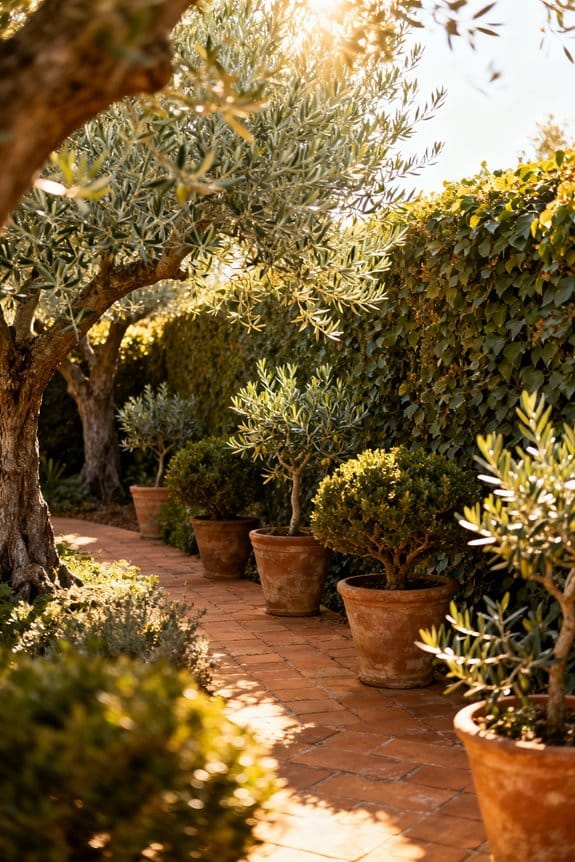
When selecting a tree variety for privacy screening, it’s important to match the growth habits with the available space. Olive tree varieties like the Wilsonii are fruitless, have dense evergreen foliage, and require minimal maintenance, making them excellent for tight spaces. Slow-growing varieties suit smaller gardens while still offering vertical interest up to 12 feet. Consider space requirements carefully; some cultivars can spread 10 feet wide, so allow room for growth and pruning. The grey-green leaves provide year-round aesthetic appeal that complements various landscape styles. Choose varieties that thrive in full sun with well-draining soil to guarantee health and longevity. Regular pruning during late fall or early spring maintains shape and height for effective screening, keeping your privacy barrier both functional and attractive. Additionally, using trees in well-draining soil with a pH of 6 to 8 improves growth and overall plant health.
Recommended Products

[Premium Natural Cedar Wood Privacy Fence] Crafted from genuine FSC-certified wood, each board features unique grain patterns, color variations, and natural knots, delivering an authentic aesthetic unmatched by vinyl privacy fence panels. Enjoy a truly natural privacy screen outdoor experience.

ROOMY FOR 8-10 PERSON TENT: The tent is perfect for 8-10 person outdoor camping. With the size of 13.1ft x 9.1ft x 76.7in(H) (119.2 sq ft). 2 queen air mattresses (6.7ft*5ft/200cm*150cm, thickness suggest below 7.8in) or 8-10 sleeping bags are well fit in the tent. Perfect for family camping or adventures with friends.

Realistic Faux Ivy for Outdoor: Covering unsightly chain-link fences, wooden rails, or concrete walls. Turn dull spaces into a lush vertical garden, perfect for patios, balconies, or backyard makeovers
Optimal Planting Locations for Olive Privacy Screens
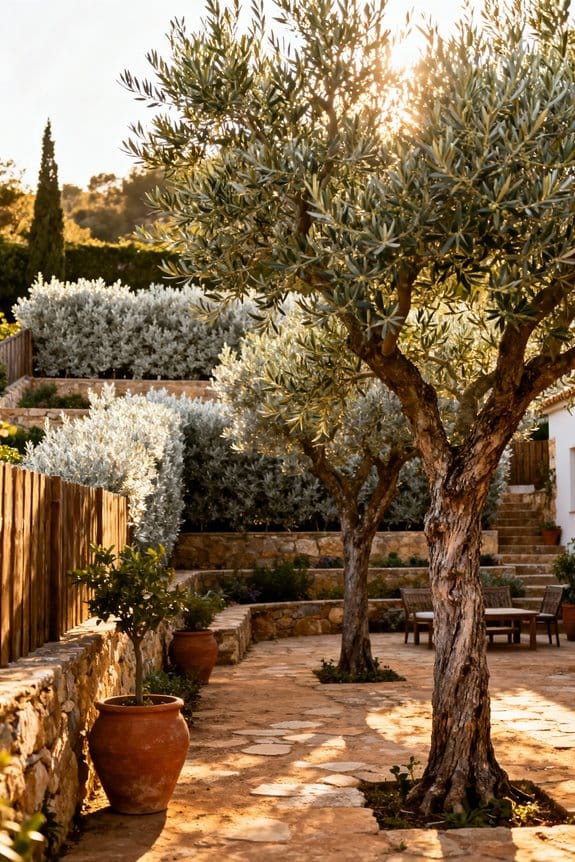
Although olive trees are hardy and drought-tolerant, they perform best in full sun locations to create an effective privacy screen. Planting them in sunny locations along garden boundaries guarantees ideal growth and thick foliage. When choosing spots, consider structural considerations like proximity to walls or pathways, which can enhance visual impact while saving lateral space. Space trees 3 to 5 feet apart to allow their mature canopies to merge seamlessly. It’s important to avoid areas near overhead wires or heavy vehicle traffic to minimize maintenance requirements linked to bird droppings. Ascertain the soil is well-drained and rich in nutrients for healthy roots. These steps help secure a dense, sustainable screen that balances privacy needs with sound structural and maintenance planning. Additionally, selecting artificial olive trees with durability and maintenance benefits can provide a practical, low-maintenance alternative for privacy screening in areas where live tree care is challenging.
Recommended Products

Highly Durable & Weather-Resistant: The leaves are tightly packed, UV-resistant, and weatherproof, ensuring they won't fall out or fade easily
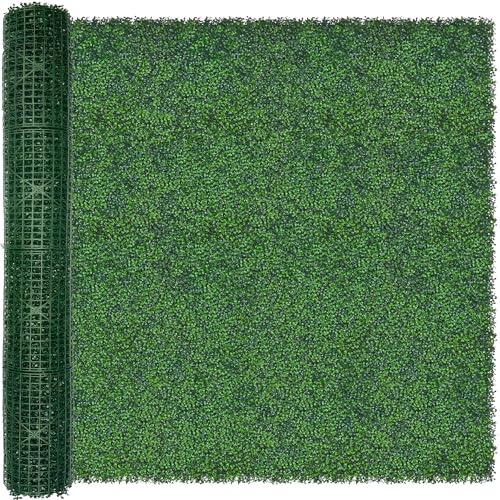
The faux ivy boxwood roll is 6FT X 12FT, which can cover 72 sqft. The height of the faux ivy boxwood leaves is 2 inches, which has a Perfect 3D effect. Each panel has 7200 fake leaves, which are dense and can cover the background 100%.The faux ivy vine leaf panel can be cut to get the size.Give away 50 new cable ties.
How to Maintain and Prune Olive Trees for Effective Screening

Maintaining and pruning olive trees is essential for creating a strong privacy screen. Pruning techniques recommend trimming no more than two-thirds of the canopy in late fall or early spring. Focus on removing dead or crossing branches to improve air circulation and sunlight penetration. For young trees, follow a watering schedule of about three times per week during the first year to establish strong roots; mature trees need less frequent watering. Applying nutrient-rich fertilizer like Moon Dust™ during the growing season encourages dense foliage that enhances privacy. Regular pest management is vital—inspect leaves for any signs of infestation to prevent damage. Consistent maintenance helps olive trees maintain their health and achieve peak height faster, ensuring an effective privacy barrier for your garden. Pairing olive trees with a stable wide base can also prevent tipping and maintain balanced visual appeal in your garden pathways.
Designing a Contemporary Garden With Olive Tree Screening
Because olive trees grow slowly and stay compact, they fit well in contemporary gardens, especially in urban settings where space is tight. Their dense, grey-green foliage creates year-round privacy while contributing to olive tree aesthetics that complement Mediterranean landscaping. Plant olive trees about 3 feet apart to form a tight screen without overcrowding. Incorporate gravel and modern hardscaping elements like concrete slabs or metal edging to enhance the urban garden design. These trees tolerate temperatures between 50°F and 80°F, thriving with minimal watering after establishment. Prune lightly each spring to maintain shape and encourage vertical growth. This approach balances practical screening with stylish, low-maintenance greenery. With careful placement and regular upkeep, olive trees successfully define outdoor spaces in compact, contemporary gardens. Using durable tree stakes and supports can help maintain upright growth and prevent damage, especially in windy urban environments.
Managing Bird Activity Around Olive Trees Near Vehicles
Bird activity around olive trees can become a concern, especially when these trees are planted near parked vehicles. Birds are attracted to the dense canopy and fruits, leading to droppings on cars. Vehicle maintenance considerations become important, as frequent cleaning is needed to prevent paint damage. To manage this, bird deterrents strategies such as installing reflective tape approximately 12 inches long or using noise devices emitting sounds at 60-70 decibels can be effective. Positioning olive trees at least 10 feet away from parking areas helps reduce interaction. Ecology impact awareness is essential; these trees support local bird populations, so deterrents should avoid harm. Monitoring surrounding vegetation and minimizing additional food sources further controls bird presence while maintaining garden balance. Additionally, selecting olive tree varieties that are well-suited for compact gardens can help in designing landscapes that naturally reduce bird congregation near sensitive areas.
Combining Olive Trees With Other Landscaping Elements
Olive trees work well as strong visual barriers, but combining them with other landscaping elements can boost both beauty and privacy. For effective olive tree companions, consider evergreen shrubs spaced 3 to 4 feet apart to create textural contrast. Adding seasonal blooms nearby introduces color variation throughout the year, complementing the olive’s evergreen leaves. Visual layering works well by planting taller, columnar Italian Cypress behind olive trees, spaced 5 feet apart to maximize screening without crowding. Incorporate hardscaping elements like 3-foot-wide gravel pathways or modern seating areas to frame these natural layers. Raised planters measuring about 2 feet high can also hold smaller plants and sculptural features, enhancing design rhythm while maintaining privacy. This mix balances Mediterranean charm with contemporary style, creating a garden both functional and visually engaging. Olive trees also offer low water requirements, making them an eco-friendly choice for efficient garden irrigation.
Recommended Products

✅[UV RATED]: UV-protected to prevent fading and maintain vibrant color when exposed to sunlight, ideal for indoor, natural life outdoor, cypress christmas tree, christmas topiary outdoor, office decor, garden decor, and front porch holiday decor. Safe for those with allergies to real plants.

Farm-Grown Quality: Hand-selected for premium quality, ensuring a healthy and robust plant upon arrival.

SET OF 2 SPIRAL CYPRESS FAUX PLANTS - Featuring dense cypress foliage with vibrant colors and details that look like a live topiary, this faux plant set is perfectly sculpted in a spiral and so lifelike that your neighbors and guests can’t tell it's fake.
Soil and Watering Requirements for Olive Tree Privacy Screens
A well-draining soil rich in organic matter is crucial for establishing a healthy olive tree privacy screen. Ideal soil composition includes sandy or loamy textures that provide good aeration and meet olive trees’ drainage needs. During the first year, a consistent watering schedule of about three times per week is important to help young roots develop deeply. Water should be applied directly to the root zone using deep watering methods to avoid surface moisture pooling. Once established, olive trees tolerate drought and require less frequent irrigation. Soil that retains too much water can cause root rot, so monitor moisture levels carefully. Maintaining these soil and watering requirements guarantees a strong, vibrant privacy screen that thrives in sunny, warm environments where temperatures often reach above 90°F. For added versatility and maintenance ease, consider integrating low-maintenance greenery options such as realistic faux olive trees to complement your garden.
Where to Purchase Quality Pleached Olive Trees Locally
Where can quality pleached olive trees be found locally in southeast London? Several local nursery options offer healthy, well-maintained olive trees ideal for privacy screening. Moon Valley Nurseries is a recommended source, with a variety of olive tree varieties like Wilsonii, which withstand low maintenance and provide dense foliage. When visiting these nurseries, check for specific trunk heights, typically around 1.8 meters, to guarantee effective screening. Inspect the plant health carefully by looking for firm branches, vibrant leaves, and absence of pests or diseases. For added convenience, some online retailers with strong reputations deliver to this area, expanding selection possibilities. Following plant health tips guarantees that trees thrive well after planting. Olive trees also thrive best in well-drained soil, which helps ensure their long-term growth success. These steps help gardeners acquire quality pleached olive trees locally while maintaining good growth conditions.
Frequently Asked Questions
Are Olive Trees Good Privacy Trees?
Like silent sentinels, olive trees serve well as privacy screens due to their evergreen olive tree characteristics, slow growth rate, and low maintenance requirements, making them a practical and elegant choice for consistent, year-round garden seclusion.
What Trees Make the Best Privacy Screens?
The best privacy screen trees balance height, seasonal growth, and maintenance requirements. Evergreens like arborvitae, laurel, and cypress offer year-round coverage, moderate growth, and low upkeep, ensuring effective, long-lasting natural barriers for varied garden sizes.
What Are the Best Screening Olive Trees?
The best screening olive tree varieties, such as Wilsonii, coincidentally thrive with simple planting techniques and minimal maintenance tips. Their evergreen foliage and compact growth make them ideal for elegant, effective privacy screens in diverse garden settings.
Can Olive Trees Be Used as a Hedge?
Olive trees can be used as a hedge, especially certain olive tree varieties like Wilsonii. Proper planting spacing promotes dense growth, while slow growth simplifies hedge maintenance, making them an excellent, low-maintenance option for garden privacy.


