As an Amazon Associate, we earn from qualifying purchases. Some links on this site are affiliate links at no extra cost to you. Our recommendations are based on thorough research and editorial judgment.


Understanding Apical Dominance in Olive Tree Pruning

Apical dominance in olive trees happens because the apical bud at the shoot tip produces auxin, which suppresses side bud growth to favor a central leader. Pruning cuts this auxin supply, usually in late winter when temperatures range from 40-60°F, allowing lateral buds to grow and form a bushier canopy. Shortening shoots by 4-6 inches and thinning branches improves light and airflow, boosting olive yield and health. Understanding these steps leads to better growth management.
Key Takeaways
- Apical buds produce auxin, which suppresses lateral bud growth to maintain a dominant central leader in olive trees.
- Pruning reduces auxin levels by removing apical buds, allowing dormant lateral buds to grow and form new branches.
- Disrupting apical dominance through pruning promotes a bushier olive tree with improved light penetration and airflow.
- Techniques like heading cuts and thinning during dormancy encourage side branching and balanced canopy development.
- Managing apical dominance is essential for healthier trees, increased fruit yield, and preventing branch overcrowding in olives.
Apical Bud Function and Hormonal Influence
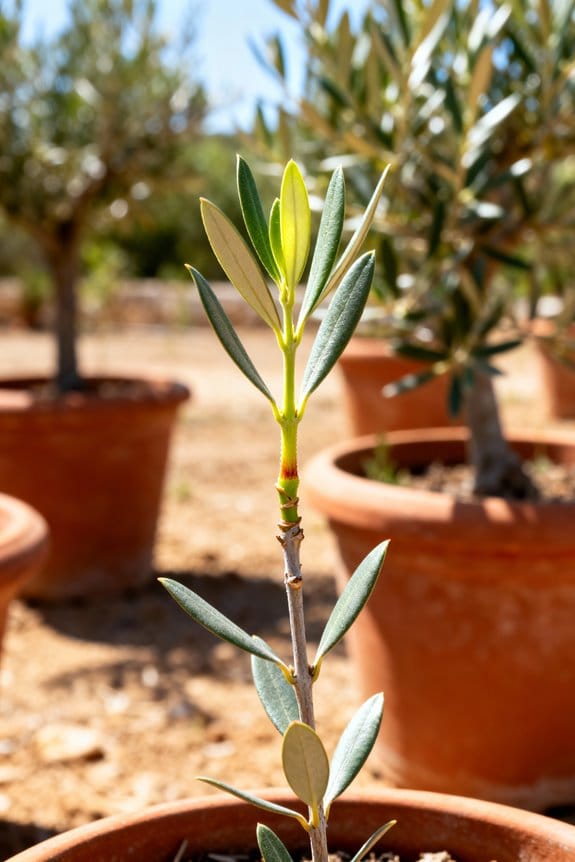
Apical buds are small but powerful growth points found at the tips of olive shoots, usually less than 5 millimeters long. These buds produce auxin, a hormone crucial for new growth and elongation. Auxin concentration is highest at the apical bud, which suppresses the growth of lateral buds lower on the shoots. This suppression maintains dominance, encouraging energy flow toward the primary leader of olive trees and shaping their branches. During pruning, cutting off the apical bud disrupts auxin production, allowing lateral buds to break dormancy and develop new shoots. Proper pruning techniques take advantage of this process to balance dominance and stimulate a desirable branch structure. Understanding how apical buds control growth through auxin helps manage the olive tree’s form and productivity effectively. Additionally, maintaining a balanced tree structure is critical for optimizing branch development and symmetry, which can be enhanced by pairing and arranging olive trees thoughtfully in your garden.
How Apical Dominance Shapes Olive Tree Growth

Growth regulation plays a key role in shaping olive tree development. Apical dominance is maintained by auxin, a hormone produced in the apical buds. This hormone suppresses the growth of lateral buds, keeping the main shoot dominant and promoting a strong central leader. When pruning cuts remove the apical bud, auxin levels drop, allowing lateral buds to grow and resulting in bushier growth. Olive trees respond differently depending on the variety, with some showing stronger apical dominance than others. Strategic pruning interrupts this dominance to encourage side branching, supporting better light penetration and fruit production. Maintaining a central leader prevents uneven growth. Understanding how apical dominance shapes growth helps optimize pruning for healthier olive trees with balanced, productive structures. Additionally, ensuring your olive tree is planted in an appropriately sized pot with proper aeration and drainage can further promote healthy growth after pruning.
Impact of Pruning on Apical Dominance

When the top bud of an olive tree is pruned, it interrupts the plant’s natural hormone balance. This disruption reduces apical dominance, allowing lateral buds to break dormancy and grow into new shoots and branches. Pruning the terminal shoots encourages these lateral buds to develop, producing a bushier structure rather than a single dominant leader. The strategic removal of apical shoots helps create a balanced canopy, improving light penetration and airflow, both critical for fruit development. Olive trees respond well to pruning by sprouting new growth from the trunk and older branches. This resilience means that careful pruning not only controls apical dominance but also promotes healthier growth and higher fruit yield. Understanding this impact helps growers plan pruning for effective structure and productive harvests. Pruning during dormancy when temperatures are between 40-60°F maximizes benefits while minimizing tree stress, as recommended for optimal pruning timing.
Techniques to Manage Apical Dominance for Optimal Growth

Controlling the main leader of an olive tree is a practical starting point for managing its growth pattern. Pruning the primary leader during the late winter growing season disrupts strong apical dominance, which allows new lateral buds to develop. These new buds stimulate shoot growth, promoting a fuller canopy that benefits fruit trees. Employing thinning cuts removes entire branches at their origin to enhance light and air flow, while still maintaining apical dominance in select areas. Annual pruning should include heading cuts to shorten shoots by 4-6 inches, which encourages side branch formation. Regular pinching of young shoots during spring further stimulates lateral bud activation. These combined techniques balance the tree’s structure and optimize growth, leading to improved olive yield and tree health throughout the growing season. Additionally, supporting pruning strategies with nutrient-rich fertilizers helps sustain vigorous shoot development and stronger fruit production.
Benefits of Modifying Apical Dominance in Olive Trees

Although olive trees naturally develop a dominant main leader, modifying apical dominance through pruning can create significant benefits. When the apical bud is cut, lateral buds begin growing vigorously, producing new shoots and side shoots that boost fruiting potential. Strategic heavy pruning redirects the tree’s energy from the root system into encouraging these lateral buds, which results in a bushier, well-balanced canopy. This approach improves light penetration and airflow, reducing disease risk and enhancing flower bud development by allowing more side shoots to mature. Managing apical dominance promotes stronger structural integrity, preventing overcrowding among branches. Overall, adjusting apical dominance is essential for maximizing olive tree productivity and health, especially in growing environments where sunlight and airflow contribute directly to fruit quality and yield. Using an anti-transpirant can further support this process by reducing moisture loss and protecting the foliage during periods of heat and drought, which helps maintain vigorous growth and fruit production in pruned trees. This is particularly important when managing moisture loss in olive trees under stress.
Timing and Care for Effective Pruning Outcomes
Pruning olive trees during the correct season guarantees healthier growth and better fruit production. The ideal timing is late February to March during spring, just after the tree’s vegetative rest. This avoids frost damage and encourages vigorous growth from lateral buds below the main branch. Avoid heavy pruning in summer, as it may slow growth and cause sunburned bark. When you prune, remove no more than 30% of the foliage to maintain a balance between roots and shoots. Light summer pruning around mid-August can help preserve flowering branches, increasing productivity. After pruning, provide careful watering and monitor the tree’s response closely to ascertain energy redirects toward desired growth areas. Proper timing and care directly influence the olive tree’s health and fruit yield. Additionally, annual pruning in late winter helps improve airflow and shape, which is essential for overall tree vitality.
Frequently Asked Questions
Can Pruning Break Apical Dominance?
Pruning techniques effectively break apical dominance effects by removing terminal buds, promoting lateral branching and enhancing tree vigor. Seasonal pruning with appropriate pruning tools regulates growth, improving olive tree management and optimizing fruit production.
When Not to Prune Olive Trees?
Like avoiding a sudden storm, the best timing for olive tree pruning excludes summer and drought periods to protect tree health. Pruning techniques must consider growth patterns, root development, seasonal changes, climate impact, fruit production, and pest control.
How Aggressively Can You Prune Olive Trees?
Olive trees tolerate aggressive pruning, removing up to 80% foliage, but moderate cuts support plant health and growth patterns. Proper seasonal timing, pruning techniques, and care optimize tree development, fruit production, root system stability, and biodiversity benefits.
What Is the Correct Way to Prune an Olive Tree?
The correct way to prune olive trees involves using sharp pruning tools during spring or fall, considering tree health and growth patterns. Techniques like thinning cuts enhance fruit production, while timing, seasonal impacts, and pest management optimize overall tree importance.


