As an Amazon Associate, we earn from qualifying purchases. Some links on this site are affiliate links at no extra cost to you. Our recommendations are based on thorough research and editorial judgment.


Shaping Young Olive Trees for Optimal Structure

Shaping young olive trees starts with choosing 3 to 5 scaffold branches spaced evenly about 24 inches from the soil. Prune annually in late winter when temperatures stay above 40°F to avoid stress. Remove inward-growing and crossing branches to open the canopy for light and airflow. Shorten branches by 6 to 12 inches, cutting just above lateral buds. This promotes balanced growth and future fruiting. Following these steps guarantees strong structure and healthier trees. More tips on timing and tools help refine this approach.
Key Takeaways
- Form an open vase shape by selecting 3-5 scaffold branches evenly spaced about 24 inches from soil for balanced structure.
- Prune annually in late winter above 40°F to promote lateral branch growth and maintain a dominant central trunk.
- Remove inward-growing or crossing branches to enhance light penetration and air circulation within the canopy.
- Shorten branches by 6-12 inches, limiting crown removal to 20-30%, to stimulate new growth and maintain canopy balance.
- Use sharp, clean tools with protective gear and disinfect between cuts to prevent damage and disease spread.
Determining the Desired Shape of Young Olive Trees
How does one decide the best shape for a young olive tree? Pruning olive trees early is essential to establish an open vase formation, which promotes light penetration and air circulation. This shape helps reduce disease and supports healthy tree development. First, select three to five scaffold branches spaced evenly around the trunk about 24 inches from the soil in fertile soils with good drainage. Remove any inward-growing or crossing branches. Conduct formative pruning annually during late winter when temperatures stay above 40°F to avoid stress. This pruning encourages a balanced branch distribution, which allows sunlight to reach all parts of the tree, improving fruit production. Maintaining open structure also improves air flow between branches, limiting fungal risks. Following these steps guarantees young olive trees develop a strong framework for long-term growth and productivity. Additionally, ensuring the soil is well-draining and slightly alkaline supports the tree’s healthy development and fruit-bearing capacity, as detailed in soil quality guidelines.
Understanding Olive Tree Growth Patterns
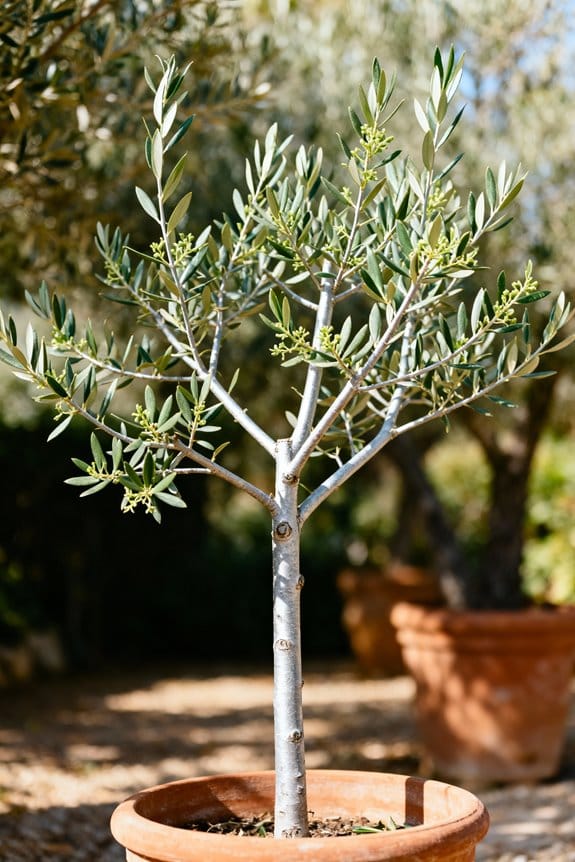
A clear grasp of olive tree growth patterns is essential for effective care and pruning. Young olive trees first grow vertically, focusing on height. This means pruning is necessary to encourage lateral branch growth. Those side branches provide support for future fruit production, which mainly occurs on one-year-old wood. It’s important to prune shoots originating from lateral buds to shape a strong, well-balanced framework. Maintaining a dominant central trunk while promoting a wide-spreading canopy enhances tree structure. Proper growth management also involves balancing vigor and light penetration by selectively thinning branches. This allows sunlight to reach inner parts, supporting fruit production and overall health. Careful observation and timely pruning during the first two years help achieve an ideal shape for productive and resilient olive trees. Additionally, pruning in late winter and limiting cuts to 10-15% of the canopy annually helps maintain good airflow and light penetration, which is essential for healthy growth.
Techniques for Shortening Olive Tree Branches
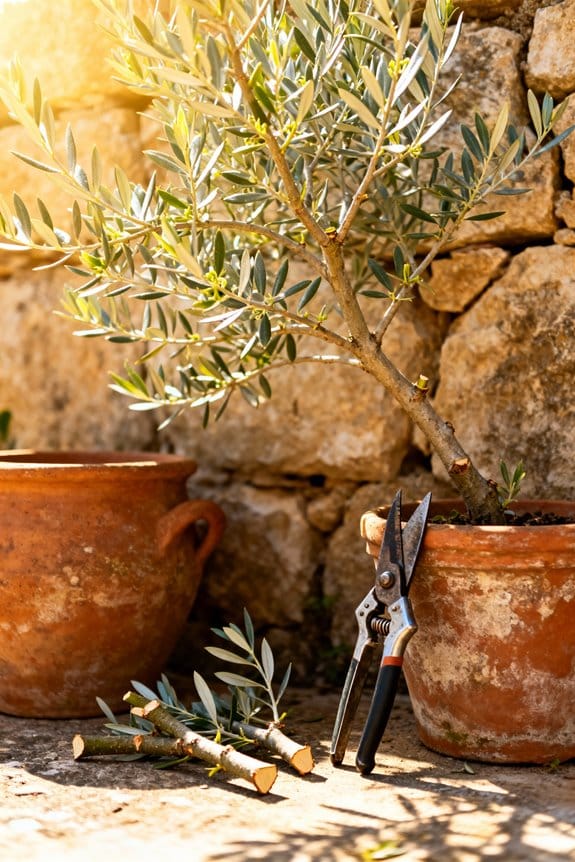
Shortening olive tree branches promotes lateral shoot growth and shapes a strong, balanced canopy. Use clean, sharp pruning shears to make precise cuts just above a lateral bud or node, which encourages new growth in the right direction. Avoid removing more than 20-30% of the crown at once to keep the tree healthy. This method enhances light penetration and air circulation within the canopy, reducing stress and disease risk. Regularly shortening branches during the growing season helps maintain structure and lessens intensive pruning later. Make clean cuts to prevent bark damage and speed healing. When pruning, choose branches that crowd the center or grow outward awkwardly. This careful technique leads to a well-formed olive tree that supports ideal growth throughout its life cycle. For the best results, it is important to prune during the optimal temperature range of 40-60°F to minimize tree stress and sap loss.
Encouraging Back-Budding and Lateral Growth
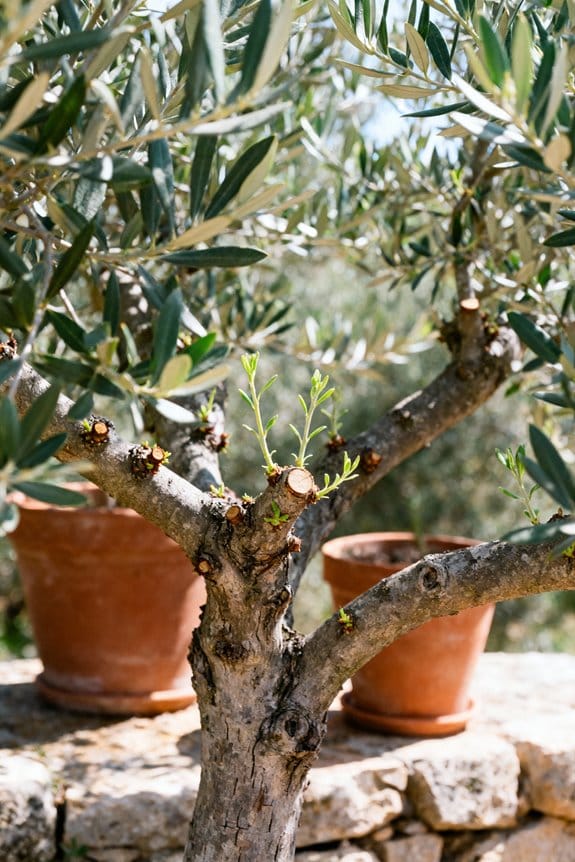
Encouraging back-budding begins by pruning major shoots, which triggers growth from the nodes left behind. To prune olive trees effectively, cut branches about 1/4 inch above a healthy bud, leaving the collar intact to prevent rot. Removing dead or damaged wood first is essential for healthy back-budding, as it lowers disease risk. Cutting older branches completely redirects the tree’s energy to new growth areas, boosting vigor. Regularly remove non-essential shoots to focus energy on strong lateral growth, targeting branches ¼ to ½ inch thick. Perform pruning 2–3 weeks before flowering to maximize response. Use sharp, sanitized tools to guarantee clean cuts at a 45-degree angle. These steps support a balanced canopy structure and set the foundation for productive, well-shaped olive trees. Additionally, applying an NPK-balanced fertilizer during the growing season can enhance the vigor and health of new growth.
Seasonal Rhythm in Olive Tree Pruning
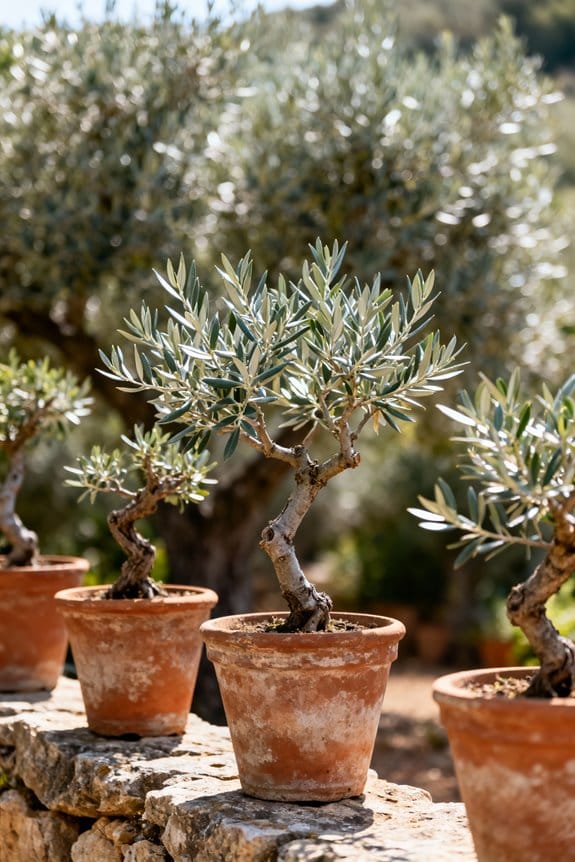
When pruning young olive trees, timing plays an essential role in their health and productivity. Pruning takes place mainly during the vegetative rest period from late fall to late winter, with the ideal window between March and April. During this time, careful cuts promote healthy growth while preserving the tree’s structure for maximum light penetration and air circulation. Seasonal pruning practices include additional green pruning in summer, which involves removing excess shoots and suckers to refine the shape formed earlier. It is important not to over-prune; removing too much growth at once can stress the tree. Observing natural growth patterns helps determine the best moments to prune, improving recovery and stimulating new shoots. Following this seasonal rhythm supports strong, productive olive trees. Additionally, selecting trees with low upkeep needs can complement pruning efforts by reducing overall maintenance complexity.
Tools and Safety for Pruning Young Olive Trees
Three core tools form the foundation for pruning young olive trees: pruning shears, hand saws, and chainsaws. Pruning shears handle small cuts up to ¾ inch wide, while hand saws manage branches between 1 and 3 inches. Chainsaws are reserved for heavy-duty pruning above 3 inches. Always keep these tools sharp and clean to avoid damaging the tree, as dull blades tear rather than cut. Safety measures include wearing protective gloves and safety glasses to prevent injury from flying debris. Disinfect tools using a 70% isopropyl alcohol solution before and after pruning to reduce disease risk. Proper pruning supports production by encouraging healthy growth. Beginning at the tree top and working downward guarantees a structured approach. Careful handling and safety awareness protect both the grower and the tree during pruning tasks. Selecting pruning shears with an ergonomic design can significantly reduce hand fatigue during extended pruning sessions.
Avoiding Common Pruning Mistakes
Many pruning mistakes come from removing too much growth at once, which can stress young olive trees. Proper olive tree pruning means removing only 20-30% of the crown gradually. Use sharp, appropriate tools to avoid damaging the bark, which protects the tree from infection. Avoid pruning in mid-winter or during active fruit production because environmental conditions then can cause excessive shock. Also, be mindful of excess water after pruning; wet soil combined with open wounds encourages disease. Assess growth carefully before pruning to prevent structural weaknesses. Beginners should consult experts or observe experienced gardeners to learn proper techniques. Following these steps guarantees a healthy framework for the tree, supporting strong growth while minimizing stress and damage during its critical early years. Additionally, using a potting mix specifically formulated for olive trees can help maintain optimal moisture and nutrient balance after pruning, promoting faster recovery.
Redirection of Energy After Pruning
Pruning actively reshapes energy flows within young olive trees to encourage healthier growth. When major auxin-producing areas are removed, the redirection of energy promotes lateral shoots on remaining branches. For example, shortening a branch by 6 to 12 inches typically stimulates one or two new branches at the nodes, improving structural balance. Complete removal of certain branches triggers back-budding lower on the trunk, redistributing growth hormones effectively. Pruning and training systems focus on selectively cutting non-essential new shoots every 6 to 8 weeks during the growing season. This process channels the tree’s resources towards desired, vigorous shoots. The result supports the trees’ health by fostering a strong framework and enhanced fruiting capacity. It’s a deliberate method to guide energy, ensuring young olives develop a balanced and durable canopy. For indoor olive trees, maintaining this structure is easier since they require no sunlight or watering and need only light dusting for upkeep.
Maintenance Tips for a Balanced Canopy
When aiming for a balanced canopy in young olive trees, establishing a strong framework is crucial. Maintenance tips begin with structural pruning, focusing on a central leader and evenly spaced scaffold branches to improve light penetration and air circulation. Regularly remove downward-growing and crossing branches to reduce competition and prevent pest issues. Keep tree height between 6 to 8 feet for easy harvesting and care. During initial pruning, remove about 20-30% of growth to avoid stressing the tree, allowing gradual canopy development. Vigilance for suckers and vigorous growth, especially near the base, is important as these can distort the shape and reduce productivity. Consistent attention using these maintenance tips guarantees the canopy remains healthy and well-balanced over time. Additionally, promoting airflow through regular pruning helps reduce the risk of fungal diseases and pest infestations.
Frequently Asked Questions
How to Shape a Young Olive Tree?
Tree shaping techniques for young olive care involve selecting a central leader, evenly spaced scaffold branches, and using pruning tools to remove crossing branches. Pruning should balance canopy density, promoting healthy growth and structural integrity.
When Can I Shape My Olive Tree?
The best time to shape an olive tree is during its vegetative rest period, typically late fall to late winter. The ideal age for initial shaping is around one year, considering seasonal considerations to promote healthy growth and structure.
What Is the Best Shape for an Olive Tree?
The ideal tree shape for olive trees is the open vase, improving light penetration by up to 30%. This form aligns with natural growth patterns, fostering structural balance and healthier, more productive trees through optimized branch spacing and canopy development.
How to Prune a 2 Year Old Olive Tree?
Pruning techniques for a 2-year-old olive tree emphasize removing dead branches, fostering a central leader, and thinning crowded limbs. Seasonal considerations include pruning during dormant periods to support olive tree health and minimize stress.


