As an Amazon Associate, we earn from qualifying purchases. Some links on this site are affiliate links at no extra cost to you. Our recommendations are based on thorough research and editorial judgment.


How Olive Trees Utilize Nitrogen, Phosphorus, and Potassium

Olive trees use nitrogen mainly for leaf growth and fruit set, needing 800 to 1000 grams yearly with leaf levels between 1.5% and 2.0%. Phosphorus supports root development and flower quality, recommended at 0.1% to 0.3%, applied at about one-third to one-fifth of nitrogen amounts. Potassium impacts fruit size and taste, requiring 0.5 to 1.5 kg per tree in midsummer. Applying nutrients through fertigation during growth guarantees balanced uptake. Proper timing and monitoring keep trees healthy and productive. Further details explain how to optimize these nutrients effectively.
Key Takeaways
- Nitrogen supports flower differentiation, fruit set, and is needed in 800-1000g per mature olive tree annually.
- Phosphorus promotes root development, nutrient absorption, and improves flower formation and fruit quality.
- Potassium enhances fruit size, color, taste, and increases yield, with optimal leaf levels around 0.35 mol·kg.
- Balanced nutrient supply throughout the growing season ensures healthy roots and efficient nutrient uptake.
- Fertigation and timely nutrient applications optimize absorption and prevent deficiencies or excesses in olive trees.
The Role of Nitrogen in Olive Tree Growth
Nitrogen plays a critical role in olive tree growth and productivity. It supports flower differentiation and fruit set, which are essential for good yields. Mature trees typically require 800 to 1000 grams of nitrogen annually. This amount varies with soil conditions and tree age, so leaf analysis is crucial to adjust fertilization accurately. Ideal leaf nitrogen levels range from 1.5% to 2.0%. Applying too much nitrogen can boost leaf growth but decrease fruit production and oil quality. Nitrogen should be supplied carefully, often through fertigation, which allows precise nutrient delivery during the growing season. Foliar nitrogen samples are most reliable one week after fertilization to avoid misleading results. Potassium and soil nutrient balance also influence nitrogen uptake and overall tree health. Using organic fertilizers can enhance soil health and improve nutrient uptake efficiency when supplying nitrogen.
Phosphorus Functions and Benefits for Olive Trees
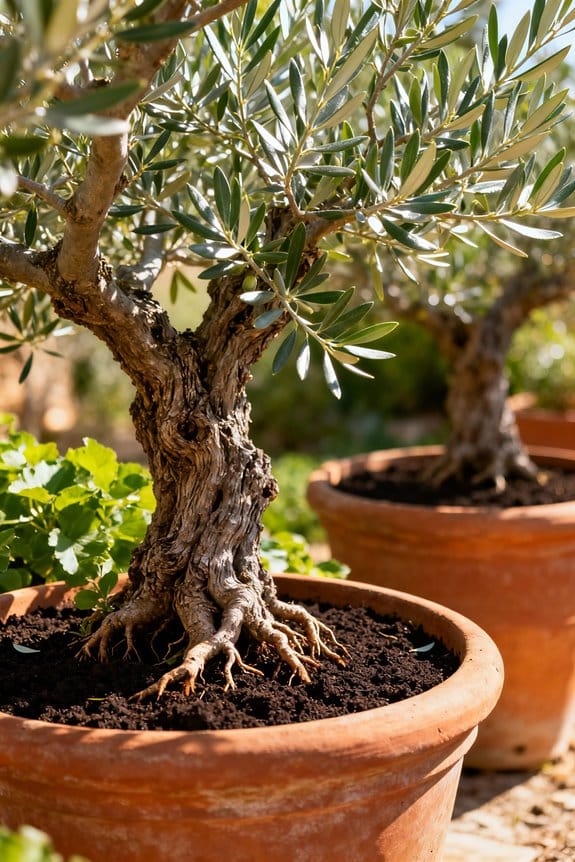
Phosphorus is a key nutrient that supports several essential functions in olive trees. It drives root development, improving water and nutrient absorption, which is critical for tree vitality. In olive trees, adequate phosphorus (P) levels between 0.1-0.3% promote better flower formation and enhance fruit quality. This nutrient also facilitates energy transfer within the plant, fueling photosynthesis and respiration processes required for growth. Deficiency symptoms include stunted growth, small leaves, and reddish-purple discoloration, although true phosphorus deficiency is rare. Often, these symptoms arise from poor soil management rather than low phosphorus itself. Olive growers should guarantee proper drainage and monitor phosphorus levels to avoid issues. Maintaining balanced phosphorus aids in keeping olive trees healthy and productive throughout the growing season. Using fertilizers with a balanced NPK ratio tailored to olive trees ensures that phosphorus is effectively supplemented along with nitrogen and potassium.
Importance of Potassium for Fruit Quality and Yield
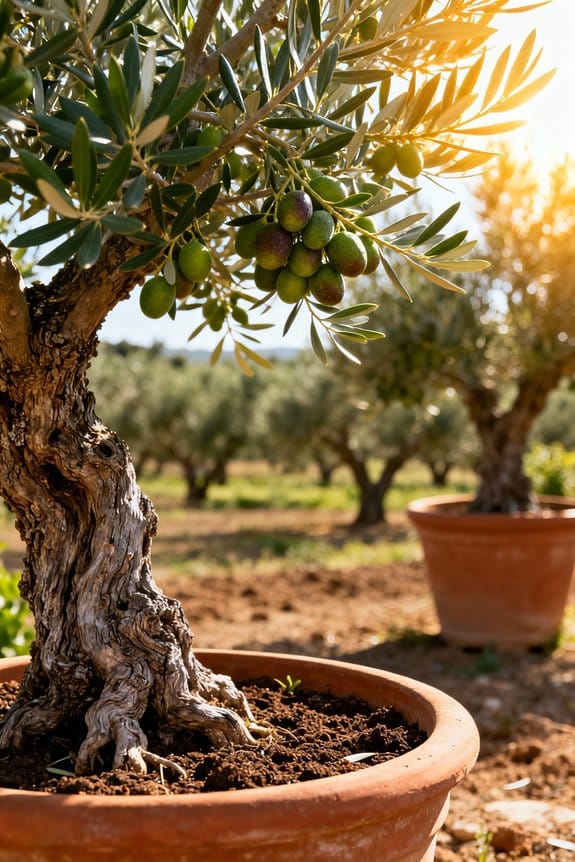
Alongside phosphorus, potassium plays a significant role in shaping the quality and yield of olive fruit. Potassium influences fruit set, size, color, and taste, all critical for commercial olive production. Olive trees with leaf potassium levels around 0.35 mol·kg tend to produce more fruit and better overall quality. In irrigated olive groves, applying 0.5 to 1.5 kg of potassium per tree between July and August supports ideal fruit growth. Regular soil analysis guides potassium fertilizer application, whether synthetic or organic fertilizers, to avoid deficiencies. Potassium-deficient trees often show reduced fruit set and lower yields, weakening oil quality as well. Managing potassium carefully guarantees healthier fruit development and sustainable productivity in olive orchards. Proper spacing and balanced nutrient management have been shown to enhance fruit quality and yield in olive trees.
Signs and Symptoms of Nutrient Deficiencies in Olive Trees
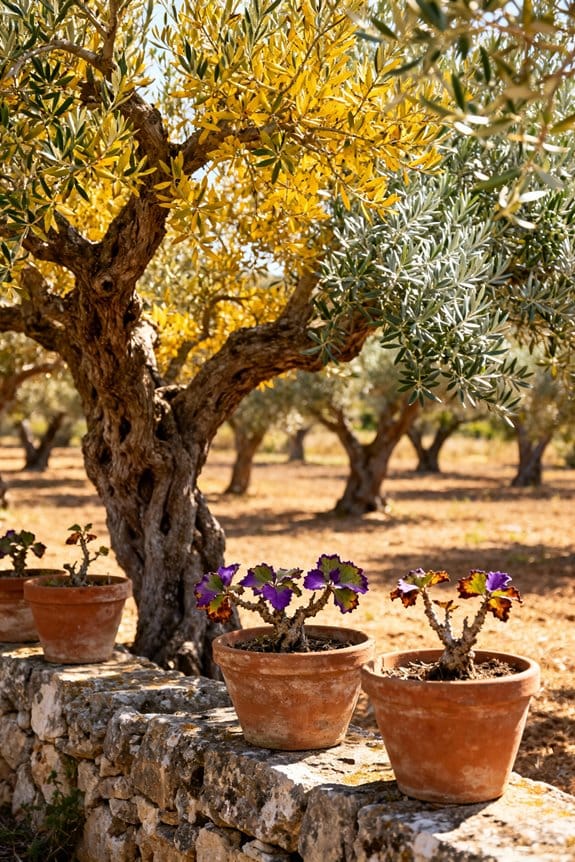
When olive trees lack essential nutrients, they show specific physical signs that help identify the problem. Nitrogen (N) deficiency causes yellowish-green leaves and stunted growth; leaf N levels typically range from 1.5% to 2.0% when healthy. Phosphorus (P) deficiency leads to reddish-purple leaves and poor root development; ideal leaf phosphorus should be between 0.1% and 0.3%. Potassium (K) deficiency reveals itself through yellow leaf edges and tips, along with lower fruit yield; leaf potassium levels should exceed 0.8%. Visual symptoms often appear after critical growth stages, so regular leaf and soil analyses are necessary to track nutrient levels accurately. Monitoring these signs and maintaining recommended nutrient concentrations help avoid deficiencies that compromise olive tree health and productivity. Additionally, ensuring proper soil conditions such as well-drained sandy or loamy soil with a slightly alkaline to neutral pH supports optimal nutrient uptake in olive trees.
Recommended Products

THE ULTIMATE ANTIOXIDANT - Carbon 60 helps lift oxidative burden at the cellular level, which is the main cause of aging and cellular damage. C60 supports overall wellness and healthy aging over time

OUR CARBON 60 OLIVE OIL IS HELD TO THE HIGHEST STANDARDS It's tested for purity and quality. Like our C60 powder, we use lab tested high Polyphenol Extra Virgin Olive Only. Using the best ingredients means using only extra virgin olive oil

Methods of Applying Nitrogen, Phosphorus, and Potassium
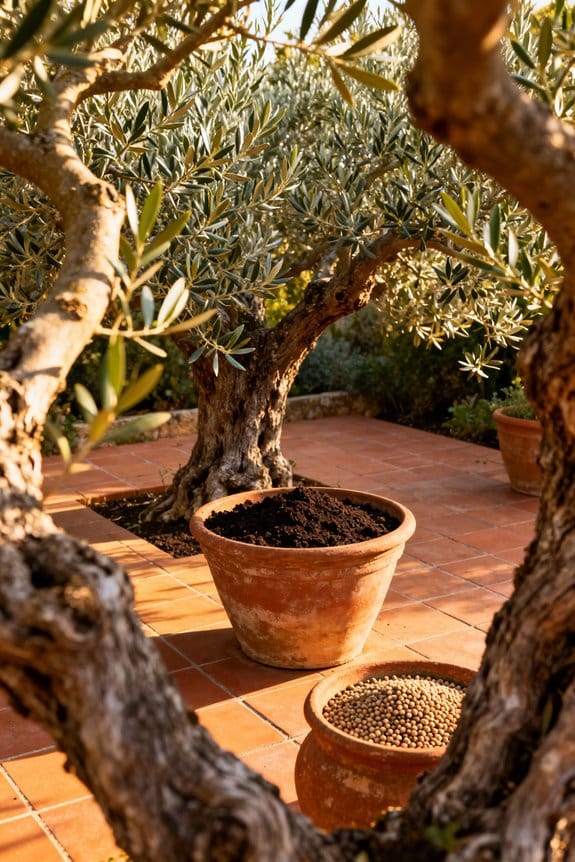
Although nitrogen, phosphorus, and potassium are all essential for olive trees, the methods to apply each nutrient vary. Nitrogen (N) is often applied through fertigation or surface applications. For example, ammonium sulfate at 1-3 kg per tree is effective post-fruit set. Phosphorus (P) should be limited to about one-third to one-fifth of the nitrogen amount to avoid interfering with nutrient absorption. Potassium (K) is critical from July to August, with 0.5-1.5 kg per tree, preferably using potassium sulfate in potassium-deficient soils. Soil type and leaf analysis guide these applications. In established orchards, regular testing guarantees each tree receives tailored fertilization. This approach prevents overuse and supports healthy growth, improving fruit yield and tree importance through precise nutrient management. Many organic fertilizers, such as those containing balanced nutrition, can help optimize these nutrient applications sustainably.
Recommended Products

COMPLETE PALM TREE FOOD: Lutz Palm Tree Potassium Spikes offer a balanced tree fertilizer spike formula tailored for palms and ferns. With essential nutrients like potash (20%), magnesium (7%), sulfur (20%), and nitrogen (6%), these plant food spikes combat common deficiencies and promote lush growth in your garden, making them an ideal choice for enriching your tree spikes fertilizer routine.

CONCENTRATED POTASSIUM SOURCE FOR PLANTS: RAW Potassium delivers 50% water-soluble potash (K₂O), formulated as a high potassium to provide a readily available potassium source for plant nutrition programs during key growth stages.

Potassium Fertilizer
Optimizing Nutrient Balance for Olive Trees
Balancing nitrogen, phosphorus, and potassium properly promotes healthy olive tree growth and better fruit production. Leaf analysis is key to monitoring nutrient levels, aiming for nitrogen between 1.5% and 2.0%, phosphorus from 0.1% to 0.3%, and potassium above 0.8%. Young olive trees need less nitrogen, starting at 100-200 grams yearly, increasing to 800-1000 grams for mature trees. Fertigation helps improve nutrient absorption by delivering these elements efficiently during critical growth phases. Maintaining an NPK ratio near 1:1:1 supports ideal growth, ensuring root development, blooming, and quality fruit. Adjustments should be based on leaf and soil tests to avoid deficiencies or excesses. Proper nutrient balance helps olive trees remain productive and healthy throughout their lifespan. Additionally, using organic mulches can aid nutrient retention and maintain soil health, supporting overall tree vigor.
Recommended Products

COMPLETE PALM TREE FOOD: Lutz Palm Tree Magnesium Spikes offer a balanced tree fertilizer spike formula tailored for palms and ferns. With essential nutrients like magnesium (12%), sulfur (20%), and nitrogen (4%), these plant food spikes combat common deficiencies and promote lush growth in your garden, making them an ideal choice for enriching your tree spikes fertilizer routine.

Package contains 160 tree and shrub fertilizer spikes and are produced to avoid wasteful runoff, mess, hazards and smells

Finally Available On Amazon! You Asked And We Listened, So The Most Popular Fertilizer For Palms Is Now On Amazon.
Timing Fertilizer Applications for Maximum Effectiveness
Why is timing fertilizer applications vital for olive trees? Proper timing guarantees nutrients like nitrogen and potassium are available during important growth stages. Nitrogen fertilization is best after harvest in late summer or early fall, supporting tree health while avoiding frost damage. Young trees benefit from nitrogen spread throughout the growing season, but mature trees receive most of it in bulk during winter. Potassium is essential from July to August, aligning with fruit growth, and should be applied at 0.5 to 1.5 kg per tree. Phosphorus is usually unnecessary for young trees but can be applied in early spring in strips or rings near the drip line. Watering should accompany these schedules to improve nutrient absorption, especially during dry spells, enhancing fertilization effectiveness overall. Additionally, timing nutrient applications to coincide with dormant periods optimizes the tree’s nutrient uptake and reduces stress.
Recommended Products

Supports Healthy Growth & Roots – Tree food helps promote deep root systems, strong structure, and steady growth.

Made for Evergreen Trees – Formulated to support healthy growth in evergreen and conifer trees.

Made for Arborvitae Trees – Formulated to support healthy growth in arborvitae and evergreen hedges.
Monitoring and Adjusting Nutrient Levels in Olive Cultivation
Maintaining the proper nutrient balance in olive trees requires ongoing attention beyond initial fertilizer application. Regular soil testing and leaf analysis between June and August guarantee nitrogen, phosphorus, and potassium levels remain ideal. Leaf nitrogen should stay between 1.5% and 2.0% for best results. Visual checks can be misleading, so laboratory data informs nutrient application decisions. Olive growers aim for a balanced NPK ratio near 1:1:1 to support tree health and fruit production. Excess nitrogen causes excessive growth but reduces yields. Fertigation systems provide precise nutrient dosing throughout the season based on these measurements. Adjustments follow analytic results to avoid deficiencies or excesses. This method guarantees olive trees receive necessary nutrients efficiently, maintaining steady growth and high-quality fruit each year. For optimal nutrient uptake, it is crucial to maintain good aeration and moderate moisture in the root zone, as these conditions prevent root rot and promote healthy root development.
Frequently Asked Questions
Do Olive Trees Need Phosphorus?
Olive trees need phosphorus for ideal growth, especially to prevent phosphorus deficiency and support olive tree growth and bloom quality. Soil testing guarantees phosphorus availability, while phosphorus sources like organic fertilizers enhance phosphorus uptake and maintain nutrient balance.
How Do Plants Use Nitrogen, Phosphorus, and Potassium?
Like a symphony, nitrogen tunes leaf development, phosphorus anchors the root system, and potassium colors fruit maturity. Together, they enhance photosynthesis, nutrient uptake, and soil health—key elements in growth stages shaped by organic matter and fertilizer impact in agricultural practices.
Do Olive Trees Need Potassium?
Olive trees need potassium to enhance fruit quality, promote olive growth, and support plant growth. Potassium benefits nutrient uptake, water retention, and soil health. Potassium deficiency impairs growth, but organic fertilizers can improve potassium availability effectively.
Is Nitrogen Good for Olive Trees?
Nitrogen benefits olive trees by enhancing leaf development, chlorophyll production, and root systems, essential for growth enhancement and fruit quality. Proper olive fertilization maintains nutrient balance and soil health, optimizing overall tree vigor and productivity.


