As an Amazon Associate, we earn from qualifying purchases. Some links on this site are affiliate links at no extra cost to you. Our recommendations are based on thorough research and editorial judgment.


Growing Olive Trees in Mediterranean Climate Gardens

Growing olive trees in Mediterranean gardens starts with selecting varieties like ‘Arbequina’ or cold-tolerant ‘Leccino’. Plant trees in full sun with well-drained, slightly alkaline soil (pH 6.0–8.0), spacing them 15–20 feet apart. Dig holes twice the root ball width and water deeply once or twice a month. Prune in fall to improve growth and control pests like olive flies with traps and bait sprays. Proper care guarantees healthy trees and abundant harvests. Detailed guidance follows.
Key Takeaways
- Select olive varieties like ‘Leccino’ or ‘Arbequina’ suited for Mediterranean climates and temperature ranges.
- Plant olive trees in sunny, well-drained soil with pH between 6.0 and 8.0, avoiding low moisture-prone areas.
- Water deeply once or twice monthly during hot seasons, allowing soil to dry between watering to prevent root rot.
- Prune olive trees in fall to improve structure, encourage growth, and enhance fruit production.
- Use integrated pest management and monitor for olive flies with yellow sticky traps every 10 meters.
Choosing the Right Olive Tree Varieties for Mediterranean Gardens
When selecting olive tree varieties for a Mediterranean garden, the choice greatly affects both the landscape and fruit yield. Popular olive varieties like ‘Arbequina’ offer a weeping habit and adapt well to various Mediterranean plants, making them versatile choices. ‘Leccino’ is resilient, tolerating a range of temperatures between 15°F and 95°F, which suits many garden conditions. ‘Picual’ requires regular pruning but produces abundant fruit, suitable for productive gardens. For vertical interest, ‘Cipressino’ grows tall and upright, mimicking Italian cypress. The compact, weeping form of ‘Pendolino’ demands cross-pollination because it is self-sterile, so pairing it with another variety is necessary for fruit. Cold tolerance must be considered, as potted olive trees tolerate freezing temperatures less than those planted in the ground, freezing below 20°F may cause damage. The Arbequina olive tree is especially suitable for smaller spaces and containers due to its compact size and self-fertile nature.
Preparing the Soil and Site Selection for Olive Trees

Site selection is critical for healthy olive trees and good fruit yields. Choose a sunny, sheltered spot receiving 6 to 8 hours of direct sunlight daily. Avoid low areas where water pools, since olives dislike standing moisture. Soil preparation begins with testing pH, aiming for 6.0 to 8.0 to maintain slightly alkaline conditions. Amend the soil by incorporating organic matter like compost, enhancing fertility and structure. Use a loam-based mix enriched with horticultural grit for excellent drainage, preventing root rot caused by waterlogged heavy clay soils. Prepare planting holes to 18 inches deep and wide, mixing native soil with compost to create an ideal growing medium. Incorporating components such as peat moss and perlite can improve moisture retention and soil aeration for better root health. By carefully selecting the site and properly preparing the soil, gardeners can establish strong, productive olive trees in Mediterranean climate gardens.
Planting Olive Trees: Best Practices for Mediterranean Climates

After preparing the soil and selecting the right spot, planting olive trees properly helps guarantee strong growth. The ideal planting time is spring or early autumn when temperatures range from 55°F to 70°F, allowing roots to establish before summer heat. Dig a hole twice the width of the root ball and deep enough so the root collar sits level with the soil surface—this prevents rot. Place the tree in the hole carefully, fill with soil, and gently tamp it down to remove air pockets. In an olive grove, spacing trees 15 to 20 feet apart promotes airflow and access to sunlight. Transplanting during late winter or early spring helps avoid shock and supports gradual root expansion. These practices set a solid foundation for healthy, long-lived olive trees. Ensuring the young tree receives full sun exposure of 6-8 hours daily is essential for optimal growth and fruit production.
Watering and Irrigation Techniques for Optimal Growth

Although olive trees are drought-tolerant, proper watering is essential for healthy growth, especially in Mediterranean climates. Deep watering once or twice a month during hot, dry summers encourages roots to grow downward, increasing drought resistance. Shallow, frequent watering should be avoided because it promotes weak roots. Established trees often only need irrigation during long dry spells. Using drip irrigation delivers water directly to roots while preventing water waste and fungal diseases by keeping foliage dry. It is important to let the topsoil dry out between irrigation sessions to avoid root rot. Ideally, provide a soak that penetrates 12 to 18 inches deep, which supports optimal development. By balancing watering frequency and depth, olive trees thrive naturally in Mediterranean conditions without excess moisture stress. Monitoring soil moisture regularly with a moisture meter helps maintain appropriate hydration for optimal olive tree health.
Pruning Methods to Maintain Healthy Olive Trees
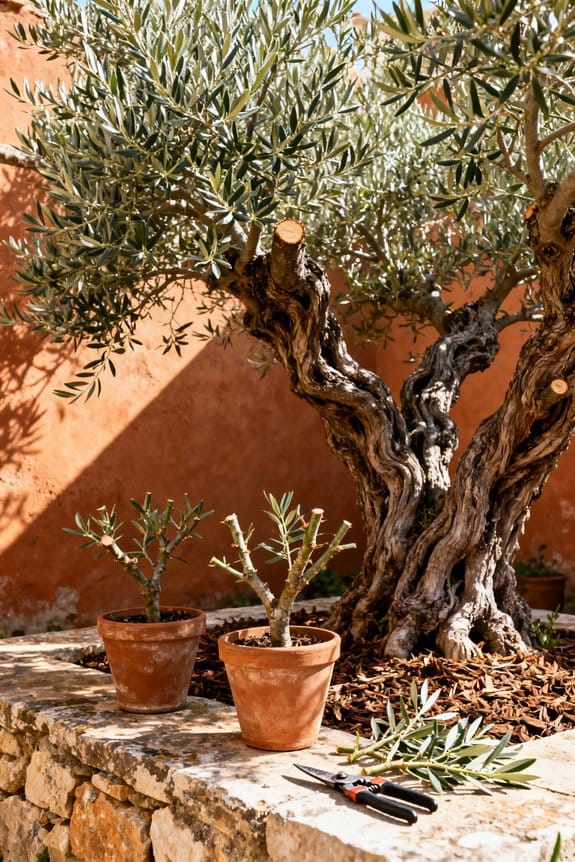
Proper watering sets the stage for olive trees to respond well to pruning, which helps keep them healthy and productive. Pruning olive trees in the fall is ideal because it encourages new shoot growth from major branches. Remove sagging branches carefully, but keep upward-growing replacements for better structure. For young trees, staking supports stem growth, which should be prioritized over fruiting until maturity. Heavy pruning removes crossing branches and suckers, stimulating rejuvenation and boosting yields. Seasonal pruning controls overgrowth and improves light penetration and air circulation, critical for healthy olives. Regular maintenance involves shaping the tree tidily and cutting out dead or diseased wood. This helps sustain healthy olive trees and guarantees quality fruit production season after season. It is best to prune during the dormant season when temperatures are between 40-60°F to minimize stress and promote healthy growth.
Managing Pests and Diseases in Olive Groves
Managing pests and diseases in olive groves demands careful attention to detail and consistent effort. The olive fly poses the biggest threat, damaging fruit and lowering oil quality. Regular monitoring with yellow sticky traps, checked weekly, helps catch infestations early. Removing fallen fruit and practicing crop rotation disrupts the pest’s lifecycle effectively. Proper pruning promotes tree vigor, making trees more resilient to pest infestations and diseases like Olive Knot and Verticillium wilt. Selecting disease-resistant varieties further reduces risks. Integrated pest management (IPM) combines cultural, biological, and chemical controls to handle outbreaks sustainably. When using insecticides, apply them in the early morning or late evening to minimize harm to beneficial insects. Consistently applying these strategies keeps olive groves healthy and productive over time. To complement chemical control, introducing natural predators such as ladybugs and lacewings can significantly reduce aphid populations.
Fertilization and Nutrient Requirements for Olive Trees
Fertilizing olive trees helps maintain strong growth and boosts fruit production. Use an all-purpose fertilizer with micronutrients during spring and summer. These are the prime growing seasons when nutrient uptake peaks. Avoid over-fertilization; too much nitrogen causes leaf growth that reduces fruit yield. Olive trees prefer slightly alkaline soil with a pH of 7 to 8, so regularly test the soil to keep pH balanced. When growing olives in pots, choose well-draining potting mixes rich in organic matter to prevent nutrient runoff and support healthy roots. Incorporate compost or well-rotted manure into the soil annually to improve nutrient availability and enhance tree health. Consistent, balanced fertilization aligned with nutrient requirements guarantees olive trees thrive and produce quality fruit throughout the Mediterranean growing season. Regular feeding with balanced NPK fertilizers ensures robust root growth and overall tree vigor.
Harvesting Olives: Timing and Techniques
Harvest timing is vital to achieving the best olive oil quality and quantity. Typically, harvesting olives begins in November, near St. Catherine’s Day, when oil content peaks in September and October. It’s important to pick olives before they fall to the ground because late harvesting raises acidity and causes spoilage. When harvesting olives, use nylon nets stretched beneath the trees to catch falling fruit, then carefully strip olives from twigs by hand or with gentle combing tools to avoid damage. On average, olive trees yield 8 to 10 kg each, but top performers can produce over 40 kg under ideal conditions. Growing olives well means timing and technique work together to preserve quality and maximize yield during this essential stage. Additionally, consistent soil moisture without sogginess plays a key role in increasing fruit production.
Olive Fly Control and Other Seasonal Challenges
Few challenges affect olive growers as persistently as the olive fly. This pest can severely damage fruit throughout the growing season if left unchecked. Monitoring olive fly populations with yellow sticky traps placed every 10 meters helps detect infestations early. Once the flies are spotted, treatments such as protein bait sprays should be applied promptly, approximately every 10–14 days, to reduce larval development. Seasonal challenges also include hail and late summer thunderstorms. While hail can bruise fruit, thunderstorms often help retain moisture during dry months, benefiting trees. Mulching with 5–10 cm of organic material around the base conserves soil moisture and limits climate stress, which otherwise encourages olive fly proliferation. Timely harvesting in November is essential to prevent fallen olives from becoming breeding sites for the olive fly. Using durable tree stakes can also enhance the overall health and resilience of olive trees by providing stable support against wind damage during storms.
Incorporating Olive Trees Into Garden Design and Landscaping
When planning a Mediterranean garden, olive trees offer both beauty and practicality. Their gnarled trunks and silvery leaves create striking focal points that add authenticity. Olive trees thrive in well-drained soil typical of Mediterranean regions and need limited irrigation once established. Using terracotta pots for smaller olives allows mobility and improves summer aesthetics. Varieties like cold-tolerant Leccino or ornamental Pendolino provide options for different climates or design needs. Positioning olives near outdoor dining areas encourages alfresco meals, enhancing the garden’s inviting atmosphere. For best results, space trees at least 15 feet apart to guarantee airflow and sunlight exposure. Regularly prune to maintain shape and health. Overall, incorporating olive trees balances drought tolerance with timeless Mediterranean charm in garden landscaping. Mission Olive Trees’ drought-tolerant qualities make them especially suited to Mediterranean climate conditions.
Winter Care and Protecting Olive Trees From Frost
Although olive trees can handle light frost, protecting them from temperatures below -2°C (28°F) is essential, especially for young or potted plants. For winter care, keep trees well-watered during fall to avoid frost heaving. Applying mulch around the base insulates roots and retains moisture while the tree is dormant. Potted olive trees require extra attention; move them indoors to a cool, bright spot between 5-10°C (41-50°F) when extreme cold hits. Monitoring weather forecasts closely lets growers act before frost events. Use protective covers or blankets to shield outdoor trees during cold snaps. These steps prevent frost damage, ensuring olive trees survive winter conditions and thrive in Mediterranean gardens year after year.
Frequently Asked Questions
What Kind of Soil Do Olive Trees Like in the Mediterranean?
Like a canvas for a masterpiece, olive trees favor soil composition rich in sandy loam with balanced drainage requirements. This guarantees roots breathe freely, avoiding soggy traps, fostering robust growth and fruitful harvests in Mediterranean settings.
How Hot Is Too Hot for Olive Trees?
Olive trees exhibit significant heat tolerance, thriving up to 40°C, but temperatures above 45°C are too hot, risking stress and reduced fruit quality. Adequate irrigation needs become critical during such extreme heat to prevent fruit drop and damage.
How Many Years Does It Take for an Olive Tree to Bear Fruit?
Olive trees generally bear fruit within 3 to 5 years. Olive tree care, including proper pollination, soil quality, pruning, and fertilization, greatly influences fruit production timelines, potentially accelerating or delaying the onset of fruit-bearing maturity.
Do Olives Grow in the Mediterranean?
Over 800 million olive trees grow in the Mediterranean, showcasing diverse olive varieties adapted to the region. Effective pruning techniques enhance fruit yield and tree health, contributing to the area’s enduring success in olive cultivation and olive oil production.


