As an Amazon Associate, we earn from qualifying purchases. Some links on this site are affiliate links at no extra cost to you. Our recommendations are based on thorough research and editorial judgment.


Creating Mediterranean Light Conditions Indoors for Olive Trees

Olive trees need six to eight hours of full sun daily, best from a south-facing window. Place the tree in a bright, well-ventilated spot with temperatures between 65°F and 80°F. When sunlight is limited, use a full-spectrum LED grow light set 12 to 24 inches above the tree for 12 to 16 hours daily. Rotate the tree every two to three weeks to guarantee even light. Follow these steps carefully, and you’ll find how to fine-tune care for Mediterranean indoor conditions.
Key Takeaways
- Place olive trees near a bright south-facing window to provide six to eight hours of full sun daily.
- Use full-spectrum LED grow lights 12 to 24 inches above the tree for 12 to 16 hours in low light conditions.
- Rotate the tree every two to three weeks to ensure even sunlight exposure and prevent uneven growth.
- Maintain indoor temperatures between 65°F and 80°F, mimicking warm Mediterranean climate conditions.
- Ensure good ventilation and avoid cold drafts, replicating the airy, dry Mediterranean environment for healthy growth.
Understanding Olive Tree Light Requirements
How much light does an olive tree really need to thrive indoors? An olive tree indoors requires at least six to eight hours of full sun daily to grow well. A bright south-facing window usually provides the best light levels. During hot summers, regularly rotating the pot guarantees even light exposure and balanced growth. Without enough sunlight, an olive tree may show leaf drop or stunted growth, which harms fruit production. Indoor temperatures should stay between 65°F and 80°F to match Mediterranean conditions. If natural light is limited, using supplemental grow lights helps maintain adequate light exposure. These steps support a healthy olive tree indoors and improve chances for fruiting by mimicking its ideal outdoor environment carefully and consistently. Utilizing grow lights with a full spectrum LED ensures that the tree receives all the necessary wavelengths for optimal photosynthesis and growth indoors.
Identifying Ideal Indoor Locations for Olive Trees

Although olive trees are quite adaptable, choosing the right indoor location is vital to support their growth. Olive trees need at least six hours of direct sunlight daily, so placing them near a south-facing window offers the best natural light. A well-ventilated area is also essential to keep the environment stable and warm, avoiding cold drafts that can stress the tree. Since seasonal changes affect sunlight intensity, monitoring light levels throughout the year helps prevent leaf drop. During indoor growing, adjusting the tree’s position as daylight shortens guarantees it receives adequate Mediterranean sunlight. Positioning near a south or southwest window maximizes light exposure without forcing conditions. This careful placement creates an environment that supports healthy growth and resilience indoors. Additionally, maintaining well-draining soil is crucial to ensure the tree’s roots remain healthy and promote optimal development.
Utilizing Grow Lights to Supplement Natural Sunlight
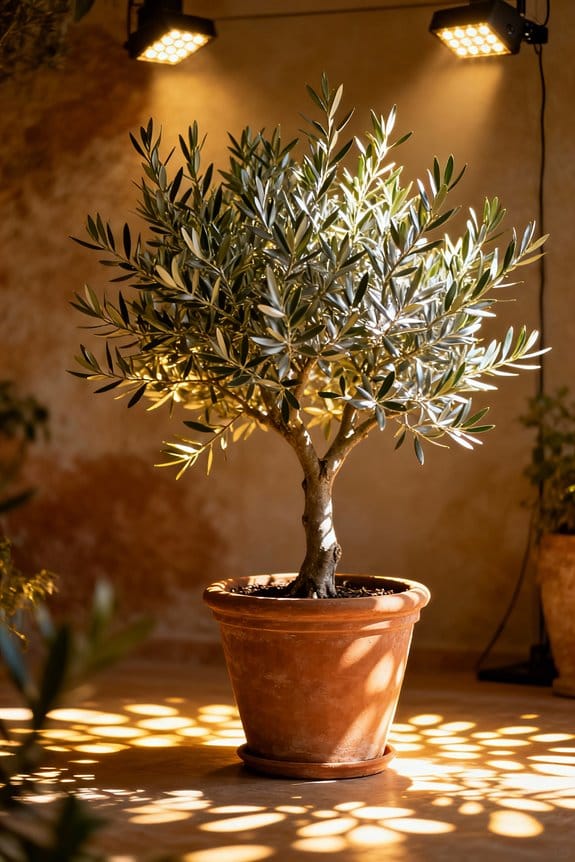
When natural sunlight falls short, grow lights become essential to keep olive trees healthy indoors. Olive trees require at least six hours of direct sunlight, but indoor conditions often don’t provide enough. Full-spectrum LED grow lights deliver a balanced light spectrum that supports photosynthesis and mimics sunlight effectively. Position the grow light 12 to 24 inches above the tree to guarantee ideal coverage without burning leaves. Use a timer to maintain consistent light exposure for 12 to 16 hours daily, especially during winter. Monitor for signs like leggy growth or leaf drop, which indicate insufficient light. Adjust the grow light’s intensity or duration accordingly to maintain healthy foliage and growth. This method helps replicate Mediterranean light conditions indoors successfully. Additionally, using a premium potting mix enriched with peat moss and perlite can significantly improve root aeration and moisture retention under indoor grow light conditions.
How to Rotate and Position Olive Trees for Even Light Exposure

A few simple steps secure olive trees receive even light from all angles indoors. Position the indoor olive tree by a south or southwest-facing window to capture 6-8 hours of direct sunlight daily. Rotate the pot every two to three weeks to distribute light evenly, preventing uneven growth and promoting balanced foliage. During summer, gradually move the tree outdoors to acclimatize to full sunlight while maintaining balanced light exposure. Monitor the tree during seasonal changes and adjust its location to sustain ideal light levels year-round. Avoid placing it near heat sources or drafts that can disturb its light needs. These methods guarantee the olive tree grows uniformly, thrives indoors, and receives suitable light exposure tailored for its Mediterranean origins. Additionally, ensuring the tree is positioned in a spot with good airflow helps maintain healthy growth and reduces pest risks.
Managing Indoor Temperature and Humidity for Optimal Growth

To keep an indoor olive tree healthy, maintaining steady temperature and humidity is essential. Olive trees grow best when indoor temperatures stay between 65°F and 80°F, which mimic their native Mediterranean climate. During winter, it’s important to lower the temperature to about 50°F to encourage natural dormancy and help with flowering. Humidity levels should be kept between 40% and 60% to support healthy growth. Avoid placing the tree near heat vents or cold drafts because sudden changes in temperature can stress the plant. To maintain proper humidity, use a humidity tray or place the pot on a pebble dish with water. This method raises moisture levels without risking overwatering the soil, ensuring a favorable environment for Mediterranean olive trees indoors. Incorporating warm earthy colors in the indoor decor can complement the natural beauty of olive trees and enhance the Mediterranean ambiance.
Monitoring Olive Tree Health Related to Light Conditions
How much light does an indoor olive tree really need to stay healthy? Olive trees need at least 6 hours of direct sunlight each day, so place indoor olive trees near south-facing windows whenever possible. Monitoring light exposure is crucial because too little light results in leaf drop and weak growth. Check the tree weekly for signs of insufficient light, such as yellowing leaves or slowed flowering and fruiting. Use grow lights during shorter days to maintain consistent brightness. Avoid placing indoor olive trees near drafts or heating vents, which can dry out leaves and reduce health. Maintaining steady Mediterranean-like conditions supports vigorous growth. Tracking these factors helps guarantee healthy foliage while encouraging better flowering and fruiting indoors. Regular observation and adjustments keep olive trees thriving under artificial light conditions. Incorporating raised beds with proper drainage can also help maintain optimal root health and moisture levels indoors.
Seasonal Adjustments to Light Exposure for Indoor Olive Trees
Maintaining the right light exposure for indoor olive trees means adjusting care as seasons change. These trees need 6-8 hours of direct sunlight daily, ideally near south or west-facing windows to simulate their Mediterranean habitat. In winter, shorter days require seasonal adjustments such as supplementing natural light with grow lights to maintain healthy growth. Avoid cold drafts that can stress the tree during this time. Summer offers an opportunity to move the tree outdoors, but it must be gradually acclimated to full sun exposure by starting in partial shade for several days. Rotating the pot weekly guarantees even light exposure on all sides, promoting balanced growth year-round. Monitoring these variables supports indoor olive tree health through seasonal light changes efficiently. For best results, also consider the durability and UV resistance of the materials used for your olive tree if it is placed near windows with strong sunlight.
Frequently Asked Questions
How to Make an Olive Tree Thrive Indoors?
Indoor olive care requires well-draining potting soil, consistent temperature control between 65°F and 80°F, maintaining humidity levels, appropriate fertilizer types, regular pruning techniques, vigilant pest management, proper container drainage, a balanced watering schedule, and attention to growth stages.
What Kind of Light Does an Indoor Olive Tree Need?
An olive tree indoors requires bright olive tree light, ideally 6–8 hours of indoor sunlight daily. Grow lights or artificial lighting supplement light intensity, supporting photosynthesis needs, leaf coloration, growth cycles, and seasonal changes throughout varying daylight hours.
Should I Mist My Indoor Olive Tree?
Like a whisper lost in a dry breeze, misting disrupts ideal indoor humidity for olive trees. Proper olive tree care, including balanced watering schedule, pot selection, fertilizer types, and pest management, supports healthy leaf health, root development, indoor temperature, and growth stages.
Can an Olive Tree Survive Without Direct Sunlight?
An olive tree has limited shade tolerance and poor indoor adaptation without direct sunlight. Artificial lighting provides sunlight alternatives but growth limitations, leaf dropping, humidity requirements, temperature control, container choice, and soil composition remain critical for survival indoors.


