As an Amazon Associate, we earn from qualifying purchases. Some links on this site are affiliate links at no extra cost to you. Our recommendations are based on thorough research and editorial judgment.


The Challenges of Growing Olive Trees Indoors Year-Round

Growing olive trees indoors year-round demands at least 6 to 8 hours of direct sunlight daily, preferably near a south-facing window or under grow lights exceeding 18 mol/m²/day. Maintain temperatures between 65°F and 80°F, with a cool winter dormancy at 40°F to 50°F. Use well-draining sandy soil in pots with drainage holes, watering every 2-3 weeks in summer and monthly in winter. Prune annually, control pests with horticultural oil, and repot every 1 to 2 years. Learn about ideal maintenance and nutrient care next.
Key Takeaways
- Olive trees need 6-8 hours of direct sunlight daily, which is difficult to achieve indoors without supplementary grow lights.
- Maintaining consistent temperatures between 65°F and 80°F, with a cool dormancy period, is challenging inside homes.
- Ensuring well-draining soil and proper watering is essential to prevent root rot but can be hard to regulate indoors.
- Regular pruning and pest management are required to avoid stress and infestations like scale insects and spider mites.
- Controlling humidity and air circulation indoors is critical to reduce pests and prevent fungal diseases.
Light Requirements for Indoor Olive Trees
Light plays an essential role in growing olive trees indoors. These trees need 6 to 8 hours of direct sunlight daily to meet their light requirements for peak growth. Placing indoor olive trees near a south-facing window guarantees they receive the most intense natural light throughout the day. If sunlight is insufficient, strong grow lights can be used to simulate direct sunlight for at least 6 hours, providing a daily light integral (DLI) of 18+ mol/m²/day. Extending grow light exposure beyond 12 hours may further improve growth rates and overall tree health. Without adequate light, fruit production can decline, although most indoor varieties are grown mainly for their ornamental foliage rather than fruit. Monitoring light duration and intensity helps keep indoor olive trees thriving year-round. Alternatively, for a maintenance-free option that still delivers the look of an olive tree, consider an artificial olive tree with lifelike foliage and no light requirements.
Temperature and Humidity Challenges

Temperature and humidity can pose significant challenges for indoor olive trees. These trees thrive between 65°F and 80°F but need a cool dormancy period at 40°F to 50°F during winter to grow well. High indoor humidity can cause problems, so keeping it near average household levels is usually enough. Sudden temperature changes stress olive trees, so acclimatization is essential when moving them indoors or outdoors. Light also affects temperature tolerance; olive trees require 6 to 8 hours of direct sunlight daily to thrive indoors. Without enough light, temperature stress worsens, and leaf drop during winter becomes more common. Gradual acclimatization coupled with stable temperature and moderate humidity helps maintain healthy growth year-round inside the home. Additionally, ensuring the soil is well-drained indoors is crucial to prevent root rot and support healthy root systems.
Soil and Drainage Considerations
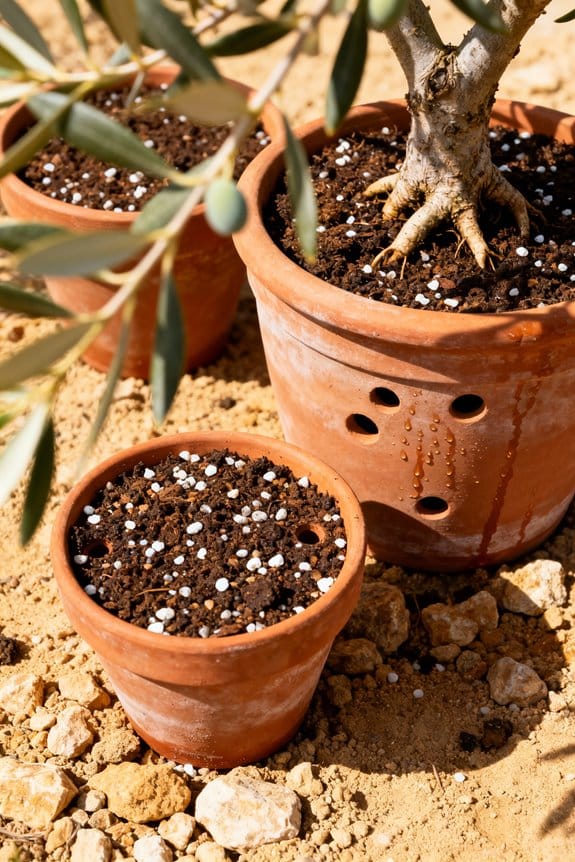
Soil quality greatly influences the health of indoor olive trees. Using a well-draining soil is essential, such as sandy cacti potting soil, to keep moisture levels from building up around the root ball. A potting mix with excellent drainage prevents root rot by allowing air to flow efficiently. Always choose pots with a drainage hole to let excess water escape. Adding a thin layer of gravel or broken pot shards at the bottom improves drainage. The soil should remain slightly dry between waterings; consistently wet soil harms roots. A mix with a pH between 6.5 and 7.5 supports growth. Repotting every one to two years refreshes the potting mix and gives roots more room to spread, helping olive trees thrive indoors. It is also beneficial to use a potting mix that contains organic nutrients to support robust root development and balanced moisture retention.
Watering Schedule and Techniques
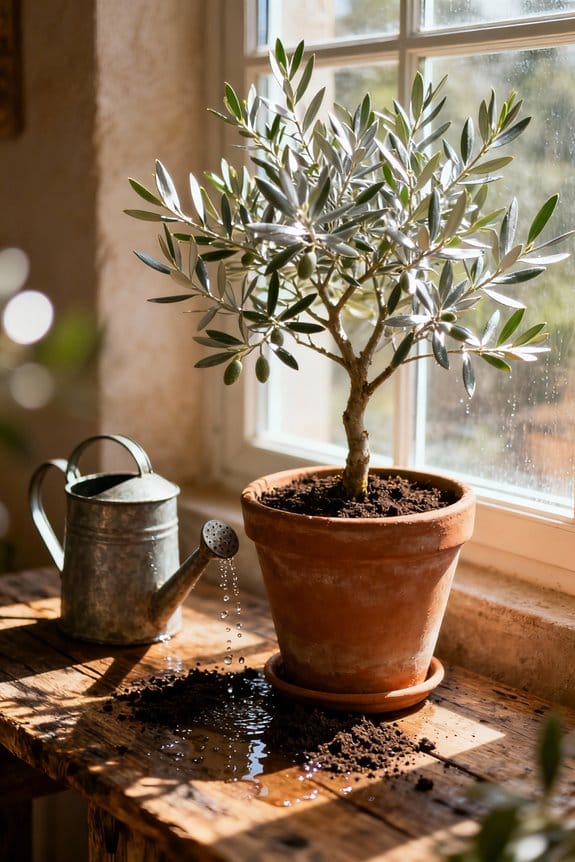
Although olive trees are drought-tolerant in their natural habitat, indoor ones require a consistent yet careful watering routine to stay healthy. The watering schedule usually calls for watering every 2 to 3 weeks during summer only after the top 2 inches of soil feel dry. In winter, reduce watering to once a month. Use a well-draining soil mix like sandy cactus potting soil to prevent moisture retention. To water properly, thoroughly soak the soil until water reaches the roots, then remove excess water to avoid root rot. Bottom watering is effective—place the pot in a bowl of room temperature water until the soil saturates. Regularly check soil moisture to prevent over-watering and maintain proper hydration for indoor plants. Additionally, selecting a pot with good stability can help avoid accidental spills and maintain a safe environment for indoor olive trees.
Fertilization Needs for Indoor Growth

How often should indoor olive trees be fertilized? Fertilization is key for healthy growth, especially during the growing season from spring through summer. Apply a balanced nutrient blend containing an NPK ratio of 8-3-10 every 4 to 8 weeks. This provides essential nitrogen, phosphorus, and potassium for leaf development and fruit production. Use a special olive tree fertilizer when possible, as its formula meets specific nutrient needs. If unavailable, dilute an organic seaweed-based liquid fertilizer to half strength before applying. Avoid following generic instructions on organic products; olive trees require a tailored feeding schedule. Applying fertilizer too often or in excess risks harming the roots and foliage. Consistent, measured fertilization supports ongoing energy and fruit growth without overwhelming the tree. Additionally, incorporating micronutrients like iron, boron, and zinc into the feeding routine helps prevent deficiencies common in indoor environments.
Choosing the Right Olive Varieties for Indoors
When selecting olive varieties for indoor growth, it’s important to take into account size and pollination needs to guarantee successful cultivation. Dwarf varieties like Little Ollie are well-suited for indoor cultivation because they stay small, usually under 4 feet tall, and fit easily in containers. Arbequina is another strong choice; it is self-fertile, so it does not require a second tree for pollination, which simplifies fruit production indoors. Both require at least 6-8 hours of direct sunlight daily, best placed near south-facing windows. Other options include Nocellara de Belice and Picholine for flavor and ornamental value, but for small spaces, Little Ollie and Arbequina remain top picks due to manageable size and self-fertile traits that ease indoor care. It is essential to ensure these indoor olive trees receive full sun exposure to support healthy growth and fruiting potential.
Propagation Methods Suitable for Indoor Plants
Propagation of olive trees indoors most often starts with stem cuttings rather than seeds because seedlings tend to yield wild types with poor fruit quality. The preferred propagation methods involve taking 6-inch cuttings from healthy olive trees using sharp scissors. Remove the lower leaves before placing the cuttings in water to encourage root growth. Roots typically develop within two weeks, indicating readiness for transplanting. Rooting hormones are unnecessary, simplifying the process. For indoor plants, maintain a warm environment with adequate light, ideally bright indirect sunlight, to promote healthy roots. Ensuring consistent warmth and good light exposure speeds rooting and improves success rates. This straightforward approach works well for most indoor growers and avoids the pitfalls of seed propagation while supporting robust young plants for long-term growth indoors. Additionally, selecting olive tree varieties suitable for USDA Hardiness Zones 8 to 11 can enhance indoor growth success.
Optimal Container and Potting Mix Selection
Although olive trees are quite adaptable, choosing the right container is critical for indoor success. The ideal container should be at least 12 inches in diameter to accommodate the root system and allow healthy growth. Larger trees may require pots up to 24 inches, and a sturdy design prevents tipping. Using ceramic self-watering planters can help regulate moisture levels without risking waterlogging. The potting mix must be well-draining—sandy or cactus-based soil works best to avoid root rot and encourage oxygen flow. Check drainage holes regularly for blockages. Repot the tree every 1 to 2 years to support its expanding root system and refresh the soil. These steps guarantee a healthy environment that prevents common indoor growing challenges. Additionally, selecting containers with a weighted base can enhance stability and prevent tipping in indoor settings.
Pruning and Maintenance Practices
Pruning olive trees indoors requires careful timing and technique to maintain health and shape. It is best to prune once or twice a year using the “Open Center Pruning” method. This approach improves air circulation and light penetration in the canopy. Start by making initial cuts at about 18-24 inches above the soil to encourage branching and better structure. During maintenance pruning, remove crossing, dead, or weak branches to support tree health and new growth. If leaves drop excessively, it often signals stress or improper pruning, which needs correction. After pruning, continue proper care with consistent watering and provide at least 6 hours of bright, indirect sunlight daily. This routine helps the tree recover while promoting vigorous new growth and sustained health indoors. Additionally, maintaining a regular pruning schedule is essential to support the olive tree’s structure and productivity through the seasons, especially in indoor environments where natural conditions vary. Monitoring nutrient deficiencies can help inform pruning and overall care decisions.
Dealing With Common Pests and Diseases Indoors
Pests and diseases can quietly undermine the health of indoor olive trees if not carefully watched. Common pests like scale insects, spider mites, and aphids often settle on leaves and stems, causing damage and leaf drop. Regularly inspect the tree every seven days for sticky residue, yellowing leaves, or tiny webbing. Root rot is a serious disease caused by overly wet soil and poor drainage, so avoid watering more than once a week and guarantee the pot has drainage holes. For pest management, applying horticultural oil every 10 days can smother pests without harming the plant. Maintaining good air circulation by placing a small fan near the tree helps reduce humidity and makes the environment less hospitable for pests and fungi alike. Additionally, consider using Bonide Captain Jacks Neem Oil as a safe, organic pesticide to effectively target mites and mildew while being safe up to the harvest day.
Repotting and Root Care Strategies
Repotting indoor olive trees every 1 to 2 years is vital for their health and growth. Choose a pot at least 12 inches in diameter with large drainage holes to guarantee proper water flow and aeration. Use a well-draining soil mix, like sandy cacti potting soil, to prevent root rot and support healthy root systems. Check for root-bound conditions by examining if roots emerge through drainage holes or circle tightly inside the pot. When repotting, gently untangle the roots if needed and place the tree at the same soil level. Backfill with fresh soil to stabilize the plant. Ideally, repot in fall to reduce stress during fruiting. This routine helps maintain strong roots and encourages healthy development indoors.
Frequently Asked Questions
What Are Common Problems With Indoor Olive Trees?
Common problems with indoor olive trees include inadequate light requirements, improper watering frequency causing root rot, unsuitable soil type, temperature fluctuations, pest control challenges from insects, and unmet fertilization needs affecting overall health and growth.
How Hard Is It to Keep an Olive Tree Alive Indoors?
Keeping an olive tree alive indoors is like tending a delicate flame. Success demands precise olive tree care: matching pot size, meeting sunlight requirements, mastering watering techniques, and choosing well-draining soil types within indoor gardening’s nuanced environment.
Why Is My Indoor Olive Tree Dying?
The indoor olive tree is dying due to poor drainage, insufficient light, overwatering issues, pest infestations, temperature fluctuations, and nutrient deficiencies, all of which can stress the plant and inhibit its growth and vigor.
How Long Does an Olive Tree Live Indoors?
Like a timeworn lantern, an olive tree’s indoor lifespan can surpass decades with attentive olive tree care. Success hinges on indoor sunlight needs, pot size selection, temperature requirements, and soil type importance to sustain lasting vigor.


