As an Amazon Associate, we earn from qualifying purchases. Some links on this site are affiliate links at no extra cost to you. Our recommendations are based on thorough research and editorial judgment.


Air Circulation Needs for Healthy Indoor Olive Trees

Indoor olive trees need steady air circulation of about 0.2 meters per second to thrive. Keep humidity below 50% and position the tree at least 12 inches from walls or other plants to avoid airflow blockages. Use a small fan placed 3-4 feet away on low speed to promote gentle breeze without leaf damage. Maintain temperatures between 65-75°F, rotate trees biweekly, and elevate pots 4-6 inches off the floor. Proper airflow prevents mold and boosts nutrient uptake; these tips help you optimize growth.
Key Takeaways
- Maintain consistent gentle airflow around indoor olive trees to reduce humidity and prevent fungal diseases like powdery mildew.
- Position olive trees near open windows or use small fans placed 3-4 feet away to promote effective air movement without leaf damage.
- Ensure trees have at least 12 inches of clearance from walls and other plants to avoid obstructing airflow.
- Keep indoor temperatures stable between 65-75°F and humidity below 50% to optimize air circulation and tree health.
- Elevate pots 4-6 inches off the ground and rotate trees biweekly for even air exposure and improved ventilation.
Importance of Air Circulation for Indoor Olive Trees
Although many people appreciate the look of indoor olive trees, they often overlook the essential role of air circulation for their health. Good air circulation surrounding indoor olive trees reduces humidity levels, keeping conditions less favorable for mold and disease. It also limits stagnant air pockets that attract pests, helping prevent common infestations. Positioning trees near open windows or using small fans improves airflow considerably. For best results, indoor olive trees should be rotated every two weeks to guarantee all sides receive fresh air evenly. Avoid placing trees too close to heat vents, which can dry them out or create erratic airflow. Maintaining consistent airflow while monitoring temperature around 65-75°F supports ideal plant health and resilience, allowing these Mediterranean natives to thrive indoors. Proper air circulation also complements regular pruning, which encourages balanced growth and even fruit production.
Effects of Poor Airflow on Olive Tree Health
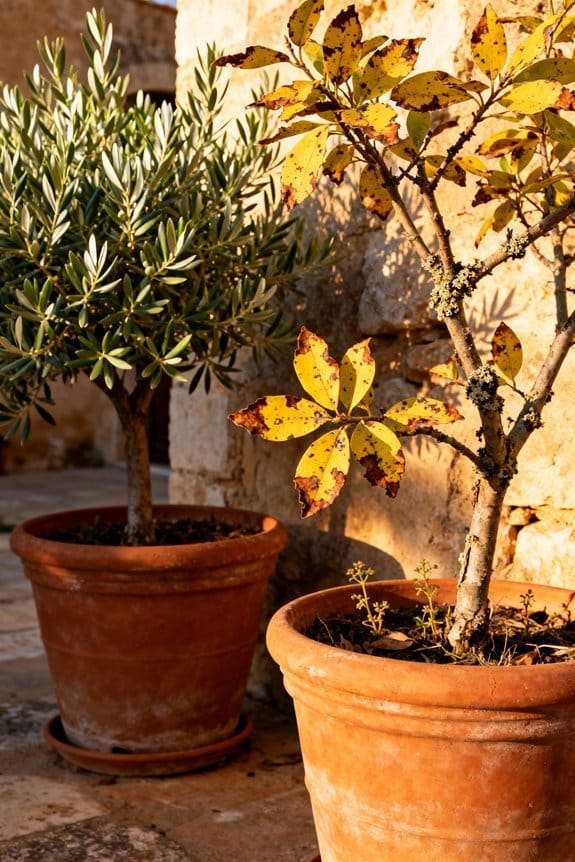
Poor airflow around indoor olive trees creates an environment where humidity rises above 60%, which encourages fungal diseases like powdery mildew and root rot to develop quickly. Humid conditions cause water to linger on leaves longer, preventing proper drying and leading to leaf drop. Poor airflow also invites pest infestations, including spider mites and scale insects, because still air favors their growth cycles. Without sufficient air circulation, root zones can become overly damp, accelerating root rot. This weakens the tree’s ability to absorb nutrients effectively. Maintaining air movement of at least 0.2 meters per second around the tree can reduce humidity and pest problems. Regularly inspecting leaves for signs of pests and rotating the tree to expose all sides to air currents minimizes these risks, promoting healthier growth and preventing stress-related leaf loss. Using Bonide Captain Jacks Neem Oil can effectively target mites and mildew that thrive in poor airflow conditions while being safe up to harvest day.
Ideal Location for Optimizing Air Movement

When placing an indoor olive tree, selecting a spot with consistent air movement is key to preventing fungal and pest issues. Choose a location that offers good air circulation without exposing the tree to direct drafts or heat vents, which can stress the plant. Position the tree at least 12 inches away from walls and other plants to promote proper airflow around its foliage. A stable environment with moderate temperatures between 65-75°F helps maintain steady air movement and controls humidity levels below 50 percent. This reduces moisture buildup and prevents mold formation on leaves and soil. Avoid areas prone to sudden temperature changes or stagnant air pockets. By carefully selecting this ideal location, indoor olive trees receive the air movement they need to thrive in a balanced, healthy environment. Additionally, maintaining water pH between 6.0 and 8.0 is essential for healthy root development in aquaponic olive trees.
Using Fans to Improve Air Circulation Indoors

Guaranteeing good air movement around indoor olive trees often requires more than just choosing the right location. Using a fan can greatly improve air circulation by producing consistent airflow without causing damage. Position the fan about 3 to 4 feet away, aiming for gentle airflow that prevents direct blasting on the leaves. This helps maintain ideal humidity levels, keeping moisture low enough to deter mold and pests. Regularly rotate or adjust the fan’s angle every few days to guarantee even air distribution. Enhanced airflow boosts leaf transpiration, which supports nutrient absorption and sunlight exposure. Fans operating at low speed—around 1,000 to 1,500 RPM—work best indoors. This setup creates a stable environment where indoor olive trees can thrive and remain healthy without stressing the foliage. Additionally, combining proper air circulation with accurate soil moisture readings ensures the optimal watering schedule and guards against overwatering.
Signs of Stagnant Air Around Olive Trees

Although olive trees are hardy, stagnant air around them can quickly lead to trouble indoors. One common sign is yellowing leaves, which often indicate insufficient air circulation and excess humidity levels. You might also notice droopy or wilted leaves, showing the tree is stressed—similar to drought symptoms even if watered properly. Moldy or damp soil may appear due to trapped moisture, creating a breeding ground for pests like spider mites that thrive in stagnant air. To recognize stagnant air, check if the room lacks gentle airflow; ideally, maintain humidity levels near 40% around olive trees. Regularly airing out the space or placing the tree near an open window improves healthy growth and reduces pest risks. Monitoring these signs helps maintain a thriving indoor olive tree environment. Additionally, maintaining good airflow is crucial as it supports the tree’s overall health and reduces the likelihood of pest and disease problems.
Impact of Humidity Levels on Olive Tree Health
Air circulation and humidity are closely linked factors affecting indoor olive tree health. Olive trees thrive best with humidity levels around 40%. Maintaining low humidity prevents fungal diseases such as mold, which develop in moist environments. Excessive moisture increases the risk of root rot, a serious problem for indoor olive trees. They do not require misting since they are adapted to dry air, which supports their growth. Monitoring humidity is vital, especially in winter when indoor heating drastically lowers moisture levels. One should use a hygrometer to track humidity and avoid placing olive trees near drafty windows or humid bathrooms where sudden fluctuations occur. Proper humidity control promotes the tree’s overall health by preventing stress and reducing disease likelihood. This makes humidity management an essential part of indoor olive tree care. In addition, maintaining humidity levels between 40-60% simulates Mediterranean climate conditions ideal for hydroponic olive trees.
Relationship Between Airflow and Pest Prevention
When indoor olive trees receive good airflow, it helps prevent several pest problems that commonly arise in stagnant air. Adequate air circulation reduces humidity levels around plants, which lowers the risk of fungal diseases and pest infestations. For effective pest prevention, maintain at least 12 inches of space between olive trees and nearby walls or other plants to promote healthy airflow. Using a small fan set to low speed or placing trees near a window open 2-4 inches encourages air movement without causing drafts. This environment discourages sap-sucking insects like scale and spider mites, as they thrive in high humidity and still conditions. Regularly inspect leaves and stems in well-ventilated areas to catch pests early, helping preserve indoor olive tree plant health efficiently. Additionally, selecting olive trees with adjustable branches allows better positioning to optimize airflow around the plant.
How Air Movement Supports Transpiration Processes
Good airflow around indoor olive trees helps the transpiration process work smoothly by regulating leaf moisture and nutrient uptake. Air circulation guarantees moisture levels do not become excessive, reducing humidity build-up that fosters fungal diseases. When air movement is adequate, leaves can cool effectively, maintaining temperatures near the ideal 20-25°C range. This cooling supports consistent transpiration, which draws water and nutrients from the soil through the roots. Additionally, proper air circulation aids gas exchange by allowing carbon dioxide to enter leaf pores and oxygen to exit efficiently. To promote this, place the olive tree in a spot with gentle drafts or use a small fan set to low speed, guaranteeing airflow speed remains around 0.1 to 0.3 meters per second to avoid leaf stress. This controlled environment sustains healthy transpiration and overall plant vigor. Incorporating vintage olive branch botanical art nearby can enhance the aesthetic and create a harmonious environment for your indoor olive tree.
Seasonal Adjustments to Air Circulation Needs
Although olive trees are quite resilient, seasonal changes require careful adjustments to keep their air circulation needs satisfied indoors. During warmer months, increase airflow by placing a small fan about 3 feet away to mimic natural breezes that enhance circulation around the tree. This helps prevent mold that thrives in humid conditions. In winter, focus on maintaining stable conditions; avoid placing the tree near heat vents where dry air can stress the olive tree and reduce plant growth. Rotating the tree every two weeks guarantees even airflow and light exposure, which supports healthy indoor olive trees throughout the year. Monitor for signs like yellowing leaves or pests, as these signal stagnant air that needs correction by adjusting airflow or the tree’s location in response to seasonal changes. Ensuring proper well-drained soil also supports optimal health beyond just air circulation adjustments.
Combining Air Circulation With Proper Lighting
Balancing air circulation with proper lighting can greatly improve the indoor olive tree’s health. Place the tree in a sunny spot that receives at least six hours of natural light daily. Maintain good drainage in the pot to prevent waterlogging. Use a small fan to provide adequate airflow without creating strong drafts. This air circulation helps prevent mold and fungal diseases. Position the tree near an open window when possible, allowing fresh air to move around it. Monitor humidity levels regularly, aiming for 40-60% to reduce pest risks. Rotate the tree every week about 45 degrees so all sides receive equal light exposure and airflow, which promotes balanced leaf growth. These steps combine to maintain a healthy environment conducive to thriving olive trees. Additionally, understanding the plant hardiness zones can help determine the best indoor placement and care for real olive trees.
Best Practices for Maintaining Healthy Indoor Olive Trees
Many indoor olive trees thrive when placed in well-ventilated spots that avoid direct drafts from windows or heat vents. Proper air circulation helps prevent waterlogged soil and root rot, which are common issues when air is stagnant. Elevate the pot on a stand about 4 to 6 inches off the ground to boost airflow at the base. Avoid drafty spots, especially those near air conditioners or heaters, as sudden temperature changes harm healthy growth. Regularly clean leaves with a damp cloth to improve photosynthesis and reduce dust buildup. Monitor humidity levels carefully; indoor olive trees prefer humidity around 40-50%. Excess moisture invites pests and fungal problems. Rotate the plant every two weeks to expose all sides evenly to light and air. These small steps guarantee a thriving indoor olive tree.
Frequently Asked Questions
How to Make an Olive Tree Thrive Indoors?
Indoor growing thrives with well-draining soil, bright lighting conditions, balanced fertilizer options, regular pruning techniques, vigilant pest management, moderate humidity levels, and appropriate container selection. These factors collectively guarantee the olive tree’s robust health and growth.
What Are Common Problems With Indoor Olive Trees?
Despite their elegance, indoor olive trees commonly suffer leaf drop, pest infestations, root rot from overwatering, low humidity, insufficient light, nutrient deficiencies, and temperature fluctuations. These contrasting challenges demand vigilant care to guarantee their survival.
How Often Should I Water an Olive Tree Indoors?
Watering frequency for indoor olive trees depends on soil moisture, checked weekly to a one-inch depth. Proper pot drainage and balanced humidity levels support root health. Seasonal adjustments and appropriate fertilizer needs complement an effective watering technique.
Where Is the Best Spot for an Indoor Olive Tree?
Where else but near a south-facing window can the best lighting and sunlight exposure be found? Indoor olive trees prefer stable temperature preferences, balanced humidity levels, well-draining soil, appropriate pot size, and ideal air circulation to thrive.


