As an Amazon Associate, we earn from qualifying purchases. Some links on this site are affiliate links at no extra cost to you. Our recommendations are based on thorough research and editorial judgment.


Tools and Techniques for Clean Olive Tree Cuts

Effective olive tree pruning starts with using sharp manual shears for branches up to 2 cm thick and saws or electric tools for larger limbs up to 20 cm. Make clean, slant cuts just above buds or side branches to reduce rot and speed healing. Disinfect tools with 70% isopropyl alcohol before use and lubricate moving parts regularly. Prune between late winter and flowering for best results. Proper tools and techniques improve tree health and yield. More details help refine your approach.
Key Takeaways
- Use sharp manual pruning shears for branches up to 2 cm for clean, precise cuts on olive trees.
- Make slant cuts just above a bud or lateral branch to promote healthy healing and prevent rot.
- Employ extension poles with chain pruners or saws to safely reach and cut thick branches up to 20 cm.
- Regularly disinfect and sharpen tools at a 30-40 degree angle to maintain clean cutting and reduce tree injury.
- Prune olive trees during late winter to early flowering to optimize cut effectiveness and tree health.
Selecting the Right Pruning Tools for Olive Trees
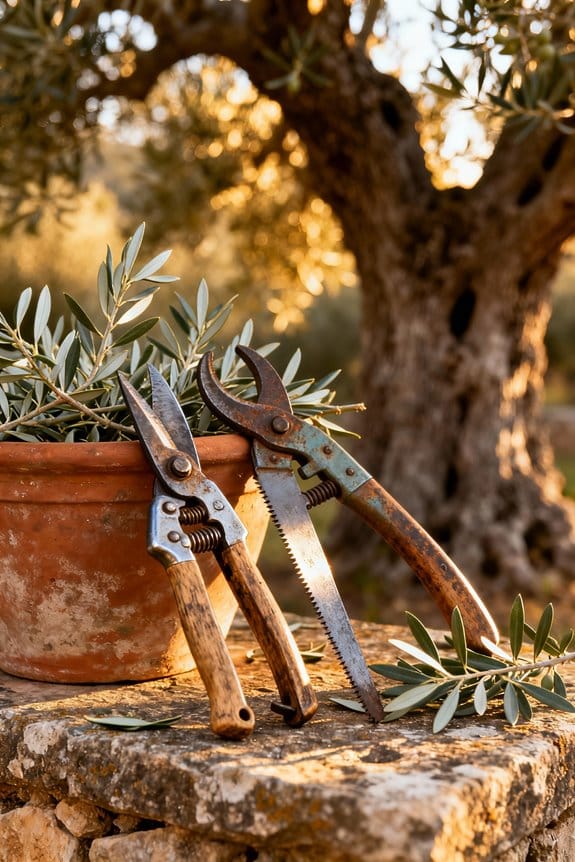
Choosing the right pruning tools is essential for clean cuts on olive trees, which helps promote healthy growth. Manual pruning shears work best for branches up to 2 cm thick. For thicker branches around 4 cm, electric and pneumatic tools boost efficiency. Hand saws are necessary for larger limbs, and foldable models improve portability in the field. Campagnola loppers, especially those with fixed extension poles, provide extra leverage to reach and cut high branches smoothly. For the biggest branches, up to 20 cm in diameter, chainsaws mounted on extension poles are effective and reduce operator fatigue. Regular maintenance of all pruning tools—including sharpening blades and applying lubrication—is important to maintain clean cuts, which encourage proper healing and prevent disease in olive trees. Timing your pruning during the dormant season when temperatures are between 40-60°F will complement using clean cuts for optimal tree health and fruit production.
Proper Cutting Techniques for Healthy Growth

Several precise cutting techniques assure olive trees stay healthy and productive. When pruning, it is essential to make cuts just above a bud or lateral branch to direct new growth properly. Using sharp, clean tools reduces injury and speeds healing. Slant cuts help prevent rainwater accumulation on cut surfaces, reducing rot risk. Thinning cuts that shorten main axes or suppress shoots improve air circulation and light penetration, which encourages fruiting. Avoid large cuts that stress young plants and increase susceptibility to pests. For young plants, make cuts no larger than one inch in diameter to minimize damage. Consistent clean cuts guide the tree’s natural habit and promote healthier development. Following these steps assures olive trees remain vigorous and yield well season after season. Additionally, selecting ultra sharp blades ensures the cuts are clean and reduces the risk of disease.
Maintaining and Caring for Pruning Equipment

Clean and precise cuts are only possible with well-maintained pruning tools. Regularly sharpen pruning shears to maintain cutting efficiency; use a flat file or sharpening stone at a 30-40 degree angle along the blade edge. Disinfect tools before and after each use with a 70% isopropyl alcohol solution to prevent disease spread. Lubricate moving parts, such as hinges and blades, with a light machine oil every five uses to guarantee smooth operation. For pneumatic tools, check air compressor pressure, maintaining it at 90 psi for best performance, and keep batteries charged above 80%. Always store pruning tools in a dry, clean place between 40-60°F to avoid rust and damage. This routine upkeep assures clean cuts, prolongs tool life, and improves pruning results in every olive tree session. Additionally, applying organic pesticides after pruning can help protect the tree from pests and diseases.
Timing and Frequency of Olive Tree Pruning

Pruning olive trees usually works best between late winter and the start of flowering. This timing avoids frost damage and promotes recovery. For table olive cultivars, annual pruning is ideal to maintain their growth habit and guarantee clean cuts. Oil olive cultivars may require less frequent pruning, though intervals longer than three to four years can negatively affect yields. Pruning right after bud break allows a good assessment of flower buds, helping to preserve flower counts. Avoid pruning during full bloom, as it reduces blossoms and ultimately lowers fruit production. Regular pruning intervals keep trees healthy and productive. Adjust frequency based on the specific olive cultivars and their growth habits to optimize tree shape and fruit quality. Consistent clean cuts support long-term orchard success. Additionally, maintaining proper soil moisture levels with a soil moisture meter can further enhance olive tree health and vigor.
Enhancing Reach and Safety With Extension Poles
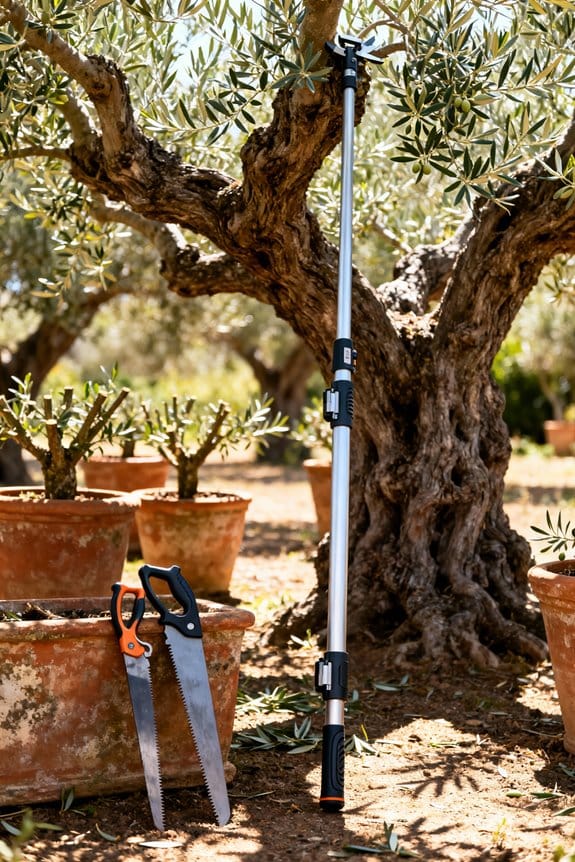
When reaching high branches, extension poles become vital tools. These poles allow pruning tools to cut branches up to 20 cm thick safely from the ground. Many extension poles are telescopic, offering adjustable lengths from 50 cm to 300 cm, adapting to various tree heights and pruning needs. This flexibility reduces physical fatigue by eliminating ladder use, which lowers accident risks during the pruning process. Extension poles often feature secure locking mechanisms that guarantee stability and prevent accidental collapses. When paired with chain pruners or saws, they enable precise, clean cuts without overextension. Selecting poles with reliable safety features is essential to maintain control and effectiveness. Overall, using extension poles enhances both reach and safety, making the pruning process more efficient and less physically demanding. It is important to prune lightly in late winter to ensure good airflow and light penetration while removing crowded branches.
Frequently Asked Questions
How to Properly Cut an Olive Tree?
Cutting an olive tree is like sculpting marble; it requires careful tree pruning and branch cutting during seasonal cutting to guarantee healthier trees. Applying ideal pruning and precise cutting techniques enhances olive tree care and optimizes olive harvesting outcomes.
How to Treat Olive Tree Scab?
Treatment of olive tree scab involves timely fungicide application, effective scab removal through pruning techniques, maintaining soil health, vigilant leaf care, and integrated pest management to promote disease prevention and sustain overall tree robustness.
How to Keep Cut Olive Branches Fresh?
Branch storage and hydration methods harmonize with nutrient solutions and temperature control to sustain freshness. Misting techniques meet pruning practices’ demands, while clean tools and longevity tips lengthen life, preserving prized olive branches perfectly post-pruning.
How Do You Take a Cutting off an Olive Tree?
Olive propagation techniques involve selecting a healthy 10-20 cm branch, using sharp pruning shears, applying rooting hormone, timing cuttings in spring, placing in well-draining soil, providing sunlight, and ensuring moisture for successful transplanting.


