As an Amazon Associate, we earn from qualifying purchases. Some links on this site are affiliate links at no extra cost to you. Our recommendations are based on thorough research and editorial judgment.

Managing Spider Mites on Indoor Olive Trees

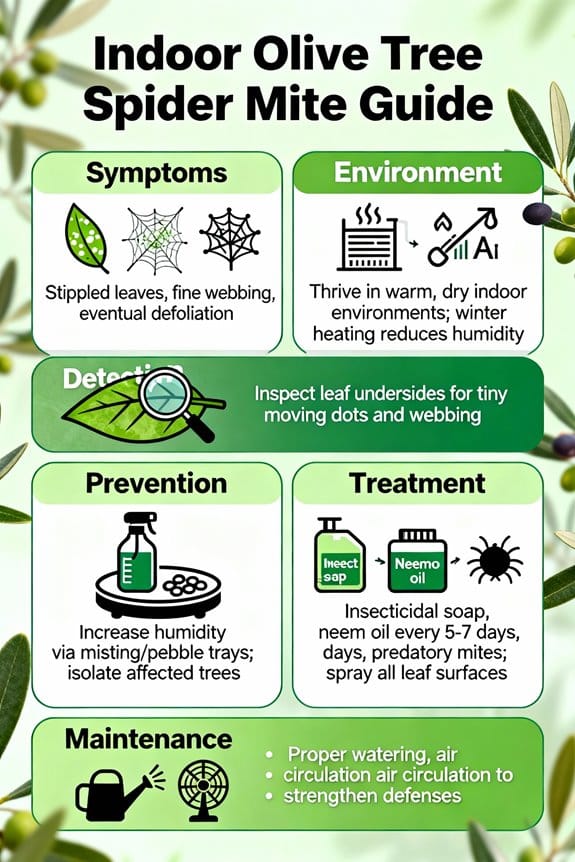
Spider mites on indoor olive trees show as tiny pale spots and fine webbing on leaves. Keep humidity above 50% by misting with room-temperature water or placing water trays nearby, as mites thrive under 40% humidity and temperatures near 80°F. Spray affected leaves with a mix of 1 cup rubbing alcohol to 4 cups water, repeating every 7–10 days. Early detection and consistent care help, but persistent problems may need professional advice. More details cover prevention and treatment strategies.
Key Takeaways
- Regularly inspect olive tree leaves for fine white webbing and pale yellow stippling as early signs of spider mite infestation.
- Maintain indoor humidity above 50% and proper air circulation to deter spider mite reproduction and infestation.
- Use homemade sprays like diluted rubbing alcohol, soap solution, or garlic spray for effective spider mite control.
- Apply treatments every 7-10 days and repeat as needed for thorough mite management on indoor olive trees.
- Seek professional pest control assistance for severe infestations or if homemade remedies and environmental adjustments are insufficient.
Recognizing Spider Mite Damage on Olive Trees
Spider mite damage on olive trees often starts with fine white webbing visible on the undersides of leaves and along stems. This webbing indicates an infestation of spider mites, tiny arachnids that feed on plant cells. Early on, the leaves of olive trees develop pale yellow spots, usually about 1-2 millimeters wide, caused by spider mites piercing leaf tissue. Over time, this creates a stippled appearance, and heavily infested leaves may turn dry and fall off prematurely. Spider mites thrive in warm conditions, roughly between 75°F and 90°F, and low humidity, so indoor olive trees require regular checks, especially during heating seasons. Catching spider mite damage early prevents stunted growth and preserves olive tree health by allowing timely treatment before the infestation spreads. Monitoring temperature and humidity can assist in timing treatments effectively and reducing spider mite populations.
Identifying Spider Mites on Indoor Olive Trees
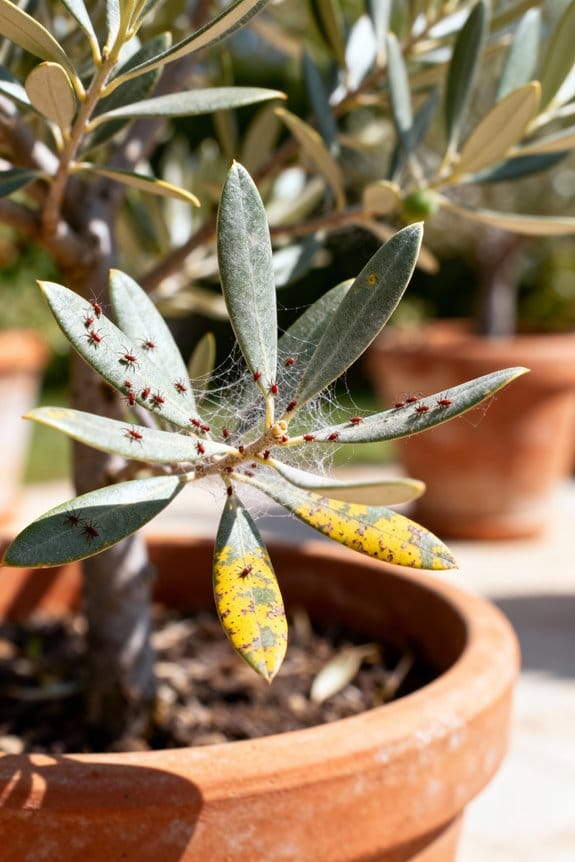
How can you tell if tiny pests have invaded your indoor olive tree? Spider mites are extremely small, measuring between 1/60 and 1/25 inch, so spotting them directly can be tricky. Instead, look for fine silky webbing on leaves and stems—an early sign of infestation. Regular inspections help identify pale dots or stippling on the leaves, which show where mites have extracted fluids. To confirm, tap some affected foliage over white paper; dark specks falling onto it are likely spider mites. Yellowed or dry leaves and premature leaf drop also signal infestation. Consistent monitoring is essential for identifying spider mites early on, especially because their small size often hides the problem until damage appears. This approach helps maintain healthy olive trees indoors. Additionally, maintaining proper air circulation and light penetration through selective pruning can reduce the risk of pest infestations.
Environmental Conditions Favoring Spider Mite Infestations

When indoor temperatures hover around 80°F, conditions become ideal for tiny mite populations to explode. Spider mites are pests that thrive in warm, dry environmental conditions common in indoor plants during winter. They prefer humidity levels below 40 percent, which speed up their reproduction and feeding rates. Overcrowding indoor plants decreases air circulation, creating a perfect habitat for spider mites to establish on olive trees. These pests often increase in late summer and early fall, especially when plants face heat stress. Maintaining humidity above 50 percent through misting or humidity trays can slow mite growth. Monitoring indoor temperature and spacing plants properly helps prevent infestations. Understanding these factors is critical for managing spider mites and protecting indoor olive trees effectively. Additionally, proper pruning improves air circulation and reduces stress on the plants, making them less susceptible to spider mite damage.
Homemade Remedies for Spider Mite Control

Several effective homemade remedies can be used to manage mite infestations on olive trees without resorting to harsh chemicals. Mixing 1 cup of rubbing alcohol with 4 cups of water creates a spray that kills spider mites on contact. Another option is soap spray: dissolve 225g of plain soap in 9 liters of hot water, apply to the leaves, then rinse with clean water to suffocate pests. Onion spray involves chopping onions, covering with boiling water, letting it cool, and diluting before use. Garlic solution requires crushing 4 cloves and steeping them in 1 liter of water for several days to repel spider mites. Finally, nettle tea made from boiled nettle tops diluted to a weak tea color serves as a natural pesticide for pest control on olive trees. Regular inspection and monitoring of your olive trees is essential to catch infestations early and apply remedies promptly.
Recommended Products

NATURAL NON-TOXIC FORMULA - Plant-derived mite treatment ingredients designed for use in homes, cars, farms, chicken coops, pens, cages and agriculture, when used as directed.

LISTED INSECT KILLER: 12 Month Tree & Shrub Insect Control kills Japanese Beetles (adult), Emerald Ash Borers, Adelgids, Leafminers, Aphids, and other listed insects that damage trees and shrubs

Control diseases and insects in your garden with Captain Jack’s Fruit Tree Spray Concentrate! Use on a variety of listed fruits, nuts and citrus plants.
Increasing Humidity to Deter Spider Mites
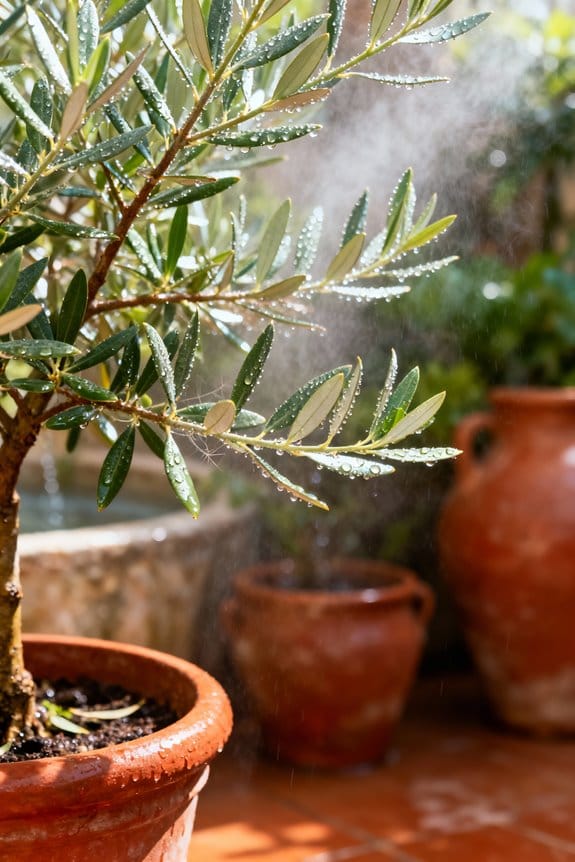
Alongside homemade sprays, adjusting the environment of your olive tree plays a big role in controlling spider mites. Spider mites thrive in dry, hot conditions, so increasing humidity around olive trees helps deter them effectively. Regularly mist the foliage, especially the undersides of leaves, with room-temperature water twice daily to raise moisture levels. Placing open bowls or jars containing water nearby further enhances humidity. Another simple method is setting a tray filled with water and small rocks beneath the potted olive tree; the water evaporates slowly, steadily increasing the local humidity. Maintaining about 50-60% humidity not only deters spider mites but also promotes overall plant health, resulting in stronger foliage and better resilience. These steps combine to create an environment less hospitable to spider mites while supporting olive tree health. Additionally, choosing pots with proper drainage and aeration ensures the roots stay healthy and supports the overall vigor of the tree.
Recommended Products

CONTENTS: Bonsai, Decorative Container (Assorted Colors & Styles), Humidity Tray, Deco Rocks, Soil, Care Instructions.

【40 lbs River Rocks】The mixed color river rock is about 2-3 inch. FANTIAN colorful rocks include various shades of brown, white, black and different shapes,they are very clean and have no dust or powder attached. These polished river rocks are loved by bonsai gardeners and Zen gardeners

Natural Predators for Managing Spider Mites
Introducing natural predators is a practical way to keep spider mite populations in check on indoor olive trees. Predatory mites, especially Phytoseiulus persimilis, consume spider mites efficiently and can be released when infestations exceed 5 mites per leaf. Beneficial insects like ladybugs and lacewing larvae also prey on spider mites, helping reduce their numbers naturally. Maintaining a diverse indoor garden with plants such as herbs and flowers attracts these helpful insects, which supports natural pest control. Keeping indoor humidity around 60% aids predatory mite survival, while discouraging spider mite growth. Regularly inspect olive leaves for signs of spider mites and introduce natural predators promptly to maintain balance in the ecosystem. This approach reduces chemical use and encourages healthy indoor plants. Additionally, combining natural predators with organic pesticides like Bonide Captain Jacks Neem Oil can enhance pest control while being safe up to harvest day.
Recommended Products

Research shows that Imicide is one of the most effective preventative and multi-season control treatments for the Emerald Ash Borer as well as other labeled insects.
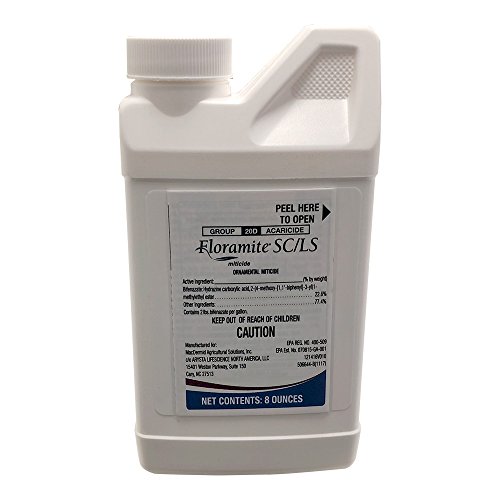
Floramite SC provides outstanding control of a variety of mite pests on ornamentals plants in greenhouse, shadehouses, nursery, field, landscape and Interiorscapes settings.

NATURAL & NON-TOXIC FORMULA. Plant-based ingredients provide a safe alternative to harsh chemical treatments. Designed for use in homes, farms, chicken coops, cages, and pens when used as directed.
Preventative Measures to Avoid Spider Mite Outbreaks
When caring for indoor olive trees, preventing spider mite outbreaks starts with maintaining steady humidity around 60%. Regularly mist the leaves and place open jars of water nearby to keep humidity levels consistent. Healthy olive trees resist infestations better, so water them evenly to avoid stress. Inspect the undersides of leaves weekly to catch spider mites early, and isolate any affected plants immediately. Use physical barriers such as fine mesh screens or natural repellents to reduce mite access. Prune branches to improve air circulation, creating an environment less favorable for spider mites to thrive. Plant diversity near your olive tree also encourages beneficial insects that naturally control mites. These preventative measures collectively keep spider mite outbreaks from taking hold and protect the health of indoor olive trees. Additionally, using 5-foot artificial olive trees made with flame-retardant and waterproof materials can eliminate worries about pest infestations while maintaining a beautiful olive tree aesthetic.
Recommended Products

>>Size & Dimensions - XXX-Large 16 Inch: 16" in outer diameter x 15.9" in height.

Size and Dimension: 10.2" outside diameter, 9.5" inside diameter, 10.8" height.

Ceramic Planter: The 13 inch plant pot is high-temperature fired stoneware which is durable lightweight and convenient for you to use
When to Seek Professional Assistance for Spider Mite Problems
Preventing spider mite outbreaks is the first line of defense for indoor olive trees, but infestations can sometimes get out of hand despite best efforts. When leaf discoloration, stippling, or webbing covers over 30% of foliage, it’s wise to seek professional assistance for effective treatment. Home remedies may falter with extensive infestation causing stunted growth or leaf drop. Licensed pest control specialists provide access to stronger miticides and conduct thorough plant health evaluations, including humidity checks around 40-60%, since spider mites thrive below these levels. Persistent spider mite populations may require multiple treatments spaced 7–10 days apart, a process better managed by experts. Calling a professional guarantees timely intervention, preventing irreversible damage and promoting recovery with targeted, tailored solutions suited for indoor olive tree care. Maintaining proper soil moisture levels and ensuring well-drained soil can also help reduce stress on olive trees, making them less susceptible to spider mite infestations.
Recommended Products

TRIPLE ACTION PEST DEFENSE: Effectively eliminate and prevent common plant pests including spider mites, thrips, aphids, fungus gnats, powdery mildew, botrytis, and other damaging insects and fungal diseases with one comprehensive, natural solution. Ideal insecticide, miticide, and fungicide for complete garden protection.

INSECT KILLER: 12 Month Tree & Shrub Protect & Feed kills Japanese Beetles, Emerald Ash Borers, Adelgids, Leafminers, Aphids, and other listed insects that damage trees and shrubs
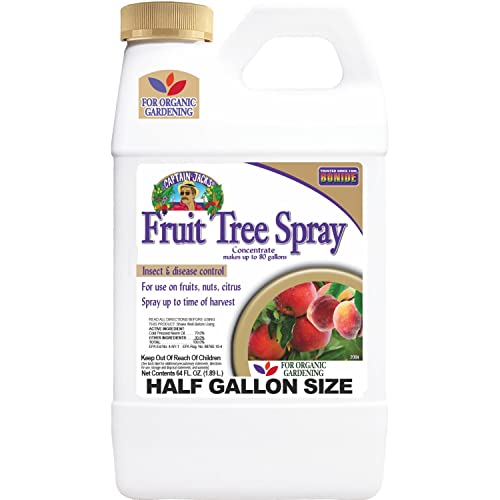
Control diseases and insects in your garden with Captain Jack’s Fruit Tree Spray Concentrate! Use on a variety of listed fruits, nuts and citrus plants.
Frequently Asked Questions
How to Get Rid of Spider Mites on Olive Trees?
Spider mite identification aids olive tree care by spotting webbing and yellow spots early. Effective pest prevention techniques include organic pest control with insecticidal soaps, beneficial insects, and maintaining humidity, essential indoor gardening tips to deter infestations.
What Kills Spider Mites Instantly in Indoor Plants?
Like a swift sword in ancient battles, rubbing alcohol sprays and insecticidal soaps kill spider mites instantly. Natural remedies, chemical solutions, essential oils, humidity control, and preventive measures form a robust defense against infestations indoors.
Will Dawn Dish Soap Get Rid of Spider Mites?
Dawn effectiveness in pest control is notable due to its soap solutions that suffocate spider mites. While not instantaneous, it supports olive health by reducing infestations organically, making it a preferred organic method for managing indoor olive tree pests.
What Can I Spray My Olive Tree With?
Like a gentle rain calming a storm, olive trees can be sprayed with safe insecticidal sprays, natural pesticide options such as neem oil, essential oil solutions, organic mite remedies, or homemade mite sprays to effectively control spider mites.


