As an Amazon Associate, we earn from qualifying purchases. Some links on this site are affiliate links at no extra cost to you. Our recommendations are based on thorough research and editorial judgment.

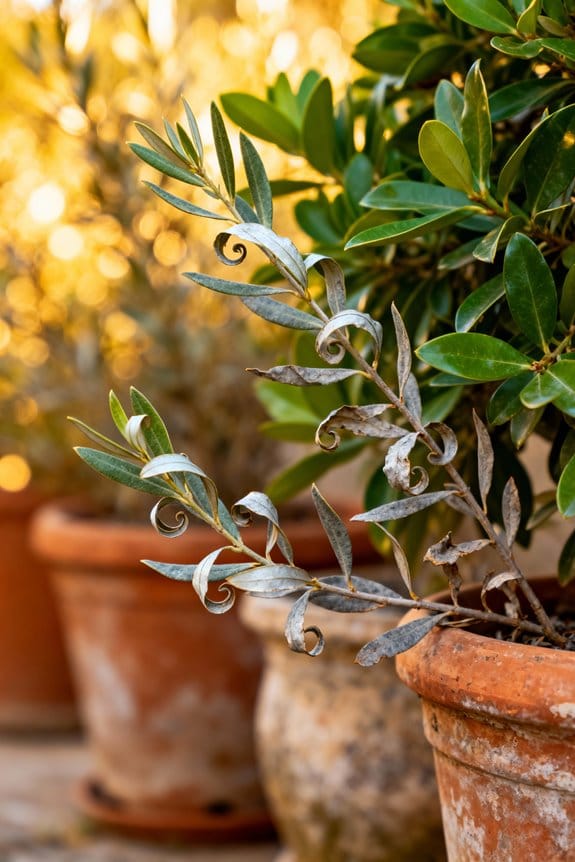
Understanding Water Stress Signals in Olive Trees

Olive trees show water stress mainly through midday stem water potential (SWP) and trunk growth rate (TGR). SWP near -1.2 MPa signals moderate stress, while values around -5 to -6 MPa indicate severe drought. Trunk growth rates below -0.1 mm/day confirm serious water shortages. Monitoring these helps adjust irrigation precisely, especially during sensitive growth phases. Using sensors for continuous TGR tracking improves timing and efficiency. These methods guarantee better water use and crop quality, with more advanced strategies available beyond this overview.
Key Takeaways
- Midday stem water potential (SWP) near −5 to −6 MPa signals severe water stress in olive trees needing irrigation adjustments.
- Declining leaf conductance reflects reduced gas exchange and increased water stress in olive trees.
- Trunk growth rate below −0.1 mm/day effectively indicates serious water stress in olive trees.
- Regulated deficit irrigation targets SWP around −1.2 MPa to optimize water use without compromising yield.
- Automated sensor systems continuously monitor trunk growth and soil moisture to precisely manage irrigation timing and intensity.
Importance of Monitoring Olive Tree Water Stress
Although olive trees are known for their drought tolerance, monitoring water stress is essential to maintain healthy growth and high yields. Stem water potential (SWP) measurements at midday help identify water stress levels and guide precise irrigation scheduling. When SWP drops below critical thresholds, it signals the need to adjust soil moisture through irrigation. Regulated Deficit Irrigation (RDI) balances water savings with productivity by applying less water during low evapotranspiration (ETo) periods and increasing it as ETo rises, especially in spring and summer. Continuous trunk growth rate monitoring below −0.1 mm/day also indicates stress requiring action. Combining these practices improves water efficiency in olive cultivation. For sustainable olive production, integrating sensor-based assessments of water status enables timely decisions that mitigate severe stress and maintain quality yields under changing climate conditions. Additionally, ensuring olive trees receive balanced nutrients with an NPK ratio of 8-8-8 supports their resilience against water stress and promotes overall health.
Physiological Indicators of Water Stress in Olive Trees
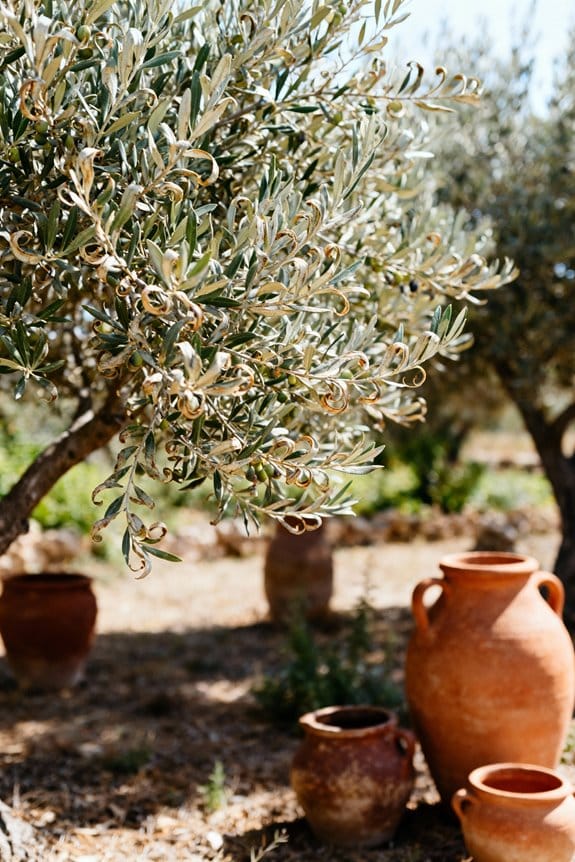
Physiological signs provide clear clues about water stress in olive trees. One key indicator is midday stem water potential (SWP), which can fall from typical levels to between -5 and -6 MPa during severe water stress. Leaf conductance also declines as water stress increases, signaling reduced gas exchange. These two physiological markers work together to reflect the tree’s hydration status accurately. Additionally, environmental factors like temperature and vapor pressure deficit affect SWP and must be considered when evaluating water stress. While trunk growth rate is another crucial physiological marker, its details will be discussed separately. Monitoring these indicators helps inform precise irrigation scheduling, allowing adjustments before irreversible stress impacts occur. By regularly tracking SWP and leaf conductance, growers can maintain olive tree health despite changing water availability. Understanding the drought tolerance of specific olive varieties can further optimize water management strategies.
Role of Trunk Growth Rate in Detecting Water Stress
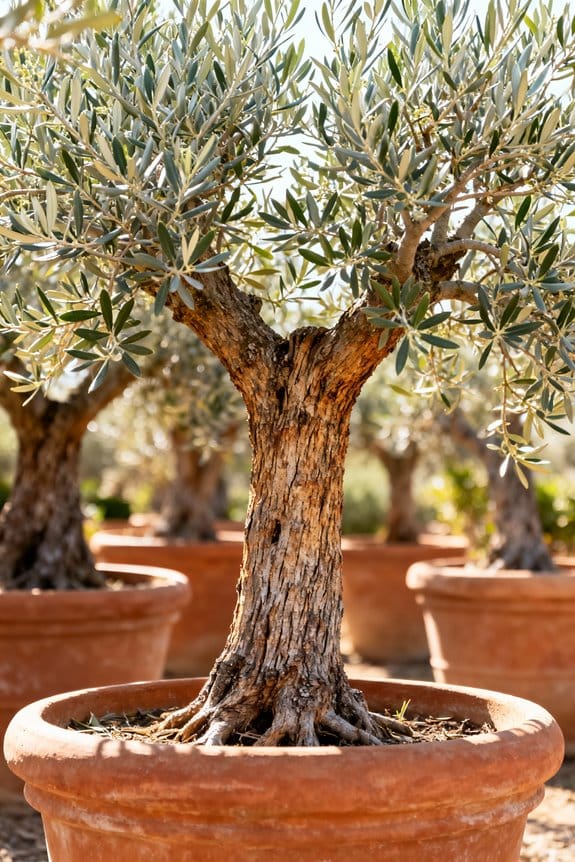
Besides midday stem water potential and leaf conductance, trunk growth rate (TGR) offers valuable insight into olive trees’ water status. The TGR measures how much the trunk diameter changes daily, with rates below −0.1 mm per day indicating serious water stress. By tracking TGR frequency patterns throughout the season, growers can distinguish severe water shortages from milder stress levels. This data helps fine-tune irrigation management, especially for regulated deficit irrigation, ensuring trees receive just enough water. Continuous TGR monitoring also boosts irrigation efficiency by preventing over- or under-watering, ultimately supporting better olive yield and quality. Regularly checking trunk growth provides an early warning sign of water stress, making it a practical, data-driven tool for olive tree care and more sustainable water use. Understanding the importance of moderate watering is essential for interpreting TGR data effectively and avoiding root rot while meeting olive trees’ hydration needs.
Overview of Irrigation Treatments for Olive Trees
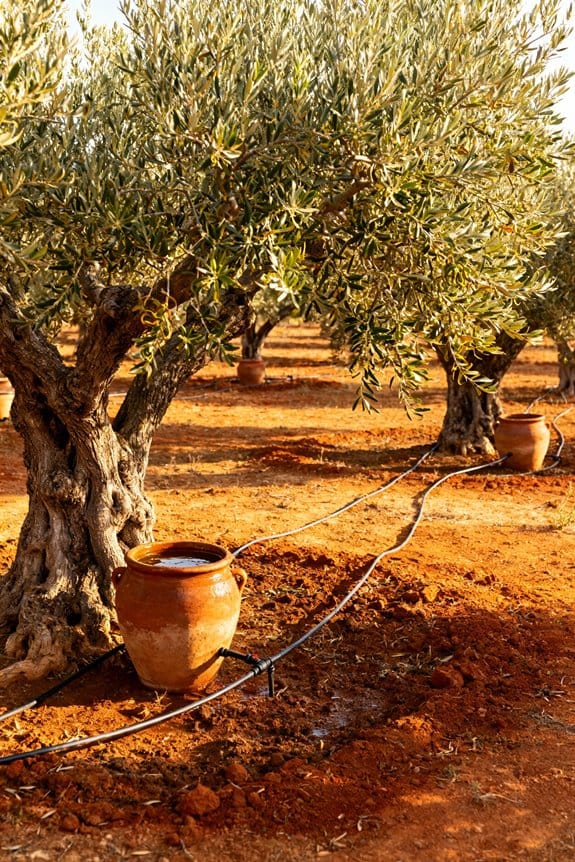
Three distinct irrigation treatments were tested on a young hedgerow olive orchard to evaluate water management strategies. The fully irrigated treatment received seasonal applications of 553 mm in 2020, 772 mm in 2021, and 727 mm in 2022, promoting ideal tree growth. Regulated Deficit Irrigation (RDI) was implemented in two forms: RDI-1 applied mild water stress guided by trunk growth rate data, while RDI-2 imposed more severe stress with reduced water supply. Water status measurements, including midday stem water potential, varied considerably between treatments, reflecting differing water stress levels. For example, the rainfed control, with no irrigation from June 2020, showed midday potentials near −5 to −6 MPa during critical periods. Monitoring tree growth alongside these irrigation treatments helps enhance water use and manage water stress effectively in olive orchards. Applying a soil moisture management approach that maintains moisture at 20-30% with proper aeration can further improve tree health.
Recommended Products

🌱Better Material: We have combined a Zinc, Magnesium, and Aluminum coated steel with our award-winning and USDA standard AkzoNobel paint to develop a new material which we call VZ 2.0. The first material of its kind is 100% safe, eco friendly, with a long 20+ year life. VZ 2.0’s exceptional performance has been verified at the Texas A&M National Corrosion & Materials Reliability Lab

🌱Better Material: We have combined a Zinc, Magnesium, and Aluminum coated steel with our award-winning and USDA standard AkzoNobel paint to develop a new material which we call VZ 2.0. The first material of its kind is 100% safe, eco friendly, with a long 20+ year life. VZ 2.0’s exceptional performance has been verified at the Texas A&M National Corrosion & Materials Reliability Lab
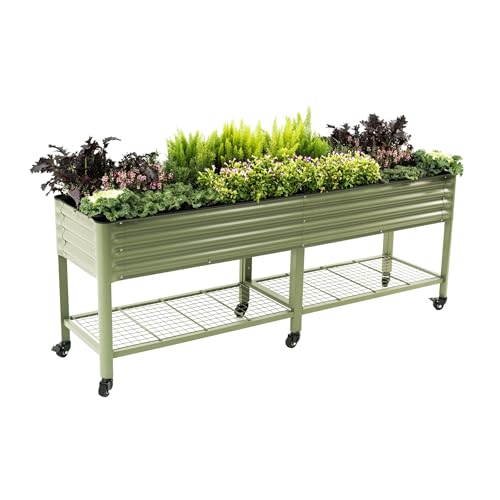
🌱Better Material: We have combined a Zinc, Magnesium, and Aluminum coated steel with our award-winning and USDA standard AkzoNobel paint to develop a new material which we call VZ 2.0. The first material of its kind is 100% safe, eco friendly, with a long 20+ year life. VZ 2.0’s exceptional performance has been verified at the Texas A&M National Corrosion & Materials Reliability Lab
Seasonal Variations in Trunk Growth Rate and Water Status
When monitoring olive trees, seasonal changes in trunk growth rate (TGR) reveal important clues about their water status. TGR varies throughout the growing season, with values below −0.1 mm day⁻¹ clearly signaling water stress. Continuous monitoring across different irrigation treatments shows that TGR patterns shift as stem water potential decreases. For instance, mild to moderate water stress increases both severe and good TGR frequencies, highlighting the tree’s response to water availability. These seasonal variations are critical for scheduling regulated deficit irrigation effectively. Weekly TGR frequency tracking proves valuable for identifying water status in olive trees, helping growers adjust irrigation strategies. Understanding how TGR correlates with water stress supports more precise and resource-efficient irrigation management in commercial olive orchards. Using an anti-transpirant spray can further help maintain tree vigor during periods of water stress by reducing moisture loss.
Relationship Between Stem Water Potential and Water Stress
Midday stem water potential (SWP) offers one of the clearest signals of water stress in olive trees. SWP values between −5 and −6 megapascals (MPa) indicate significant water stress, especially during drought conditions. This measure closely tracks environmental conditions like temperature and humidity, which directly influence water availability in the soil. Continuous monitoring of SWP using pressure bomb techniques helps identify stress patterns. Regulated deficit irrigation (RDI) is designed to keep SWP within moderate ranges, avoiding severe stress while optimizing growth and yield. Compared to leaf conductance, SWP is more sensitive, making it a reliable guide for irrigation scheduling. By regularly measuring stem water potential, growers can adjust watering to match real-time conditions, maintaining healthy olive trees even when resources are limited. Utilizing automatic watering systems can further enhance precise irrigation management by maintaining appropriate soil moisture levels consistently.
Applications of Trunk Diameter Sensors in Irrigation Scheduling
Stem water potential offers valuable insight into olive tree water stress, but it requires pressure bomb tools and periodic sampling. Trunk diameter sensors provide continuous, real-time monitoring by measuring trunk growth rate (TGR). When TGR falls below −0.1 mm per day, olive trees show clear signs of water stress. These sensors track daily shrinkage and swelling, producing curves that help detect mild to moderate stress conditions. In irrigated olive orchards, analyzing weekly TGR frequency patterns aligns closely with stem water potential trends. This data enables precise irrigation scheduling, especially for deficit irrigation strategies. By using trunk diameter sensors, growers can apply precision irrigation that saves water and maintains good tree health, optimizing water use without sacrificing yield quality during dry periods. Integrating these sensors into irrigation protocols transforms water management in olive orchards. Additionally, established olive trees become drought-tolerant after 2-3 years, reducing their irrigation needs and allowing more efficient water management with sensor data.
Impact of Deficit Irrigation on Olive Yield and Quality
Although olive trees need consistent moisture during their growing season, applying deficit irrigation can save water without greatly cutting yields. Deficit irrigation involves reducing soil water during less sensitive growth stages, maintaining moderate water stress conditions to optimize use. Regulated deficit irrigation (RDI) applied during fruit set and pit hardening stages results in higher olive yield and improved fruit quality, boosting oil content. Moderate water stress slows trunk growth rate but does not notably reduce olive yield when carefully managed. Timing is essential: mild water stress during pit hardening enhances fruit quality, while excessive stress early on harms fruit set. Monitoring soil water helps maintain balance, ensuring trees receive enough moisture without waste. This controlled water stress offers higher economic value owing to better fruit quality and efficient water use. Proper irrigation scheduling, aligned with the tree’s growth cycle and soil moisture levels, is critical for optimal olive production.
Recommended Products

Climate Logic ready - Automatically reschedules Rain Dial-R watering based on the weather

Climate Logic compatible - Turn the Total Control into a weather-based controller using an on-site wireless weather sensor

Remote control ready compatible with crr (contractor residential remote) remote series
Advances in Automated Irrigation Management Techniques
Many olive growers now rely on automated irrigation management to improve water use efficiency. This approach uses soil moisture sensors and weather stations to guide irrigation scheduling precisely. By continuously monitoring trunk growth rate (TGR), farmers can detect early signs of water stress in olive trees. They adjust irrigation accordingly to regulate deficit irrigation (RDI), which balances water savings with healthy crop growth. TGR data improves the timing and amount of water applied, reducing both over- and under-watering risks. Automated systems contribute to higher water productivity by minimizing waste and preventing yield losses. For example, sensors measure soil moisture at 20 cm depth every hour, and irrigation activates only if TGR signals moderate stress. This technique guarantees water delivery meets trees’ needs efficiently without compromising olive quality or quantity. Using 15-gallon olive trees in such systems allows ample root space, enhancing the effectiveness of irrigation management.
Recommended Products
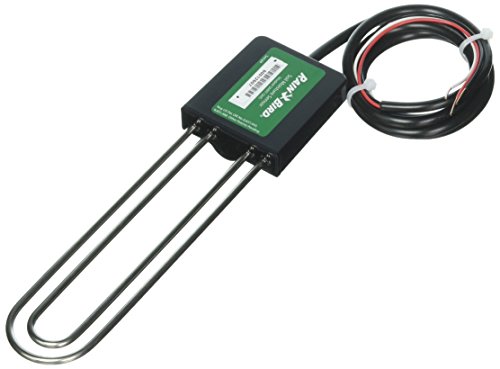

Hunter Industries prides itself on providing the best homeowner support in the irrigation industry

BATTERY POWERED FOR REMOTE OR OFF-GRID INSTALLATIONS: No AC power? No problem. The XC Hybrid runs on six AA batteries , ideal for properties without wiring such as sheds, backyards, rental properties, or off-grid installs.
Future Directions for Sustainable Water Use in Olive Cultivation
Sustainable water use in olive cultivation is becoming an urgent priority as climate variability increases. To manage water stress effectively, growers can regulate deficit irrigation (RDI) using midday stem water potential (SWP) measurements, aiming for values near -1.2 MPa in summer to balance fruit yield and water savings. Real-time data collection through soil moisture sensors and weather stations helps track environmental conditions like vapor pressure deficit (VPD), supporting timely irrigation decisions. Combining RDI with sustainable water practices such as reclaimed wastewater use and improved soil management reduces freshwater dependency. Precise daily trunk growth rate (TGR) monitoring further refines irrigation timing. Given climate change’s unpredictable effects, these adaptive strategies offer a pathway to maintain productivity while conserving water resources across olive orchards worldwide. Incorporating well-draining soils can further enhance water management by improving root health and reducing overwatering risks.
Frequently Asked Questions
How Do Olive Trees Adapt to Prolonged Drought at the Cellular Level?
Like a fortress tightening its gates, olive trees deploy cellular responses including osmotic adjustment and stress proteins. Root adaptations and modified leaf morphology enhance drought tolerance, while stomatal regulation maintains hydration levels, collectively ensuring survival under prolonged drought.
What Are Common Pest Issues Linked to Water-Stressed Olive Trees?
Water-stressed olive trees commonly face increased insect infestations, including olive fly, scale insects, and mite populations. Fungal infections and nematode damage also rise. Effective pest management improves pest resistance and reduces overall crop vulnerability.
Can Water Stress Affect Olive Oil Flavor and Chemical Composition?
Sunlight and drought sculpt olive oil’s flavor profile, altering chemical compounds and oil quality. Sensory evaluation reveals impacts shaped by moisture levels, harvest timing, cultivar differences, and processing methods, influencing the final product’s character and value.
What Traditional Methods Do Farmers Use to Detect Water Stress?
Farmers traditionally detect water stress through visual inspections of leaf drooping, monitoring soil moisture, evaluating root health, adjusting pruning techniques, scheduling irrigation based on weather patterns, and sometimes employing thermal imaging to assess plant temperature variations.
How Does Soil Type Influence Water Stress Symptoms in Olive Trees?
Soil acts as the olive tree’s silent sentinel; clay texture’s poor drainage challenges root depth and moisture retention, while sandy soil’s quick drainage tests nutrient availability and pH levels, ultimately shaping the tree’s drought resilience and visible water stress symptoms.


