As an Amazon Associate, we earn from qualifying purchases. Some links on this site are affiliate links at no extra cost to you. Our recommendations are based on thorough research and editorial judgment.


Managing Indoor Temperature Fluctuations for Olive Trees

Maintaining indoor olive trees means keeping temperatures steady between 65-75°F (18-24°C). Avoid sudden swings caused by heaters, AC vents, or drafts since drops below 32°F (0°C) damage leaves and spikes over 85°F (29°C) cause dehydration. Place trees near south- or west-facing windows for at least six hours of sun but away from heat sources. Use a thermometer to monitor conditions and keep humidity around 40% by misting or using water trays. These steps promote health and growth, with more seasonal care considerations ahead.
Key Takeaways
- Keep indoor temperatures stable between 65-75°F (18-24°C) to support healthy olive tree growth.
- Avoid placing olive trees near heating vents, AC units, or drafty windows to prevent sudden temperature shifts.
- Use a reliable indoor thermometer to monitor and quickly address any temperature fluctuations.
- Maintain room humidity around 40% with misting, water trays, or humidifiers to reduce stress from dry air.
- During winter dormancy, keep temperatures steady between 41-50°F (5-10°C) to mimic natural conditions and prevent stress.
Ideal Temperature Range for Indoor Olive Trees
Temperature control is key for indoor olive trees. The ideal temperature for olive trees ranges between 65 and 75°F (18 to 24°C). Maintaining this stable range supports growth and overall health. Frequent temperature fluctuations can stress the tree, slowing development. It is best to avoid sudden temperature changes by locating the tree away from heaters, air conditioning vents, or drafty windows. Extreme cold below 28°F (-2°C) can cause damage, and temperatures over 85°F (29°C) risk dehydration. Use a reliable indoor thermometer to monitor conditions regularly. Adjust room temperature or relocate the tree if readings fall outside the ideal range. Keeping temperature steady is essential, as olive trees thrive best when environmental conditions remain consistent rather than changing frequently or dramatically indoors. Additionally, positioning olive trees near sources of natural light can optimize their visual impact and contribute to their overall vitality indoors.
Effects of Temperature Fluctuations on Olive Tree Health
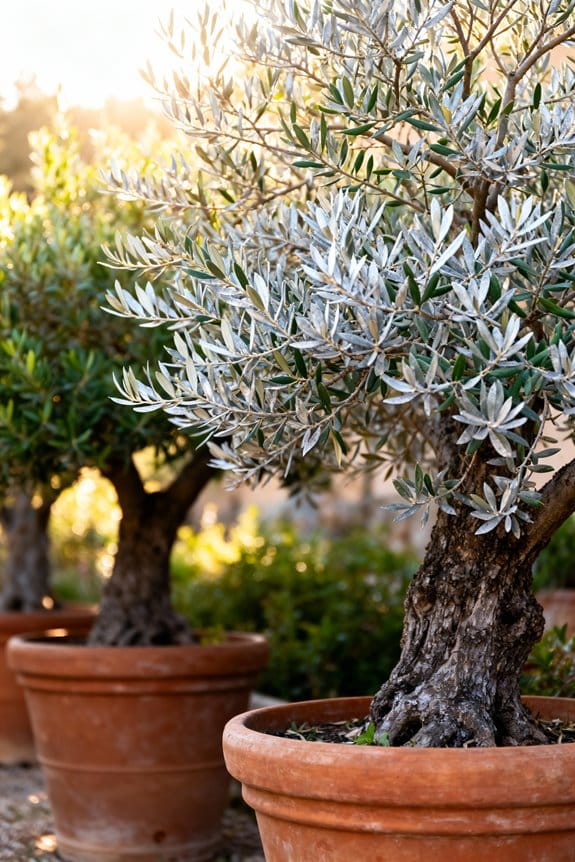
Fluctuations in indoor climate can quickly stress olive trees. Sudden temperature drops below 32°F (0°C) cause frost damage, while rapid increases over 85°F (29°C) lead to leaf drop and dehydration. These changes disrupt olive trees’ ability to adjust, reducing overall health. Inconsistent temperature and humidity levels, especially dry air below 40%, increase stress and pest risk. Maintaining stable conditions prevents dormancy and keeps trees active. Avoid placing trees near heating vents or cold drafts to minimize sudden temperature shocks. Regularly monitor temperatures between 65-75°F (18-24°C) and humidity around 40% for best results. Consistent care helps olive trees thrive indoors by limiting stress responses like leaf drop and pest susceptibility caused by fluctuating environments. Additionally, using weighted pots can help stabilize the tree’s positioning, which supports maintaining optimal health in varying indoor settings.
Best Indoor Locations to Maintain Stable Conditions

When selecting a spot for indoor olive trees, consider places near south- or west-facing windows for at least six hours of direct sunlight daily. These locations provide the best indoor settings to guarantee stable temperatures and optimum growth conditions. Avoid placing olive trees near heating vents or air conditioners, as these cause rapid temperature changes that stress the plant. Aim to maintain room temperatures between 15 and 24°C (59-75°F) around the tree, using a thermometer to monitor regularly. Staying within this range supports the tree’s resilience and health. Consistent temperature helps olive trees adapt well to indoor life. Choosing a spot with steady warmth and ample light is essential for thriving olive trees indoors. Additionally, maintaining the proper water pH between 6.0 and 8.0 is crucial for healthy root development and overall plant vigor.
Managing Humidity Levels for Optimal Growth

How does one maintain the right humidity for indoor olive trees? Ideally, keep humidity levels near 40%, which is best for growth. Place a water tray or humidifier close to the indoor olive tree during dry months. Regularly mist the leaves, especially in winter, to prevent dehydration. To keep humidity in check, monitor humidity using a hygrometer—a simple device that measures moisture in the air. Make sure to check readings daily, especially if the tree is near heat sources. If humidity falls below 35%, increase moisture by topping up water trays or boosting misting frequency. Consistently adjusting humidity levels based on these measurements supports olive tree health and vigor. This steady care helps the tree flourish despite indoor environmental challenges. Additionally, using grow bags can support healthy root development that complements proper humidity control indoors.
Protecting Olive Trees From Heat Sources and Drafts

Maintaining stable temperatures in the range of 65-75°F (18-24°C) is key for indoor olive trees to thrive. To protect them from heat sources, place olive trees several feet away from heating vents or air conditioners, which can create dry, stressful air. Avoid locating them near frequently opened windows because drafts cause harmful temperature swings. Using thermal curtains helps insulate windows while still allowing sunlight, reducing exposure to drafts. Monitoring indoor humidity is also important since heating systems often lower moisture levels; maintaining around 40% indoor humidity supports olive tree health. Together, these simple steps guard olive trees against temperature shocks and moisture loss caused by heat sources and drafts, fostering a stable environment ideal for their steady growth indoors. Additionally, selecting olive trees with flame-retardant materials increases safety in environments with heat fluctuations.
Seasonal Temperature Adjustments and Dormancy Care
Although olive trees enjoy warm, stable temperatures between 65°F and 75°F (18°C to 24°C) during most of the year, they require a cooler phase in winter to rest properly. Maintaining an indoor temperature between 41°F and 50°F (5°C to 10°C) encourages dormancy, which helps the tree conserve energy and improves its long-term health. Avoid sudden temperature changes, especially those caused by heating vents or air conditioning, since these fluctuations can disrupt the dormancy process. It’s important to monitor indoor temperature consistently throughout the season to keep conditions stable. Providing this cooler period indoors mimics the tree’s natural environment and prevents stress. By adjusting the temperature seasonally, caretakers help olive trees shift smoothly into dormancy and prepare them for the next growth cycle. Additionally, maintaining proper airflow around the tree indoors can prevent fungal diseases during the dormancy period.
Monitoring and Adjusting Temperature for Flowering and Fruiting
Once the olive tree’s dormancy period comes to an end, attention shifts to encouraging flowering and fruiting by carefully managing temperature. Monitoring temperature is essential to maintain stable indoor temperatures between 65°F and 75°F (18°C to 24°C), which supports healthy flowering and fruiting. Avoid placing trees near windows or heating vents to prevent mild drafts that cause fluctuations. Gradually introduce the tree outdoors when spring temperatures exceed 40°F (4°C) to simulate natural conditions and boost flowering. Keep humidity in check as well, since it affects pollination and fruit set. If indoor conditions become too warm, relocate the tree to a cooler spot briefly. Consistently monitor temperature and humidity levels, making small adjustments during this phase to improve flowering and fruiting success. Providing balanced nutrients during this period also promotes healthy flower and fruit development.
Frequently Asked Questions
How Do I Keep My Olive Tree Alive Indoors?
To keep an olive tree alive indoors, provide six hours of direct sunlight, use well-draining potting techniques, and practice consistent indoor watering—allowing the top inch of soil to dry before watering again to avoid root rot.
What Temperature Is Too Cold for Olive Trees?
Olive trees have limited cold tolerance, with temperatures below 40°F (4°C) causing stress and below 28°F (-2°C) risking frost damage. Effective winter care and frost protection are essential to avoid irreversible harm.
Should I Mist My Indoor Olive Tree?
Like a gentle morning fog, misting benefits indoor olive trees by softly raising humidity levels, promoting life while avoiding overwatering. This delicate balance supports ideal watering practices, ensuring the tree thrives without provoking fungal discomfort.
Do Coffee Grounds Help Olive Trees?
Coffee grounds benefit olive trees by improving nutrient absorption and enhancing soil structure. However, excessive use can increase soil acidity, potentially harming growth. Proper moderation guarantees ideal soil conditions and supports healthy olive tree development.


