As an Amazon Associate, we earn from qualifying purchases. Some links on this site are affiliate links at no extra cost to you. Our recommendations are based on thorough research and editorial judgment.

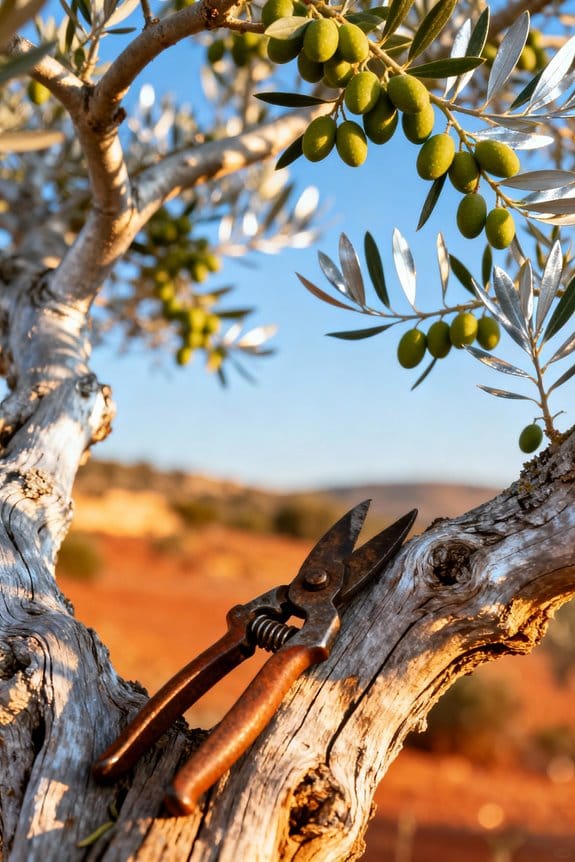
Seasonal Pruning Timing for Optimal Olive Tree Health

Seasonal pruning of olive trees is best done from January to March when sap flow is low and temperatures stay above 3°C to prevent frost damage. Start by removing dry, dead, or crossing branches using sharp shears, cutting at a 45-degree angle close to buds. Thin dense areas for better sunlight and air circulation. Disinfect tools regularly and clear debris to avoid pests. Proper pruning boosts fruit quality and tree health. More tips will follow for effective care and maintenance.
Key Takeaways
- Prune olive trees between January and March for minimal sap flow and reduced stress.
- Avoid pruning when temperatures drop below 2-3°C to prevent frost damage.
- Focus on removing suckers, dry wood, and crossing branches during the dormant season.
- Early flower buds indicate the ideal timing to begin pruning processes.
- Seasonal pruning improves air circulation, sunlight penetration, and reduces disease risk.
Importance of Pruning Olive Trees
Because olive trees require a balance between leafy growth and fruit production, pruning becomes an essential task for anyone managing an orchard or a home garden. Pruning helps maintain healthy growth by removing crowded or weak branches, which improves air circulation and sunlight reach throughout the canopy. This reduces disease risk and pests. Proper pruning supports fruit production by allowing the tree to dedicate energy to developing olives, enhancing yield and quality for the olive harvest. It also encourages quicker healing of cuts made during the ideal time, usually from January to March. Regular pruning, done annually or semi-annually, keeps the structure open and manageable, making harvesting easier. Following these steps guarantees olive trees remain productive and healthy over the years with improved olive size and flavor. Pruning should be limited to 10-15% of the canopy annually to maintain optimal tree health and growth.
Ideal Timing for Olive Tree Pruning
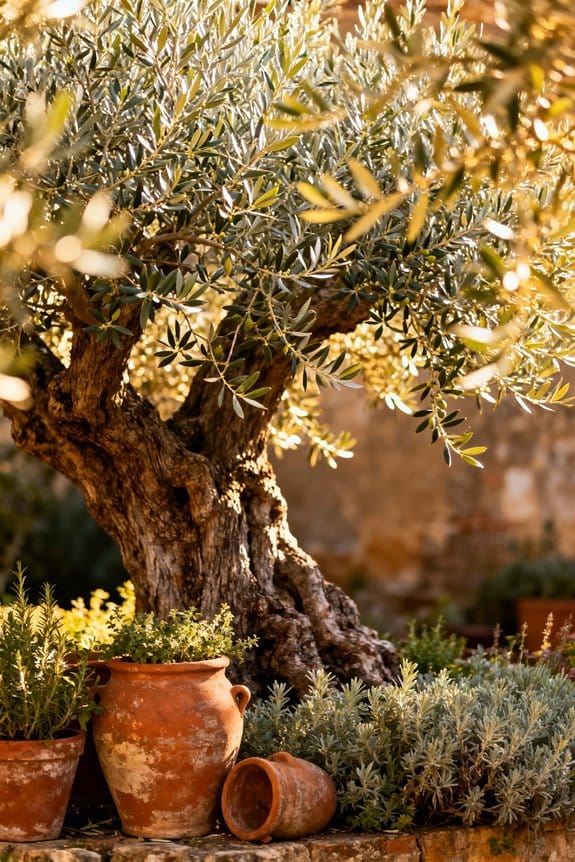
While olive trees rest in their vegetative phase, the best time to prune is between January and March. This period is the prime time for pruning olive trees because sap circulation is minimal, reducing stress and risk of damage. Early spring suits regions like Tuscany, allowing healthy trees to build vigor before blooming. It is essential to avoid pruning when temperatures drop below 2-3°C to prevent frost damage. During this time, removing suckers and dead wood helps improve air circulation and prepares the tree for maximum olive production. Monitoring early flower buds signals readiness for pruning. Green pruning can be done later in summer to focus on young shoots, but the winter vegetative rest period remains the primary window for achieving the finest tree health. Regular pruning in early spring also helps maintain the tree’s shape and is influenced by factors such as sunlight and water availability.
Step-by-Step Guide to Pruning Olive Trees
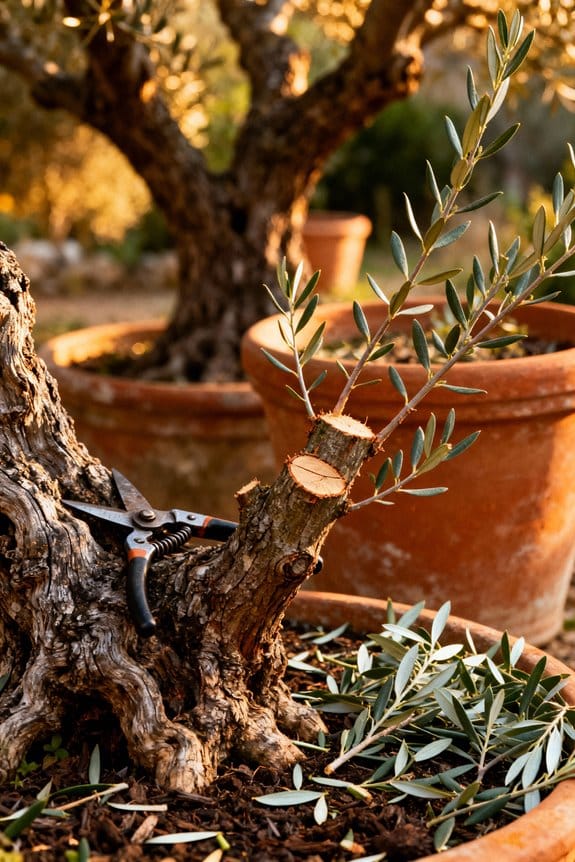
Pruning olive trees from January to March is ideal because the tree is resting vegetatively and sap flow is low. Start olive tree pruning by removing dry, diseased, or crossing branches using clean, sharp pruning shears. Cut close to the bud or main branch at a 45-degree angle to encourage healing while avoiding damage. Focus on thinning dense canopy areas to allow sunlight and air penetration, which keeps the tree healthy. The best time to prune is winter and early spring, ensuring minimal stress. Maintain a clear structure that supports consistent fruit ripening. This care improves fruit size and uniformity, essential for producing high-quality extra virgin olive oil. Always disinfect pruning shears between cuts to reduce infection risk and promote quicker recovery. Implementing selective and renewal pruning methods enhances air circulation and light penetration, which boosts fruit yield and overall tree health.
Effects of Pruning on Olive Oil Quality
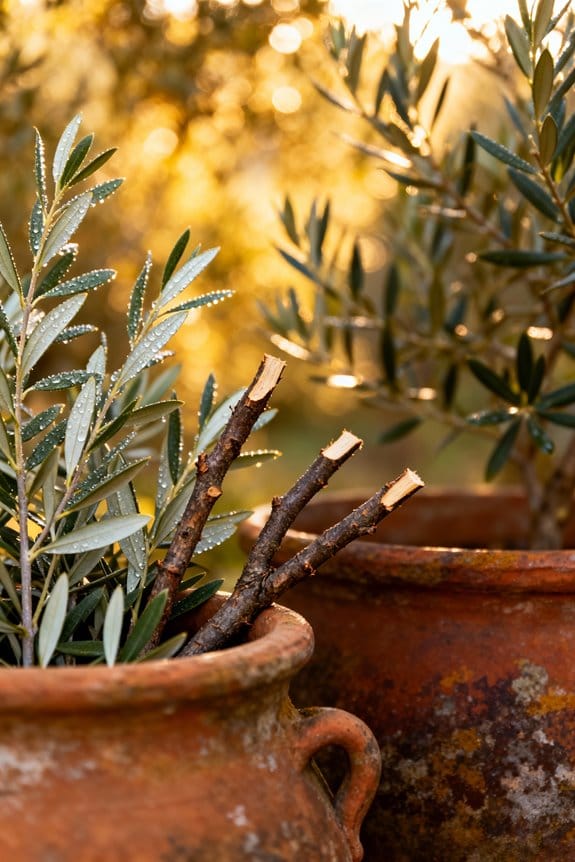
Enhancing olive oil quality starts with careful tree maintenance during the right season. Pruning the olive between January and March is ideal for improving fruit quality and oil production. By removing excess branches, the tree diverts energy to developing healthy, uniform olives. This open canopy allows sunlight to reach the fruit evenly, which is essential for consistent ripening. Proper pruning increases polyphenol levels in the olives, enhancing the oil’s health benefits and flavor. Regularly pruning maintains a balance between olive yield and oil quality by encouraging fruit of similar size. Well-pruned trees also simplify harvesting, helping each olive reach its highest potential. Following these steps, the effect of pruning on olive oil quality becomes clear—better pruning leads directly to higher-quality olive oil, making the effort well worth it. Additionally, combining pruning with proper use of fertilizers containing essential micronutrients ensures optimal tree health and fruit development.
Post-Pruning Care and Maintenance
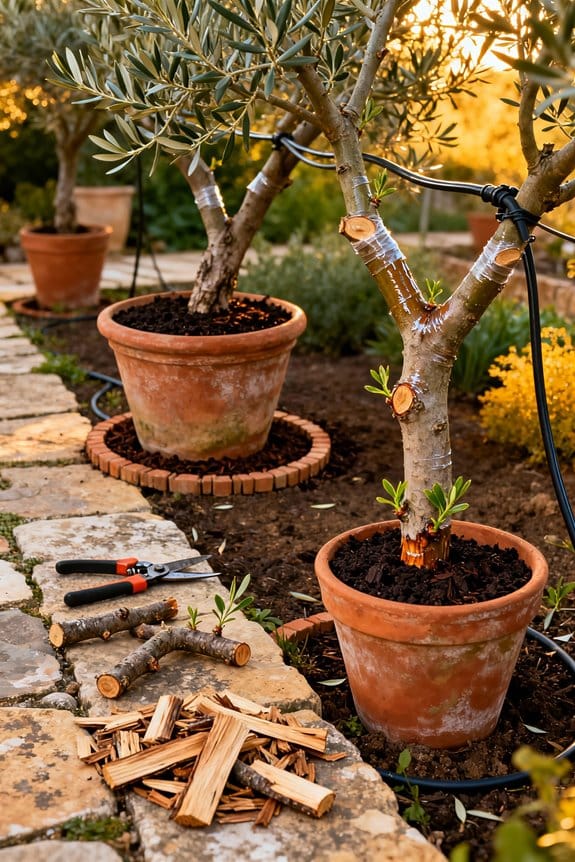
Applying proper care immediately after cutting branches helps olive trees heal faster and stay healthy. Olive growers should disinfect tools with a 70% alcohol solution before and after pruning to prevent bacterial spread. Applying a copper solution diluted to 1.5% concentration on fresh cuts reduces infection risks. It’s essential to maintain hygiene by clearing pruning debris promptly; this limits pests and diseases in the orchard. Monitoring health with weekly inspections allows early detection of issues like fungal growth or pest invasion. Olive trees need regular watering—about 20 liters per tree weekly—and balanced nutrients, including nitrogen and potassium, to recover efficiently. Using a fertilizer that provides essential macronutrients and micronutrients can significantly enhance recovery and promote robust regrowth. These post-pruning care steps support robust regrowth and sustained tree health throughout the season.
Common Pruning Techniques for Olive Trees
Several common techniques help olive trees grow healthier and produce better fruit. To prune an olive tree effectively, thinning crowded laterals is key. This promotes ample light and air circulation, improving fruit quality and reducing disease. Pruning is best done in late winter and early spring, according to UC Davis. Removing downward-growing suckers and unnecessary branches focuses the tree’s energy on main branches that bear fruit. Clean, angled cuts encourage quicker healing and lower infection risk. Umbrella pruning improves appearance but may reduce yield, so it’s less favored in productive orchards. For best results, prune with purpose: balance light access, shape, and fruit production. These common pruning techniques keep olive trees healthy and productive with minimal stress during the critical pruning window. Following pruning, applying a foliar spray can help correct nutrient deficiencies and promote vigorous growth.
Frequently Asked Questions
What Month Do You Prune Olive Trees?
Olive trees are pruned mainly from January to March using spring pruning techniques to enhance growth and yield. Summer pruning benefits include maintaining tree shape and removing young branches. Proper pruning tools are essential for pruning before harvest.
When Not to Prune Olive Trees?
Olive trees should not be pruned during frost, heavy rain, drought, or stress periods. Improper pruning techniques in these conditions hinder nutrient absorption, tree growth, and pruning benefits, while ideal seasons with proper pruning tools guarantee success despite weather impacts.
Does Pruning Affect Olive Tree Health?
Olive pruning importance is like gentle sculpting, enhancing tree health benefits by removing congestion and promoting vigor. Ideal pruning techniques, seasonal pruning effects, and proper pruning tools required guarantee olive tree resilience, minimizing signs of stress and supporting durable growth.
What Are the Mistakes for Pruning Olive Trees in the Winter?
Winter pruning errors include improper cutting techniques causing tree stress factors, excessive sap flow impact, and disease exposure risks. Dormant season concerns involve neglecting tool disinfection and damaging growth pattern disruptions, ultimately hindering olive tree health and productivity.


